Construction journal: slow but steady

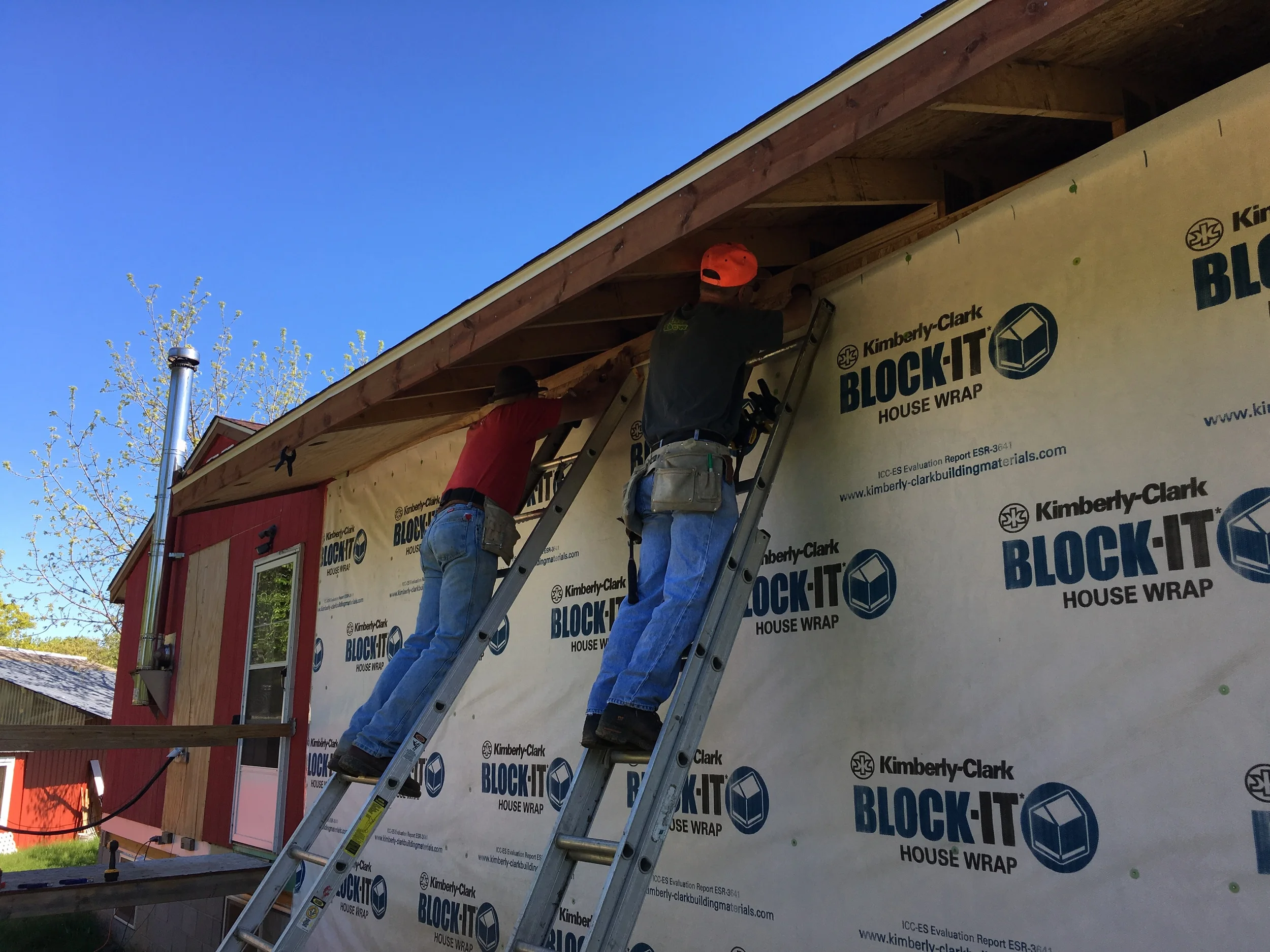
The third week of May, Michael's brother Douglas came and worked fast and steady with Michael. They got the soffit up and began a back porch. Three weeks later and we just bought the last of the lumber for the back porch: 

The framework for the porch is just visible in the background  

The framework for the porch is just visible in the background  

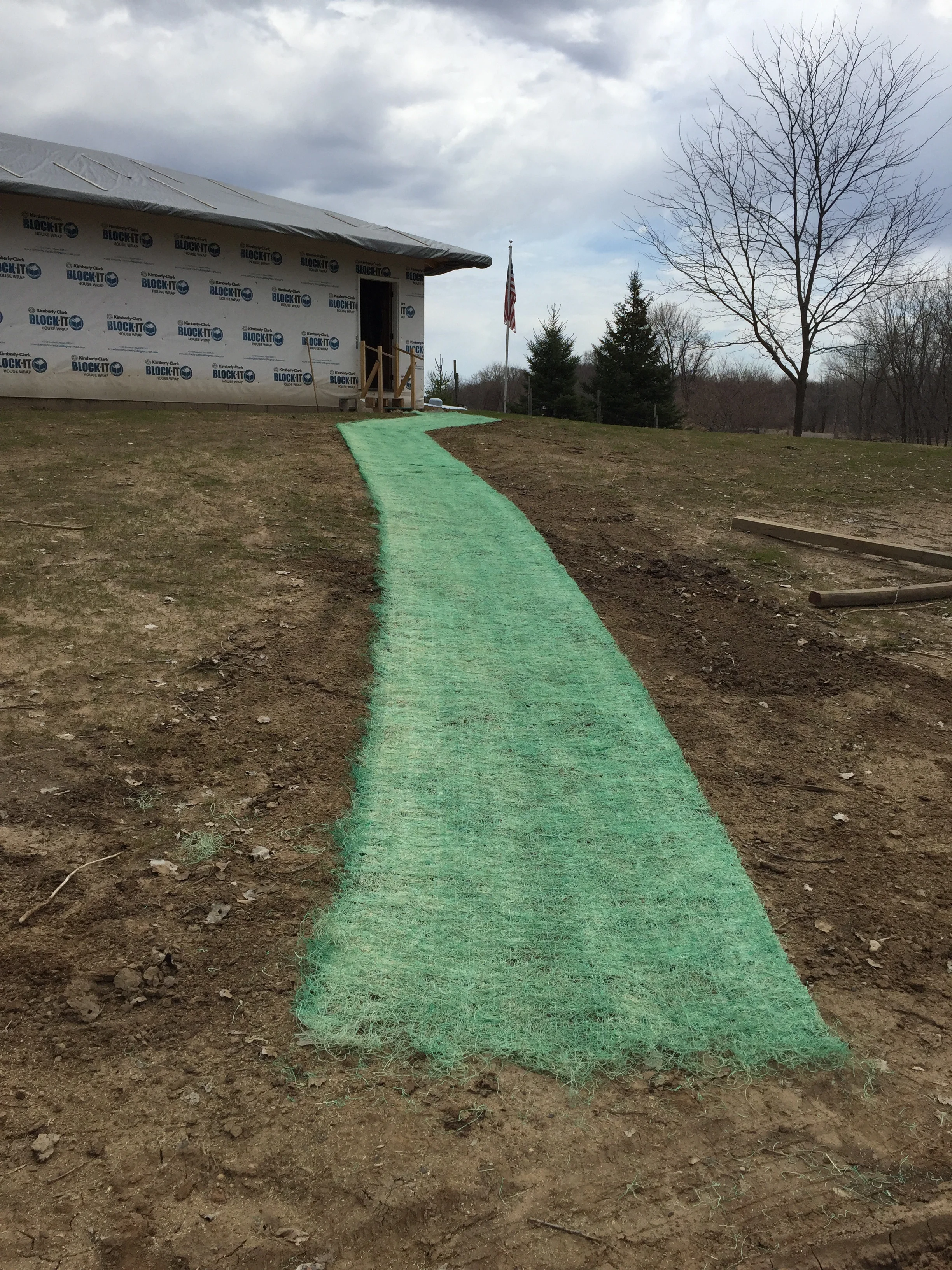
We have done a lot of other things in the meantime, such as getting the windows and the back doors purchased and in the addition waiting to be installed. We want to start on the back so we make any of our mistakes on the far side of the house. We also needed to stop erosion on the back side. So there we start. Soon.   

In the meantime, we've slowly been finishing off the base boards where the original cabin meets the first addition. 
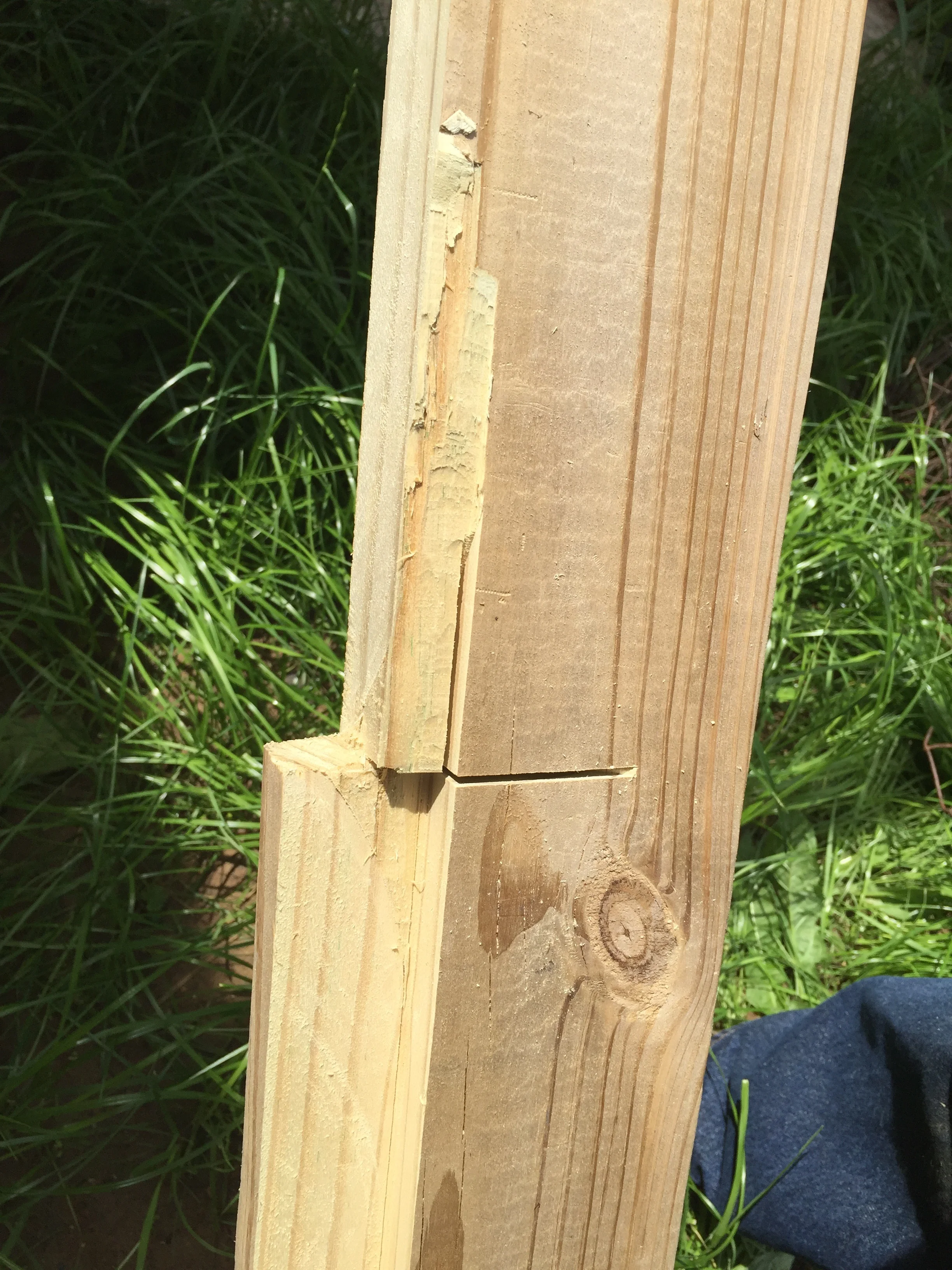
It took me a long time to get brave enough to make this cut

It took me a long time to get brave enough to make this cut

We have had to be somewhat creative in filling in spaces that are anything but uniform. It's slow, but we are getting there.  

Somewhat hard to see, but the plate size and base board are all different sizes.  

Somewhat hard to see, but the plate size and base board are all different sizes.  

It fits!!! 

It fits!!! 

 I still need to slice skinny boards to fill in the space at the top (again, anything but uniform) but just getting this one in felt like a triumph. We spent a while trying to make the porch joists square to avoid just this problem. We'll see how well we did right soon. 
Construction journal: a rocket stove of our own

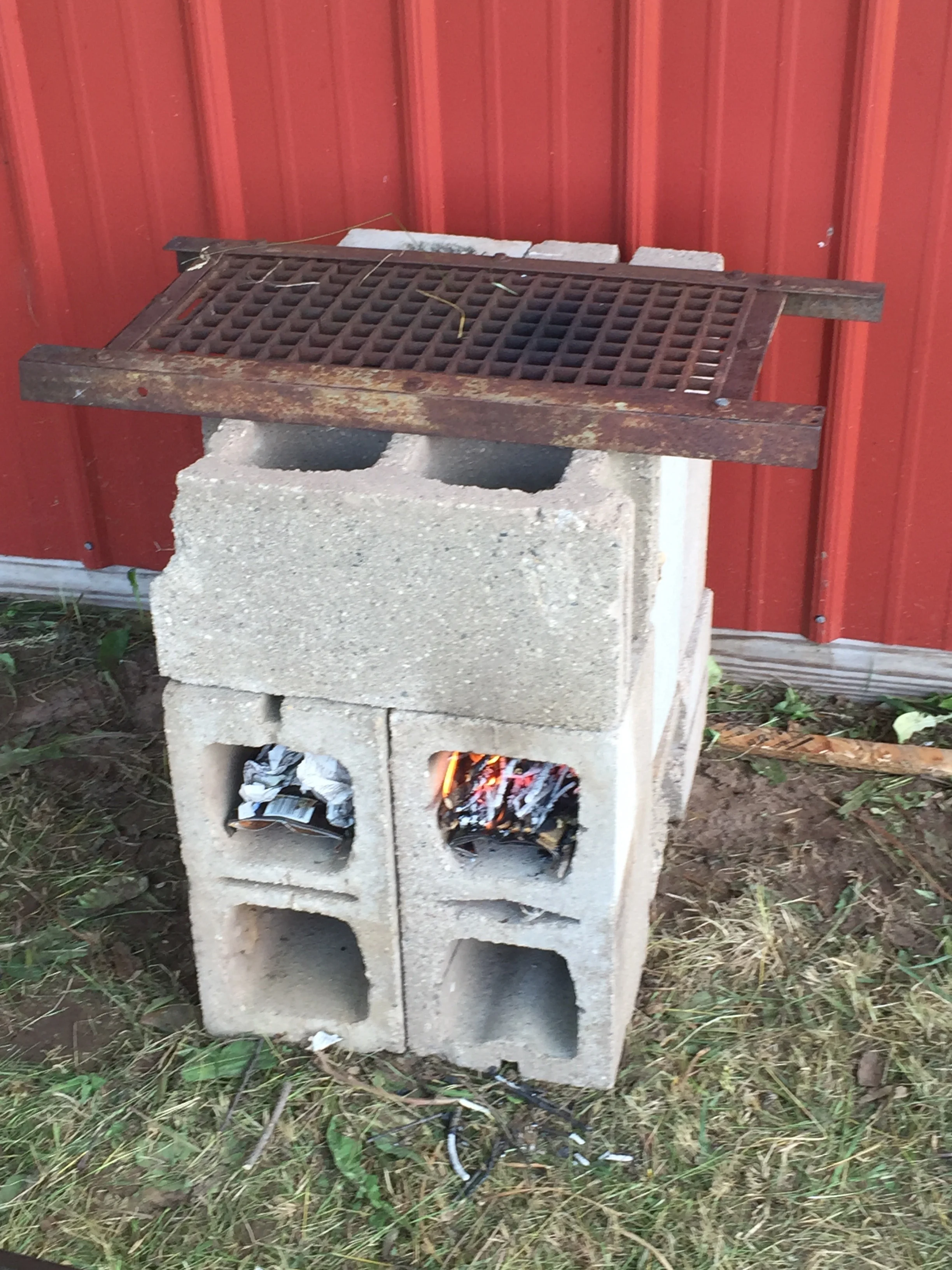
We are having a bunch of visitors coming next weekend, which coincides with our Cornish crosses getting big enough to die of a heart attack. We like the skin on our chicken and so needed a way to scald the chosen one. We have a gas burner, but are always looking for ways to avoid buying things. We have cement block. We have a fire pit grate. We have brush piles. So now we have a rocket stove: 

What you can't see are the bond beam blocks, which form the chimney.  

What you can't see are the bond beam blocks, which form the chimney.  

Actually, this is the original effort, but it made us stoop too much to feed the firebox. So we modified the plan: 

Ergonomically more satisfactory  

Ergonomically more satisfactory  

We heated the stockpot full of water from 70°F to 175°F in about an hour. It took three buckets of small sticks.  

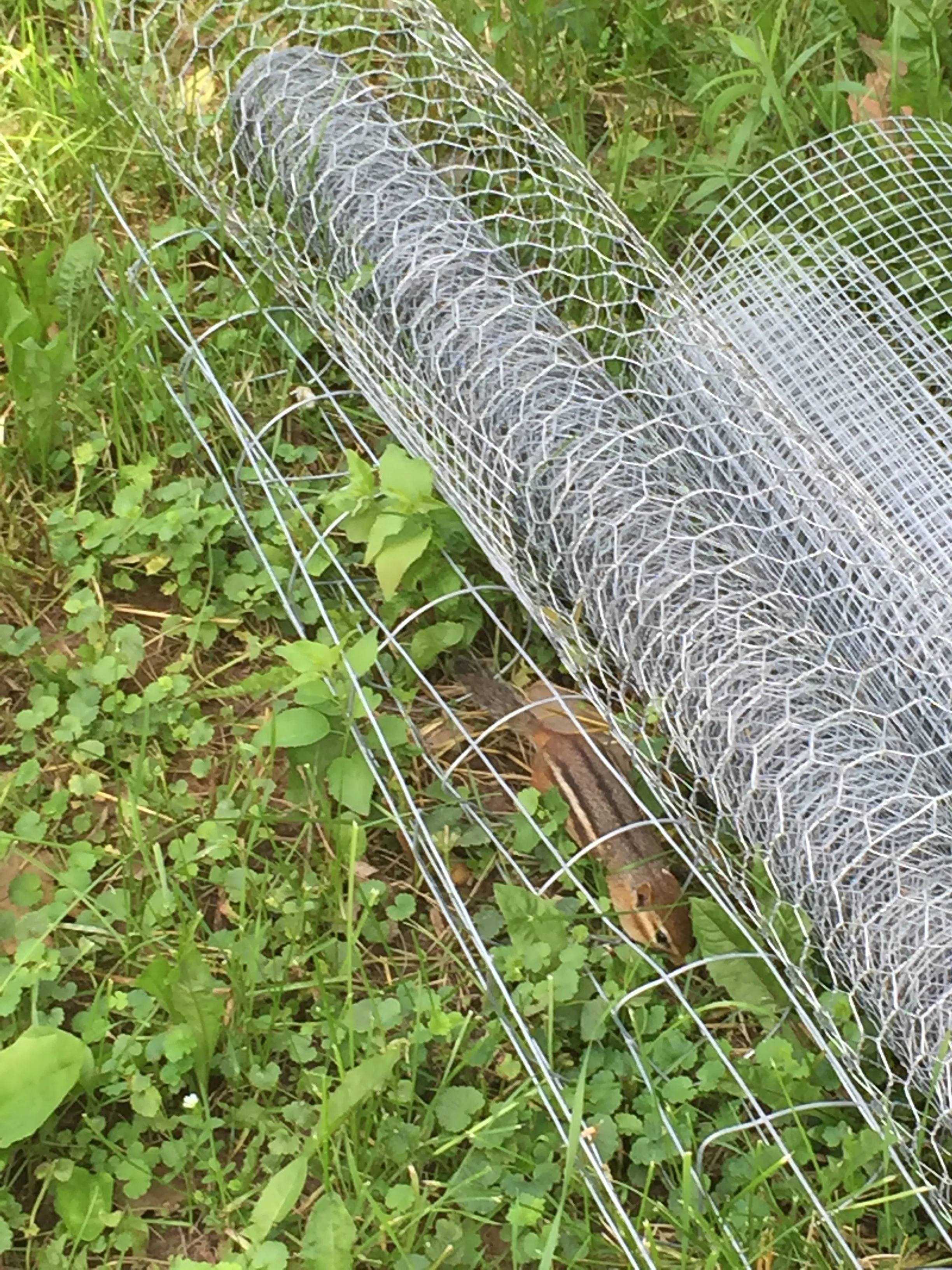
While I was puttering around, clearing out the space and running the weed whip to keep the tall grass at bay, our resident chipmunk stopped by and said hello. 

He's cute when he's not busy building nests in Irene's car's engine compartment.  

He's cute when he's not busy building nests in Irene's car's engine compartment.  

Michael spent the morning putting the riding mower back together after our neighbor welded the mower deck for us. Thanks Rick!  Then spent the rest of the day mowing while I was playing with the rocket stove. Tomorrow we will mow some more! 

Livestock journal: low-rent housing for the young stock

Yikes!  Summer always goes so quickly and there are more things to do than there are hours in a day...and we get some pretty long days here in Wisconsin. So I'm playing catch-up while making dinner. Here goes:   

Michael made one new duck hut while I was in New Mexico, and I got in on making the second chicken shack when I got back. We start by wiring together two cattle panels and attaching them to treated 2x4s.  

The start of the shack.  

The start of the shack.  

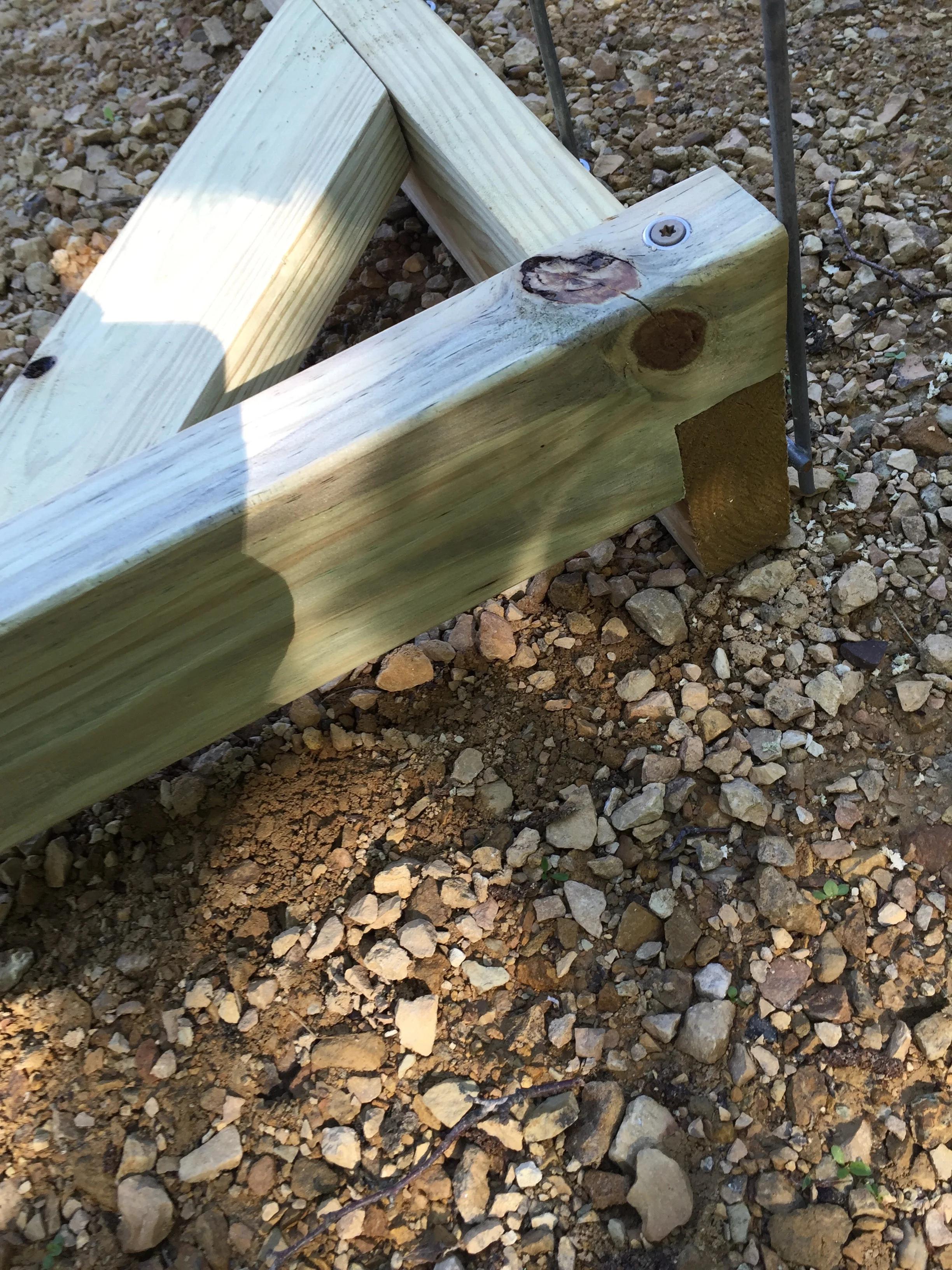
We notch a second set of treated 2x4s, lift the cattle panels into an arch and attach the front and back boards. The notches keep the front and back boards off the ground, making the shack easier to move over rough ground.  

Bracing the corners once the shack is squared keeps everything, well, square.  

Bracing the corners once the shack is squared keeps everything, well, square.  

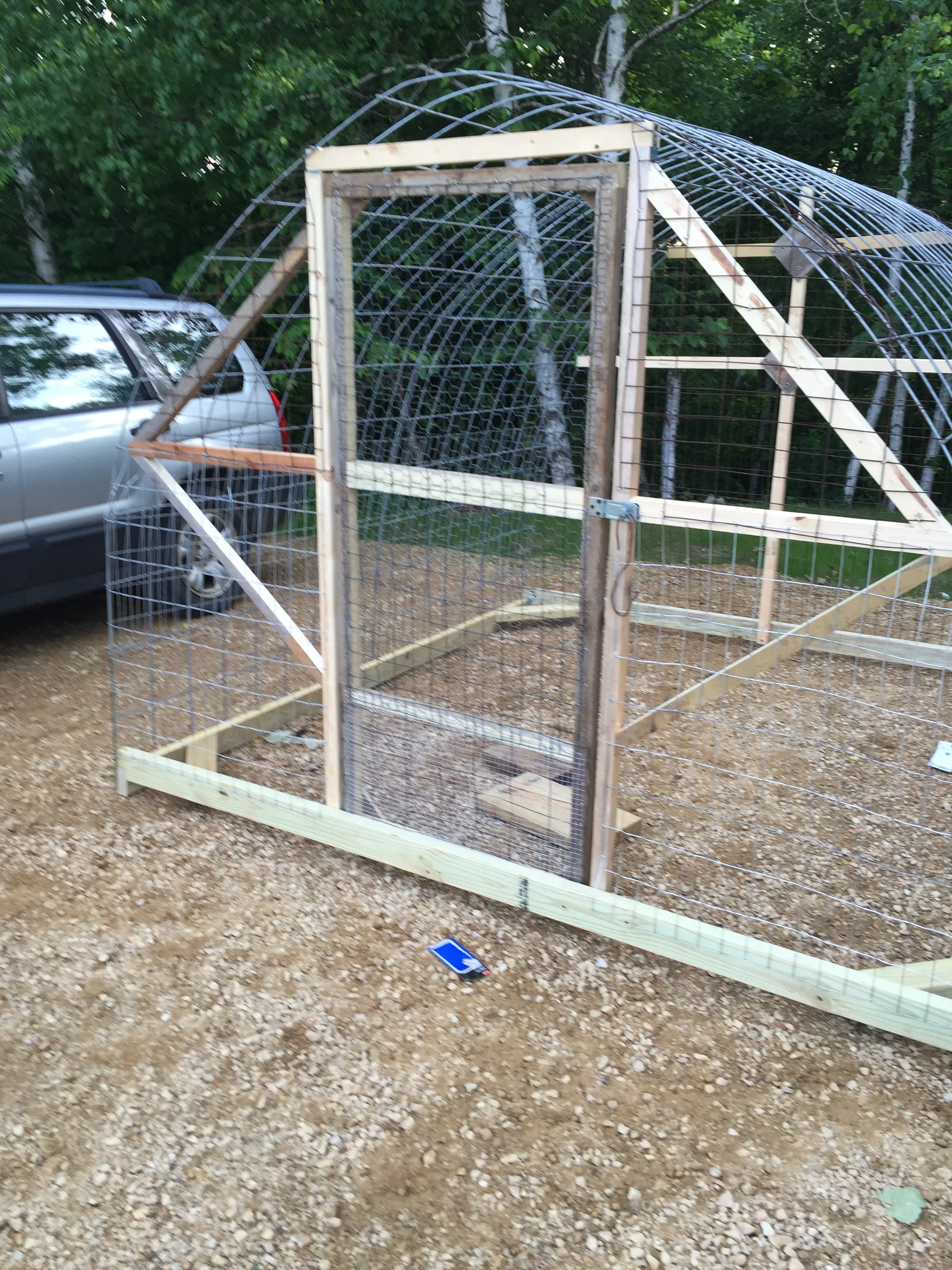
Once the base of the shack is done, then the back "wall" is put up and the front door constructed, and roosts strategically placed. Michael discovered that using metal perforated tape and screws to attach the front and back walls to the cattle panel works better than hammering in metal staples. Then fence is put over the front and back and chicken wire over that. We over build them with the idea that they are fortresses against any night time predators who may get over the fence. 

This is at the end of Day 2!  

This is at the end of Day 2!  

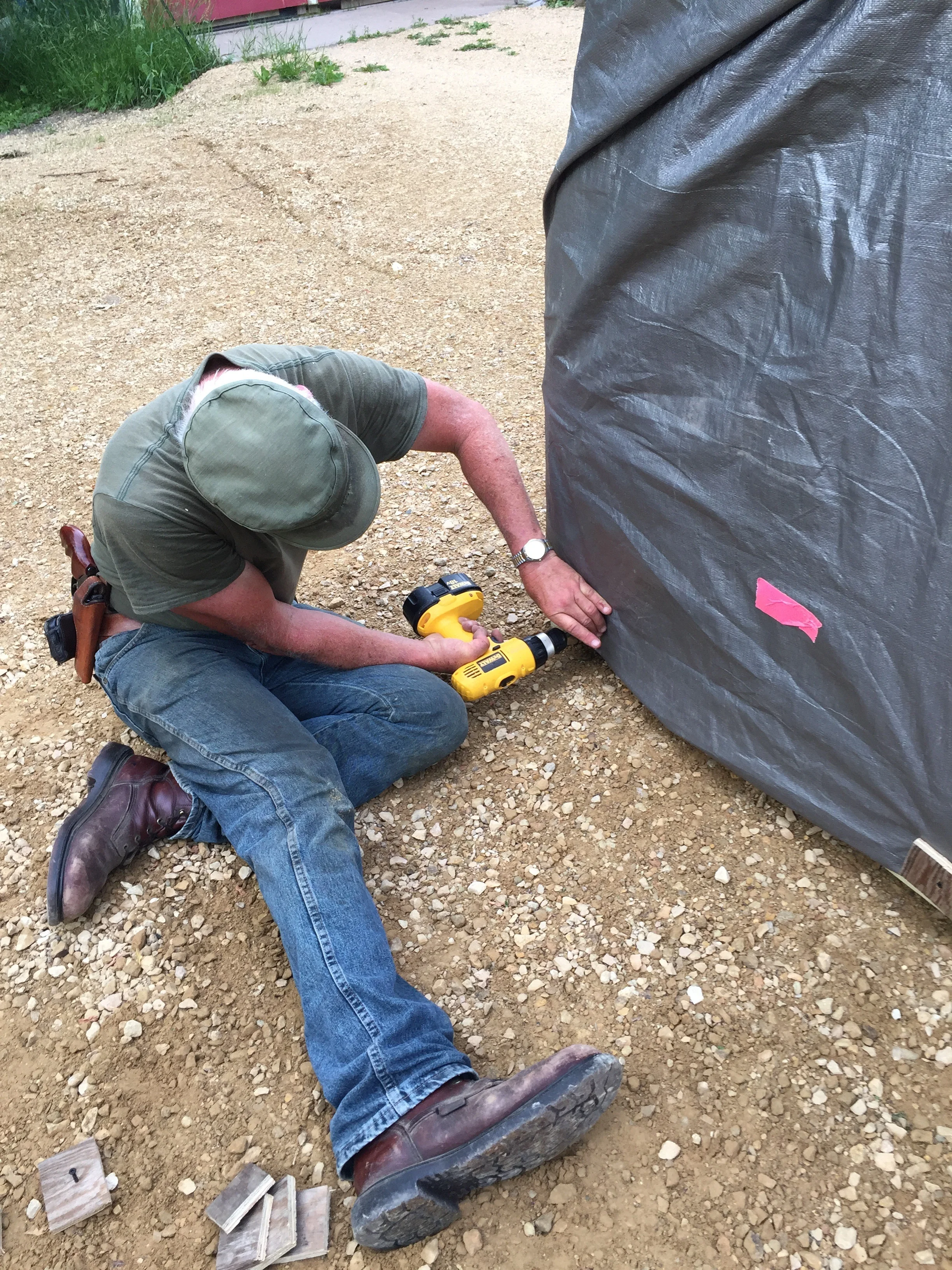
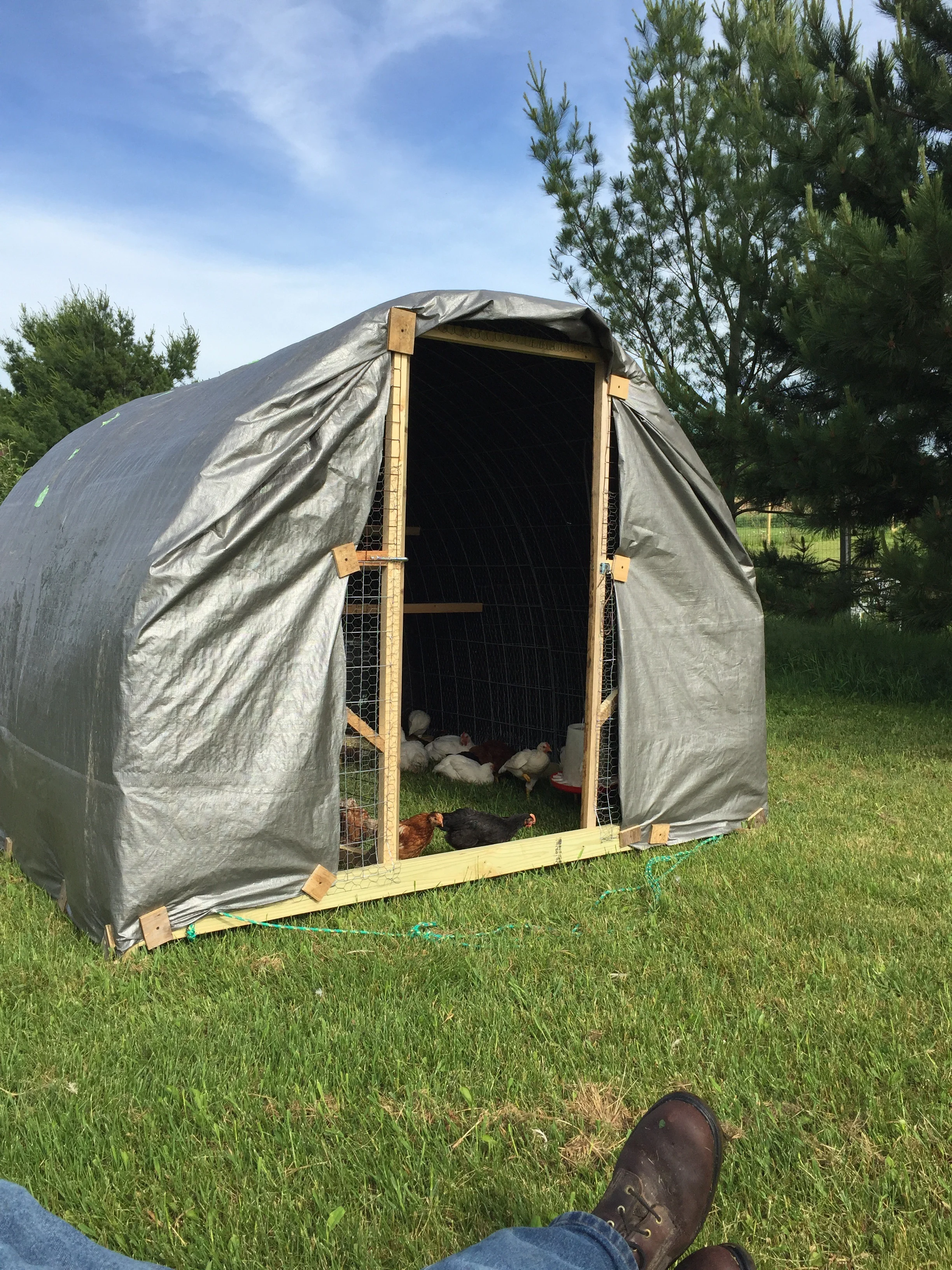
The final steps are to rig ropes to pull the shack around (mobile shacks allow you to move your birds off their poo rather than moving the poo out of the shack) and then to cover the shack with a tarp (we repurposed the tarp that we put over the addition until we could get it shingled).  

I fold. Michael attaches. Having two people to build these makes life so much easier.  

I fold. Michael attaches. Having two people to build these makes life so much easier.  

And the young ones seem pretty happy with their new home!

The end of day 3! 

The end of day 3! 

Garden journal: beating back the jungle

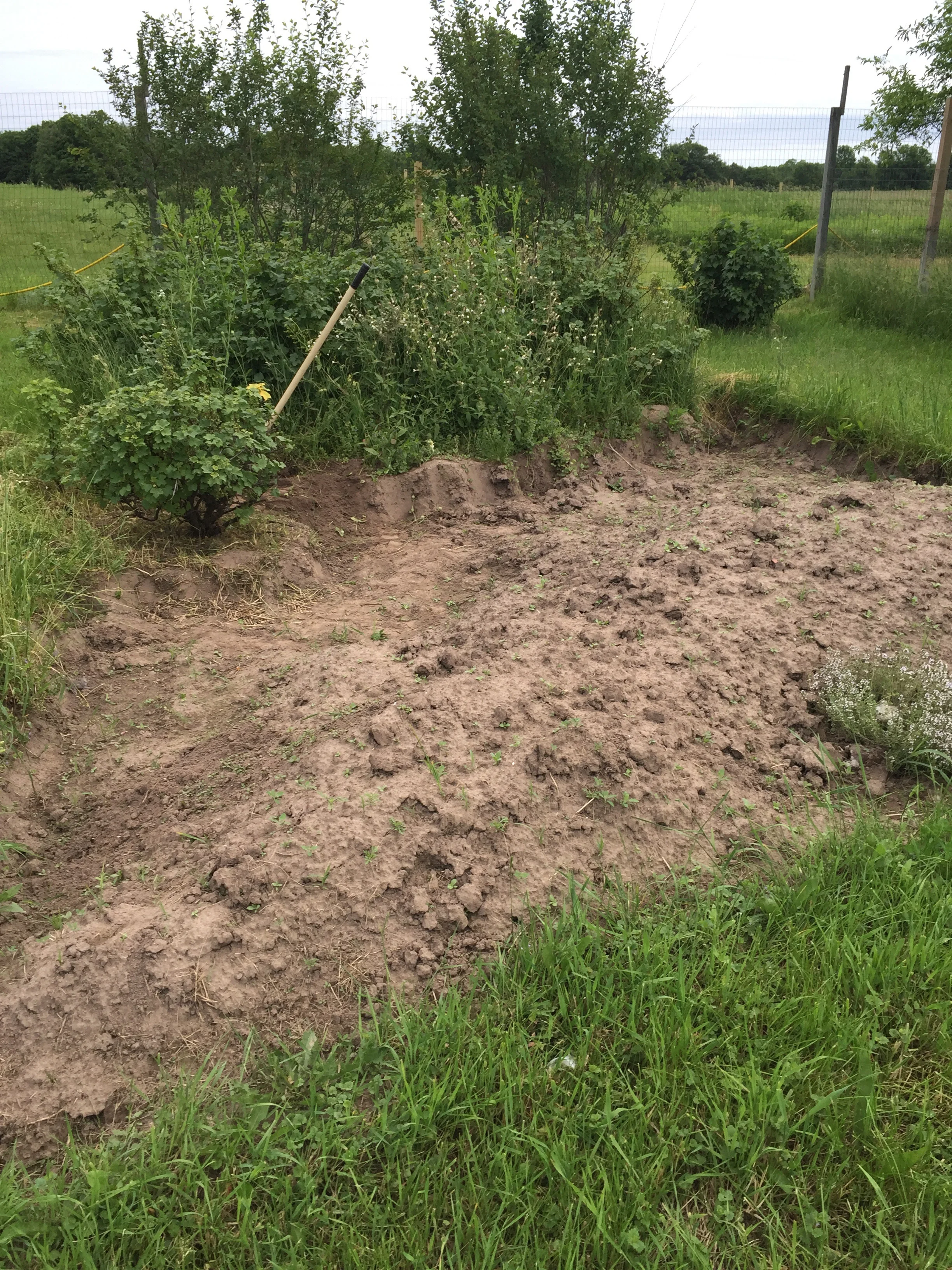
Our thyme wintered over, but like the currants, were getting lost in the weeds.

Where's Waldo?!?

Where's Waldo?!?

One of the many chores Michael tackled while I was building a shed in NM was to continue my feeble efforts to rescue the small garden.  

Mountains of dirt and fewer weeds!   

Mountains of dirt and fewer weeds!   

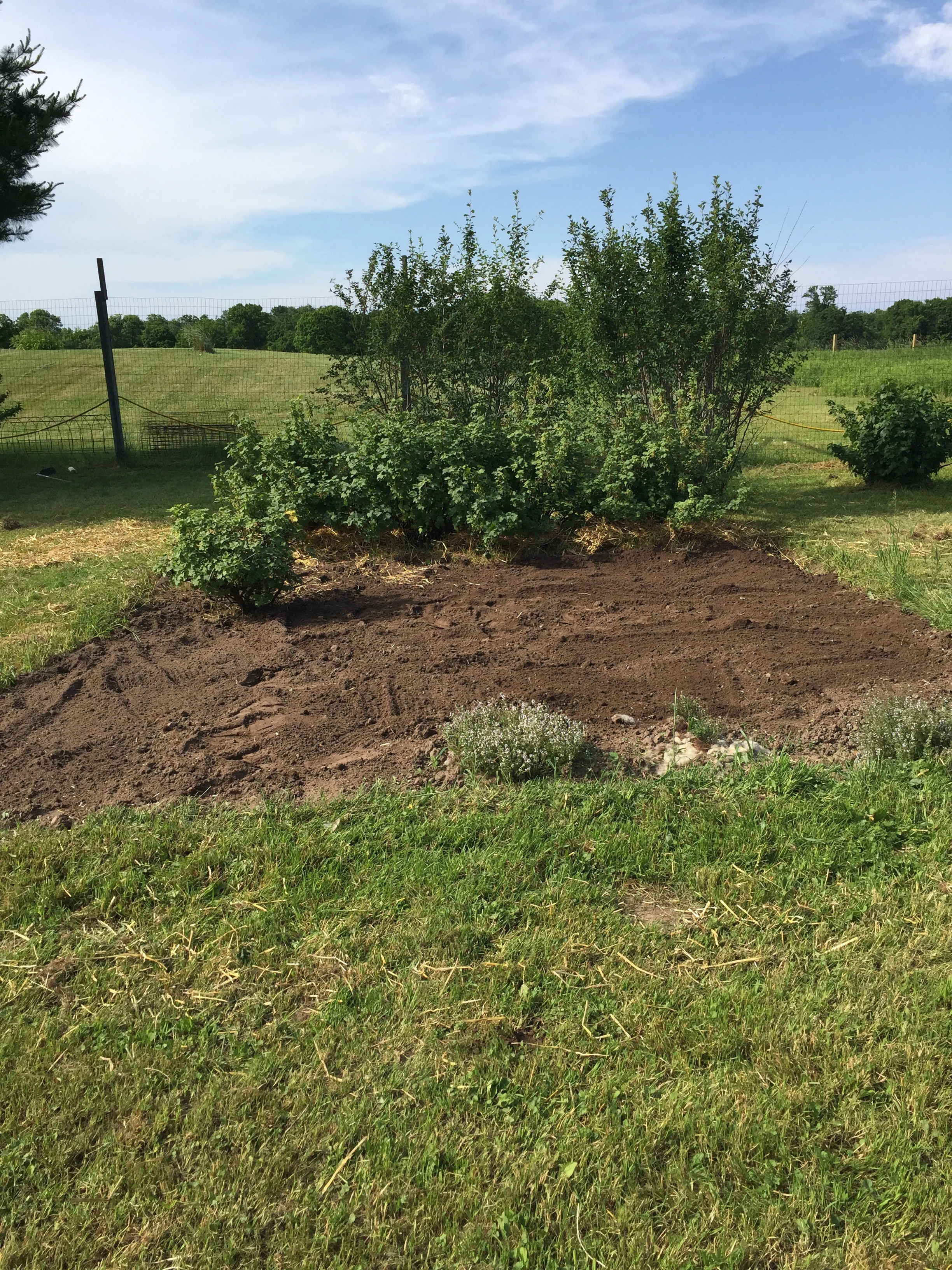
The currants were still drowned, so I tackled beating back the creeping Charlie and crab grass. Then Michael shoveled the dirt back and I raked.  

Voilà!  Ready to be planted tomorrow.  

Voilà!  Ready to be planted tomorrow.  

Garden journal: beating back the jungle

Our thyme wintered over, but like the currants, were getting lost in the weeds.

Where's Waldo?!?

Where's Waldo?!?

One of the many chores Michael tackled while I was building a shed in NM was to continue my feeble efforts to rescue the small garden.  

Mountains of dirt and fewer weeds!   

Mountains of dirt and fewer weeds!   

The currants were still drowned, so I tackled beating back the creeping Charlie and crab grass. Then Michael shoveled the dirt back and I raked.  

Voilà!  Ready to be planted tomorrow.  

Voilà!  Ready to be planted tomorrow.  

Fiber journal: knitting on the bias

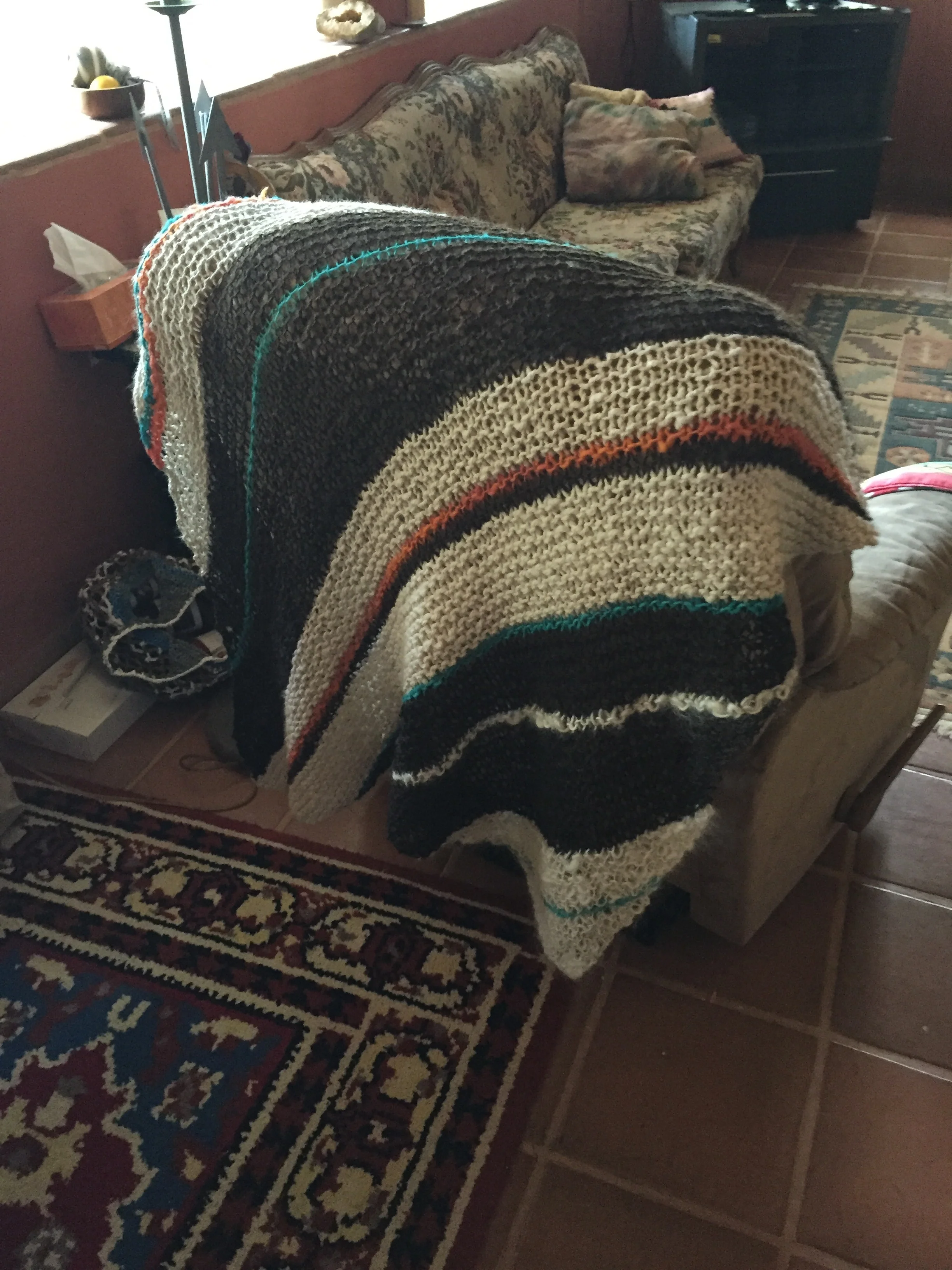
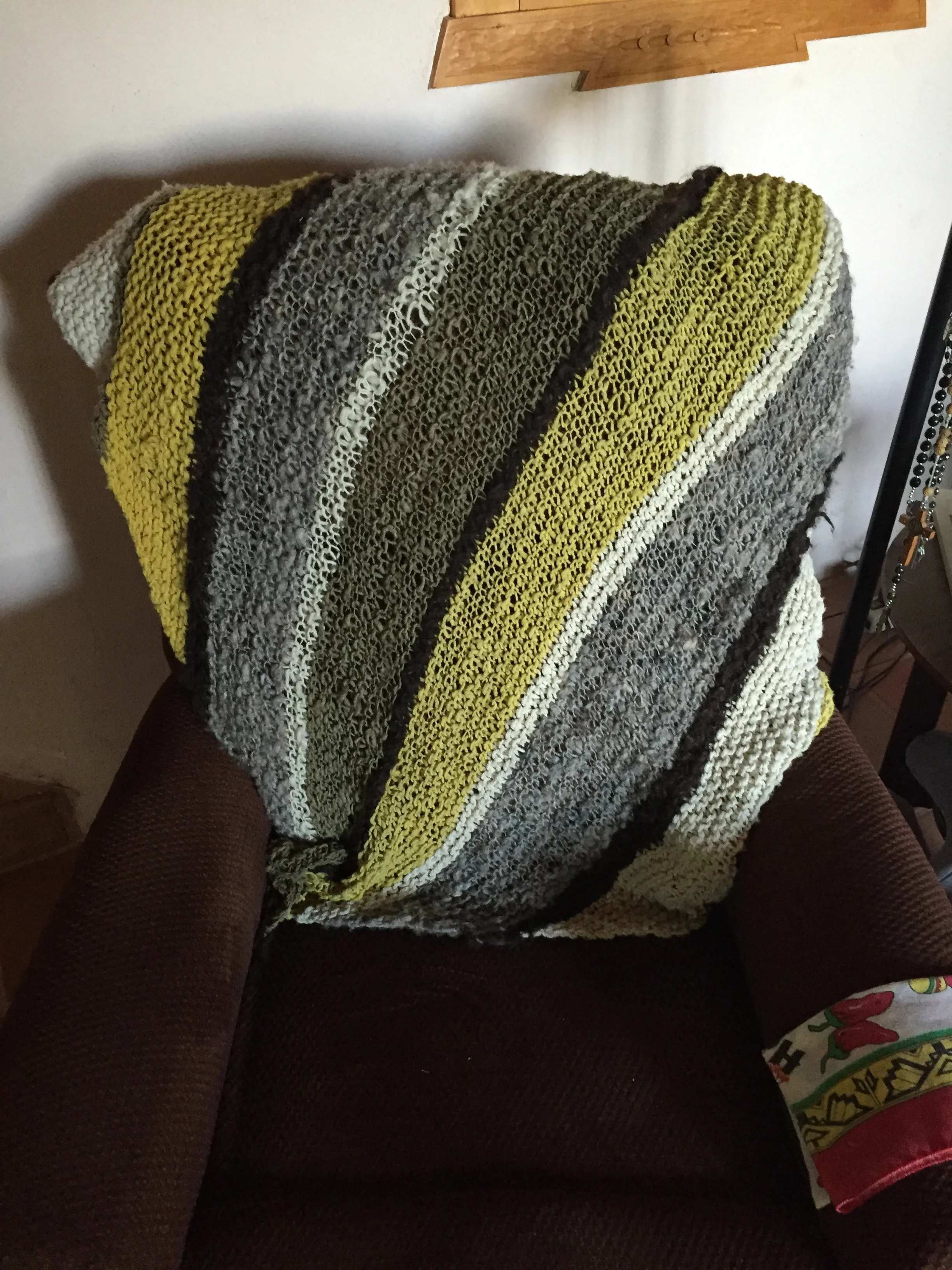
A couple of years ago I knit my parents some small blankets to keep them cozy while watching Westerns (or the news). I knit them on the bias as a design element.  

Grandma Clare's chair

Grandma Clare's chair

Papi's blanket

Papi's blanket

While I was knitting them, or even perhaps afterwards, I would drape them across my shoulders and think: "Oh, this would feel so good as a garment!"  It took me a while before I could indulge my craving, but I finally designed a vest knit on the bias. 

Same pattern different designs. My mom liked mine so much, I knit her one during my visit. It took a little longer to complete than the lawn mower shed. 

Same pattern different designs. My mom liked mine so much, I knit her one during my visit. It took a little longer to complete than the lawn mower shed. 

Little did I know that she had been experimenting with knitting on the bias as well!  

The green vest is made in 3 pieces and sewn together. My vests are knit in one piece and connected on the sides to form the sleeves.  

The green vest is made in 3 pieces and sewn together. My vests are knit in one piece and connected on the sides to form the sleeves.  

Knitting on the bias allows a garment to drape on the underlying figure, which means the vest fits short/tall/thin/voluptuous equally gracefully.   And yes, they are as wonderfully snuggly as I had hoped. 

I had some yarn left over from my projects, and so my cousin Mary picked out some colors and requested a hat, one that was just knit and could be pulled down over the ears. This is it: 

image.jpg

Now I'm back home and will devote time to writing appellate briefs, weeding the gardens and helping Michael install windows in the addition. 

Construction journal: spreading the love

We are taking a break from our regularly scheduled post about building a 40 acre farm in the 21st century to post news from another home base: my parents' house in New Mexico. I managed to lure my daughter and her husband to be here while I was visiting so we could do what we do wherever we go:  work on projects!  My papi's birthday is rolling around soon and he wanted a lawnmower shed.  


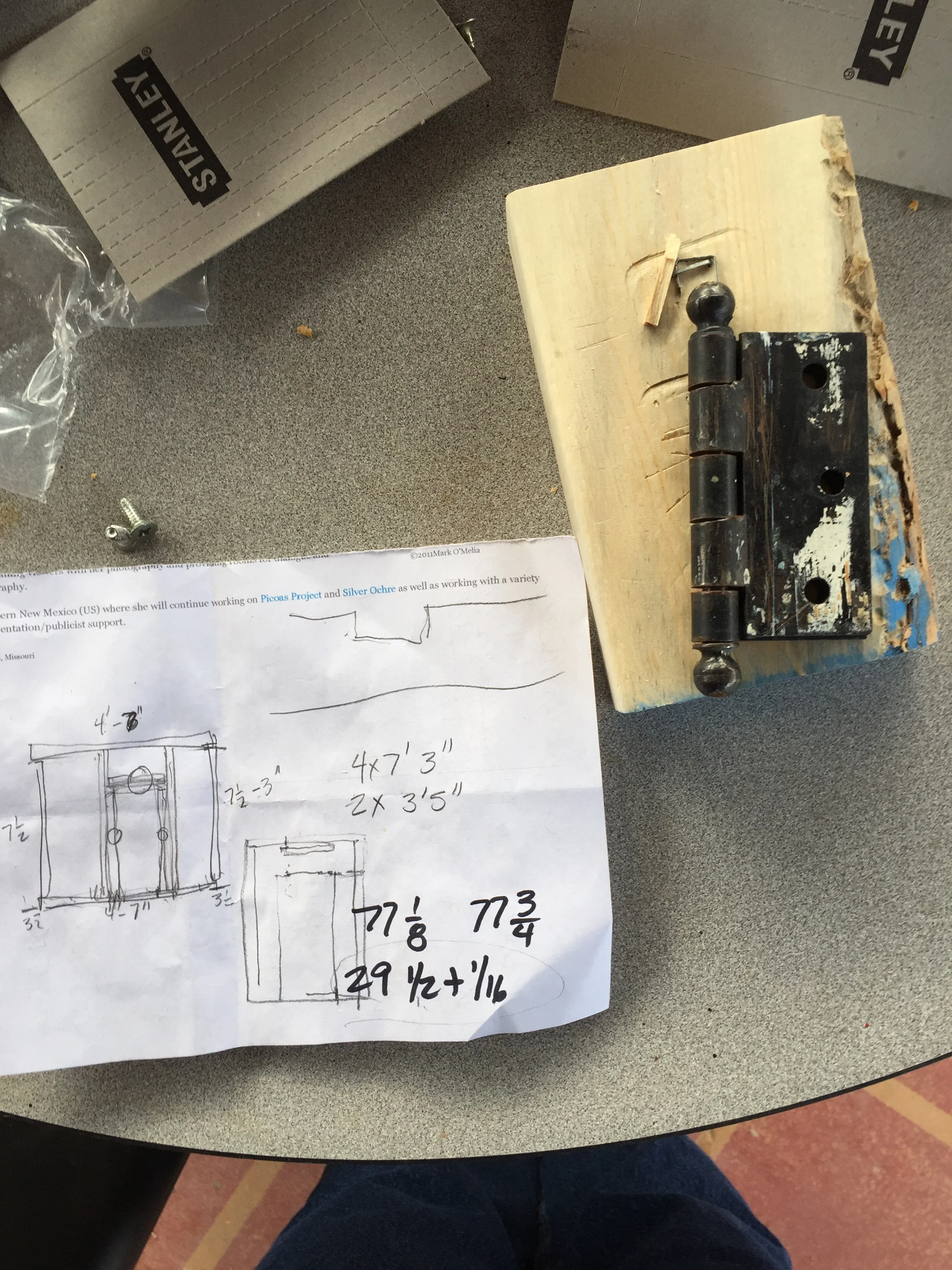
Always start with drawings. It helps consolidate and share the vision.  

Always start with drawings. It helps consolidate and share the vision.  

We rustled around and found some treated 2x4s to repurpose.  

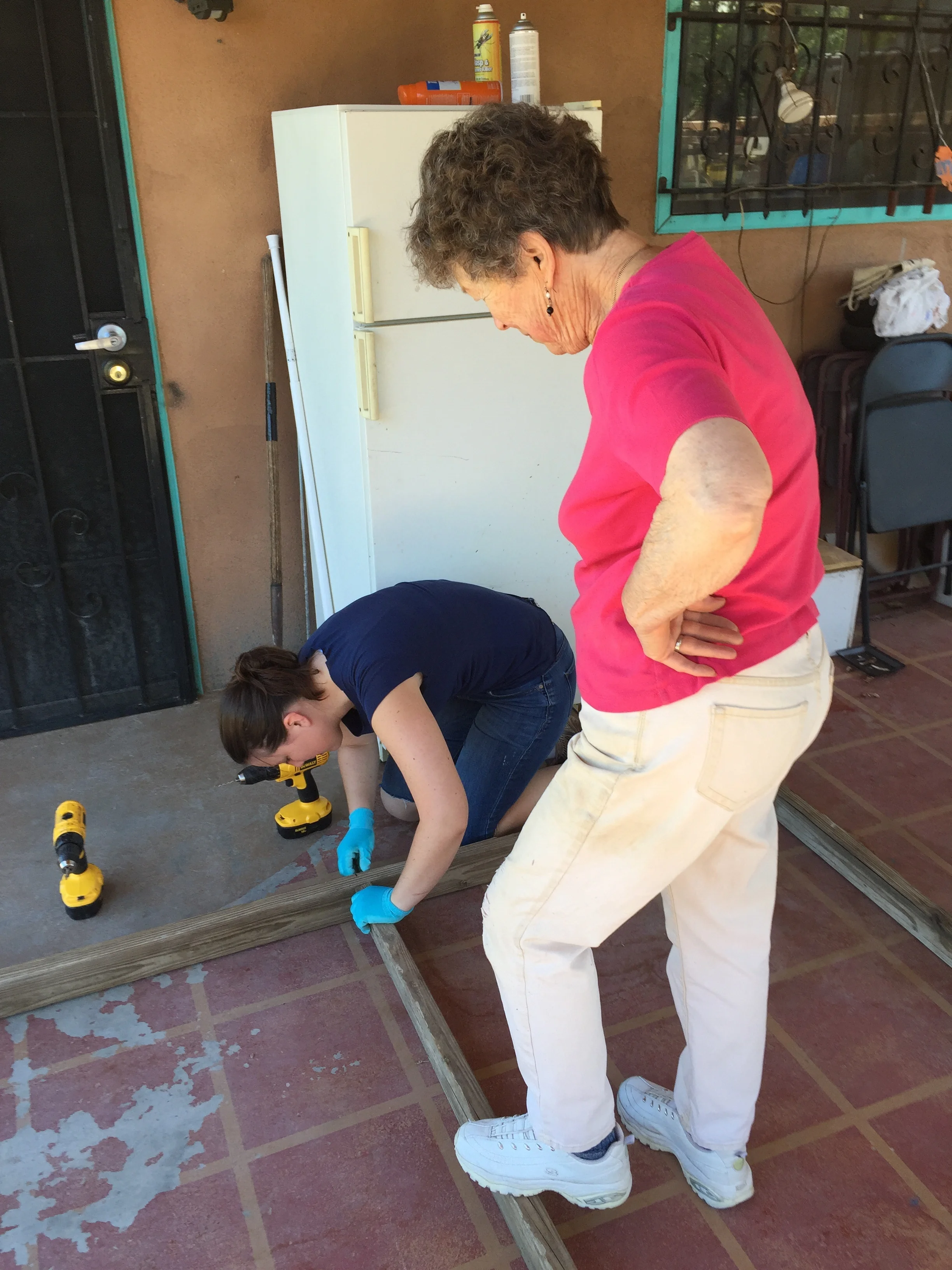
Framing a wall on the ground makes life easier. Having a flat space to work is a luxury. 

Framing a wall on the ground makes life easier. Having a flat space to work is a luxury. 

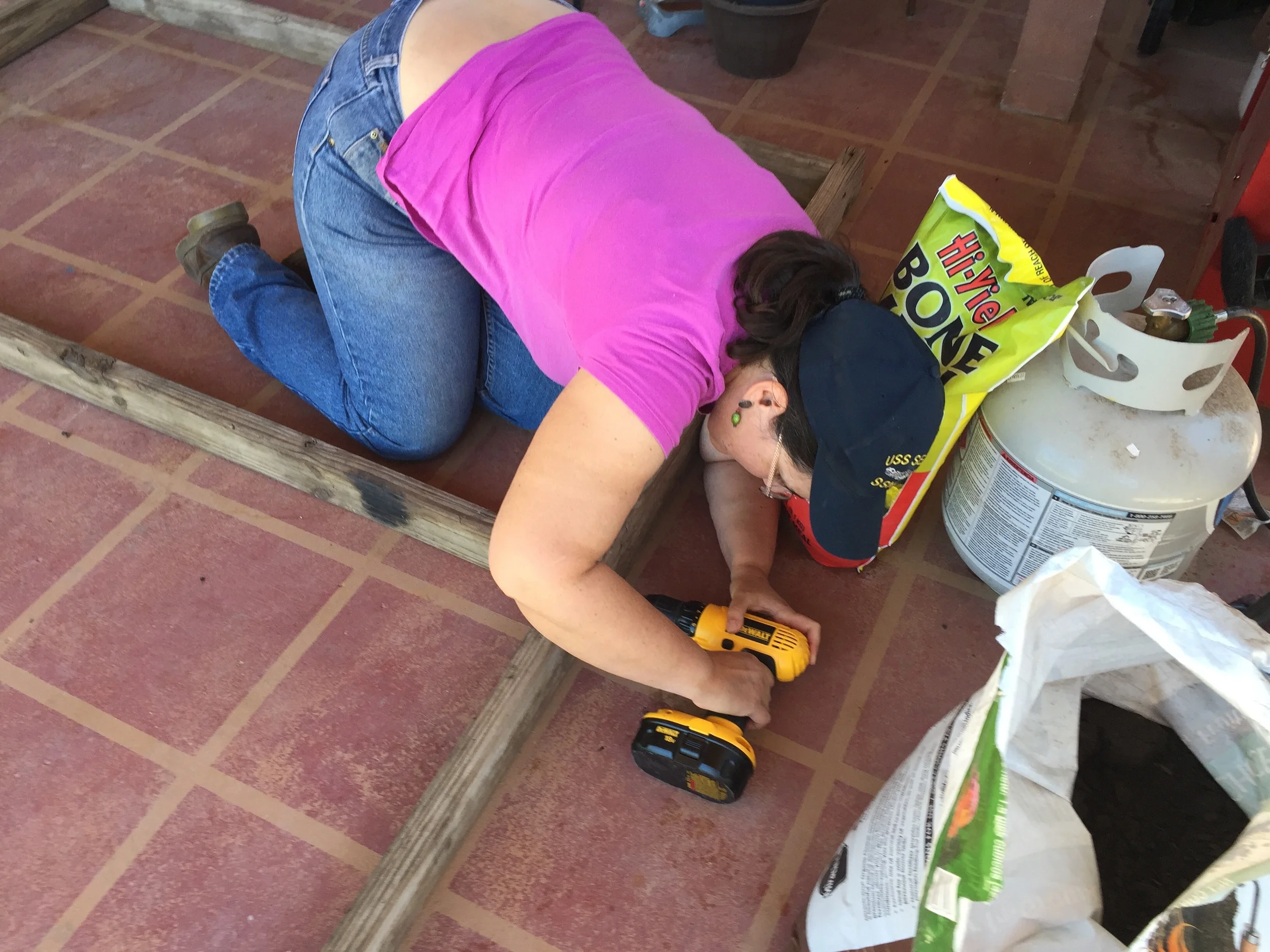
My mom had a wood working shop set up, which helped speed things along. 

Extra hands (and feet) also help in framing.  

Extra hands (and feet) also help in framing.  

We made all the walls before we put them up. We relied on the siding to be square...which it was!

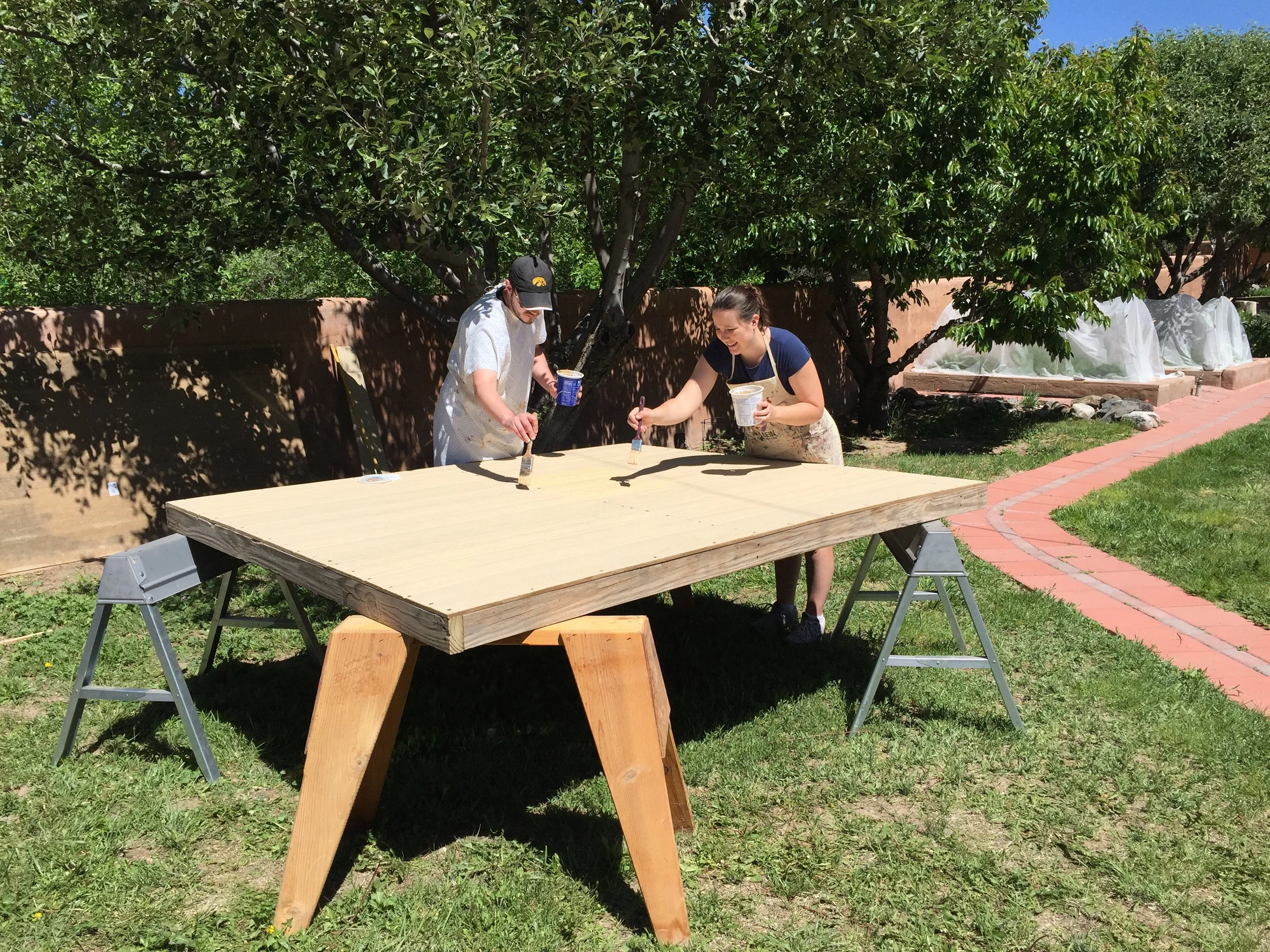
Painted the walls before raising them.  

Painted the walls before raising them.  

The roof went on and, by golly, the darn thing was square!  (No photos of wall raising-it took all hands!)

The tall guy with long arms got to fasten down the roof.  

The tall guy with long arms got to fasten down the roof.  

My papi picked up a door at the Restore and did an expert job replacing the hinges.  

Look and learn! 

Look and learn! 

And voilà: a lawnmower shed!  Happy Birthday Papi! 

A five day project  

A five day project  

Construction journal: putting family to work

Michael's brother Douglas recently retired from engineering car parts. He graciously volunteered to come and help with our building projects.  

Michael and Douglas closing off the top of the walls and installing soffit

Michael and Douglas closing off the top of the walls and installing soffit

Far be it from us to turn down an offer like that! So while I am off visiting with my parents (and thinking of undertaking a small construction project here), they are making progress! 

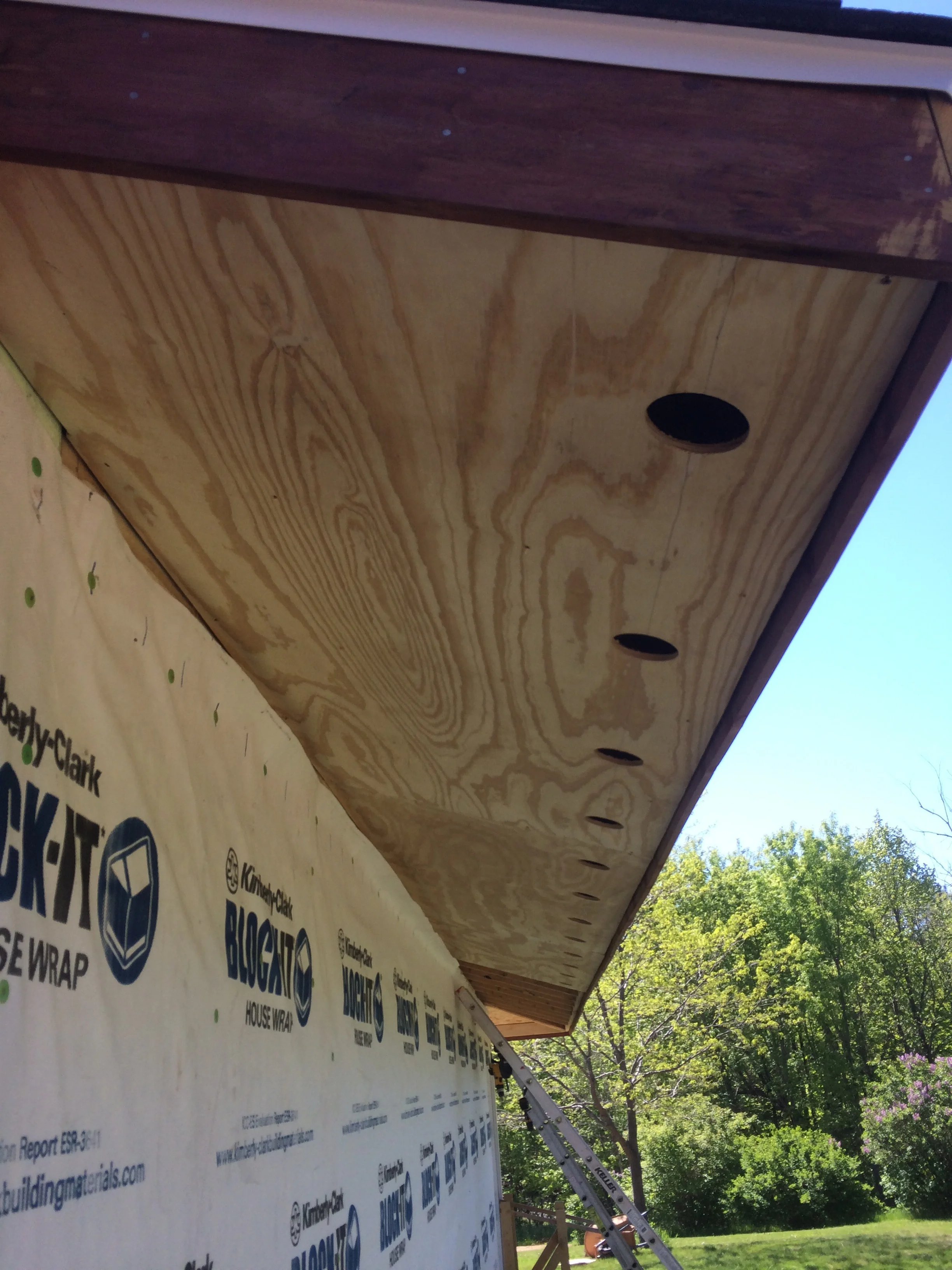
Holes are for round soffit vents

Holes are for round soffit vents

We are still in the midst of the agonies of ordering windows, but closing off the house from the elements is a step closer.  

Garden journal: repurposing fiber

Our gardening efforts have been hampered by cool trending to frosty temps. I did manage to rescue my thyme plants from the weeds and Creeping Charlie.  

Thyme with mufflers.  

Thyme with mufflers.  

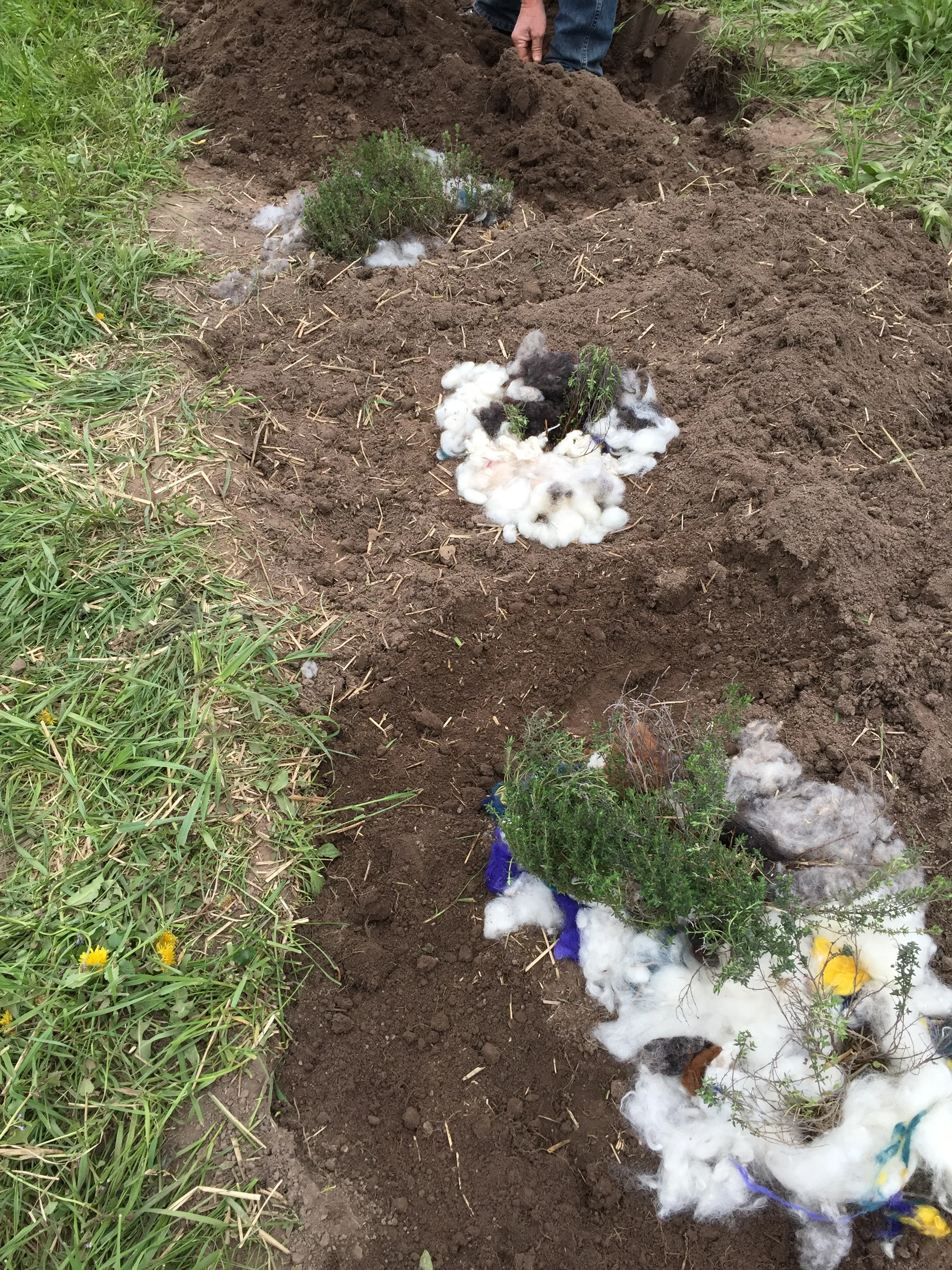
Michael had piled straw on top of them to help them survive the winter, but spring came, the straw was unpiled, and the weeds were not suppressed. I have been saving the snarly parts of my fleeces, as I've heard wool makes good mulch. I am willing to give it a whirl!  

Updating the garden progress: the onions are up but the potatoes are not. The lettuce is showing, but the spinach is suffering from cut worms. We planted kale, carrots, peas and winter squash today. The volunteer squash on our compost heap succumbed to frost. It will frost again tonight. The ducks and chickens are feathering out and looking awkward.  

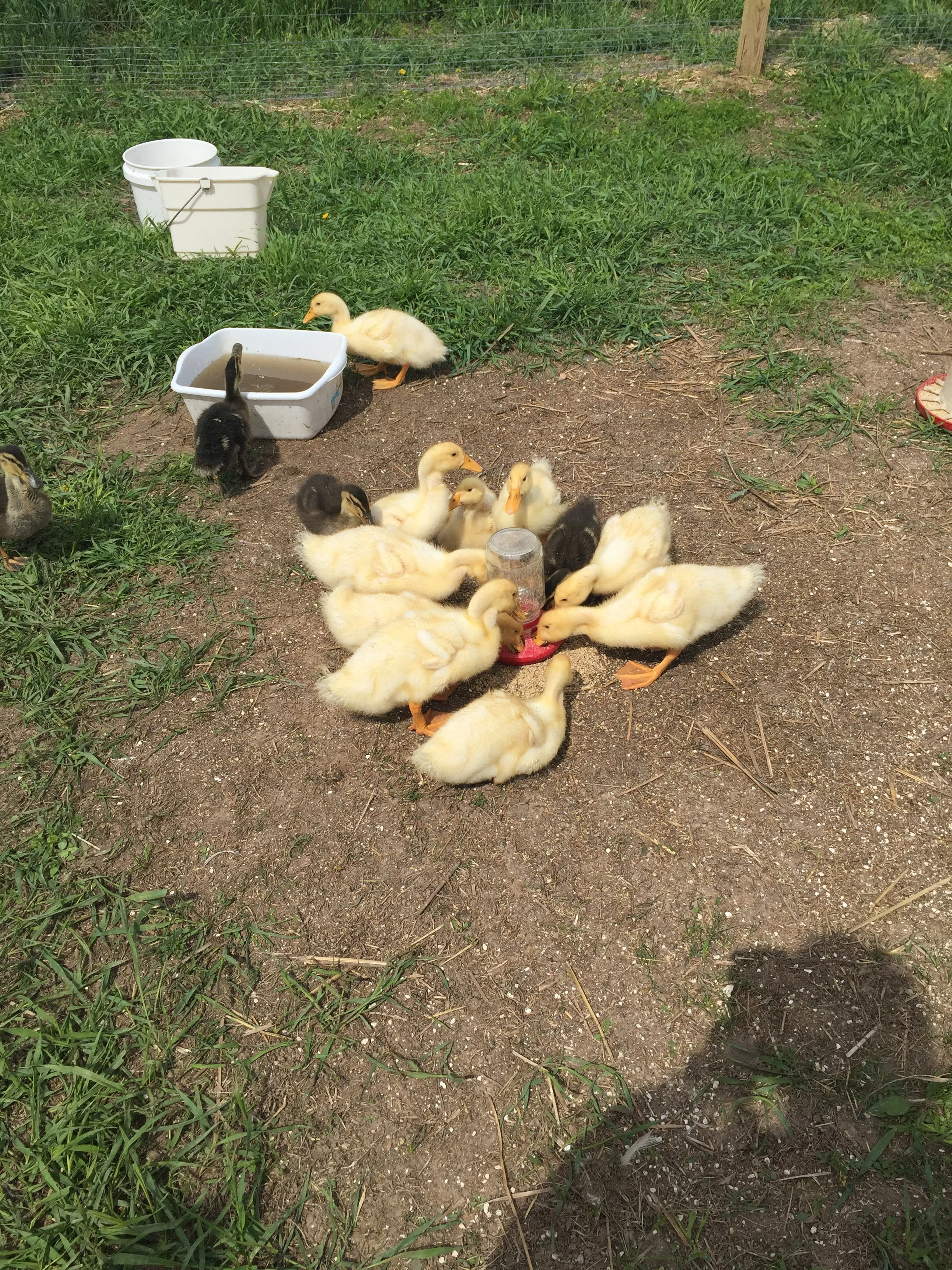
So excited to be eating again.  Two weeks old in this photo. 

So excited to be eating again.  Two weeks old in this photo. 

So much has happened in the past two weeks. We graduated a daughter from law school and I mostly wrote an appellate brief. We have been investigating windows for the addition.  We've celebrated Irene's 84th birthday and cleaned the house. And the lilacs and trillium are blooming. Ahhh.  

Gardening journal: transplanting the starts

Sunshine and 60° has inspired us to gets the starts in their second homes and get onions and potatoes in the ground.  

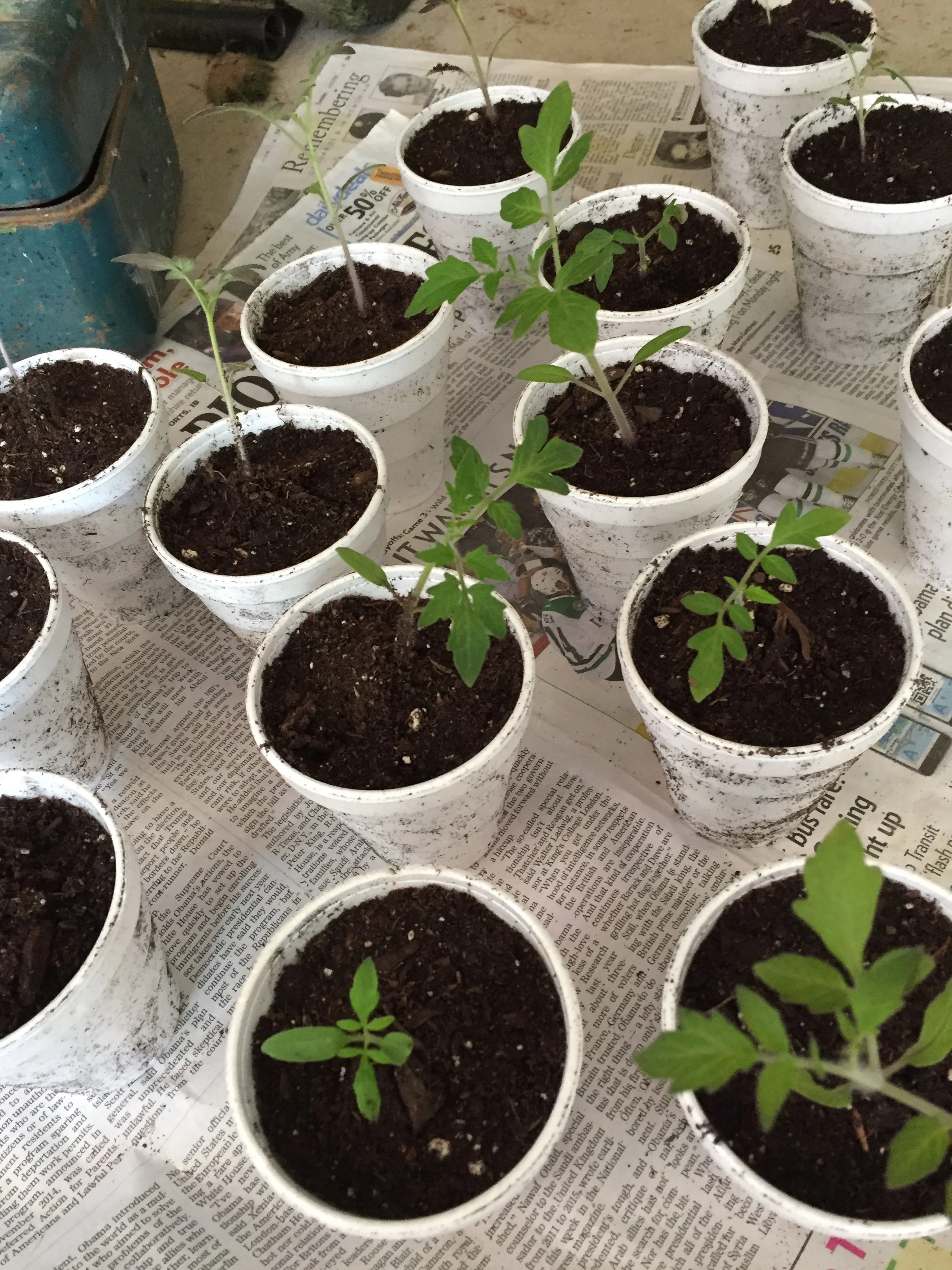
Before

Before

I like styrofoam coffee cups because you can cut off the bottoms and use the uppers for cutworm protectors.  

After

After

The wee birdies have outgrown their tubs as well, so Michael built brooding boxes for them in the coop.  

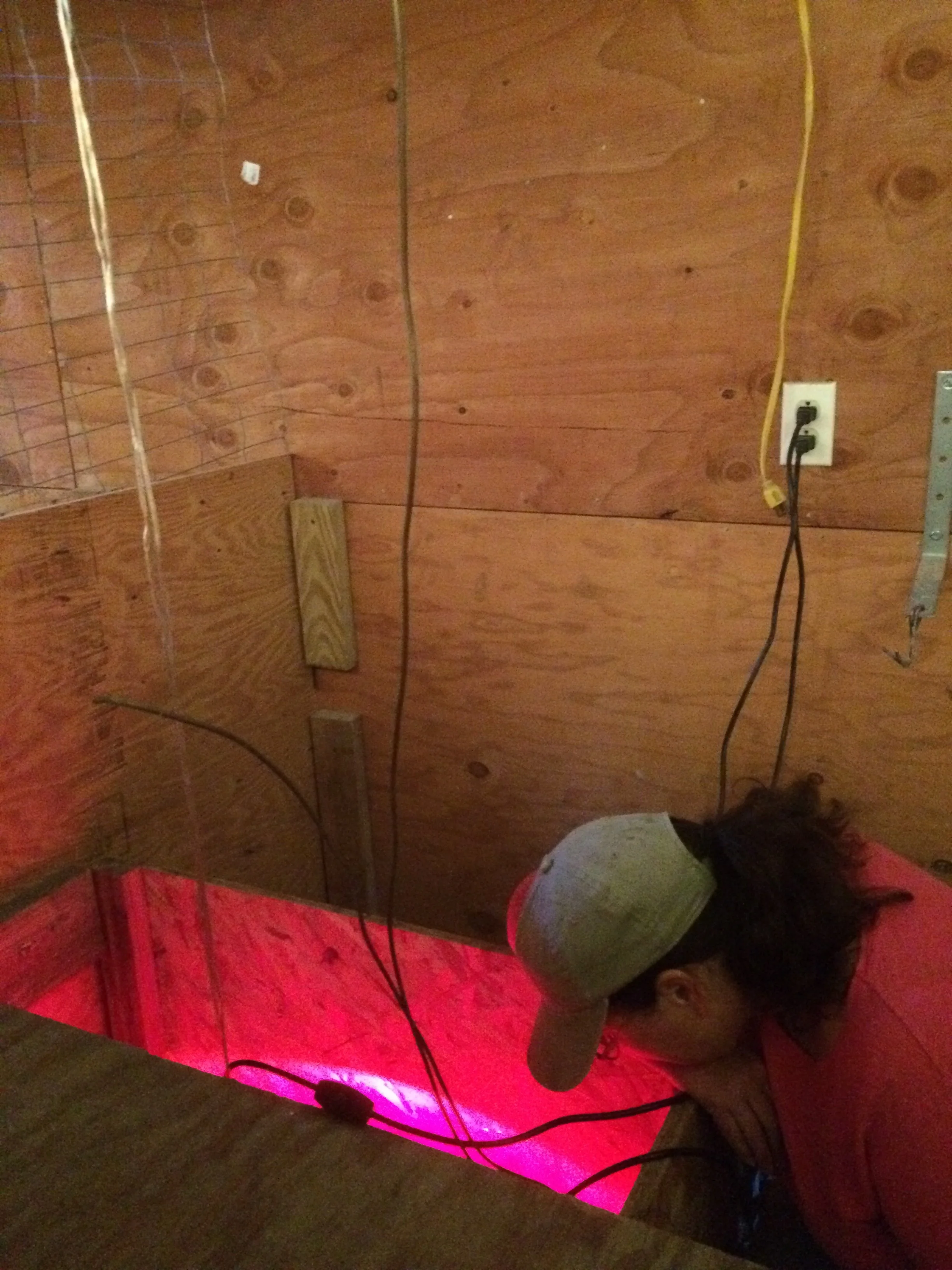
Checking on the chicks. 

Checking on the chicks. 

Yesterday we had help with cuddling the critters.  

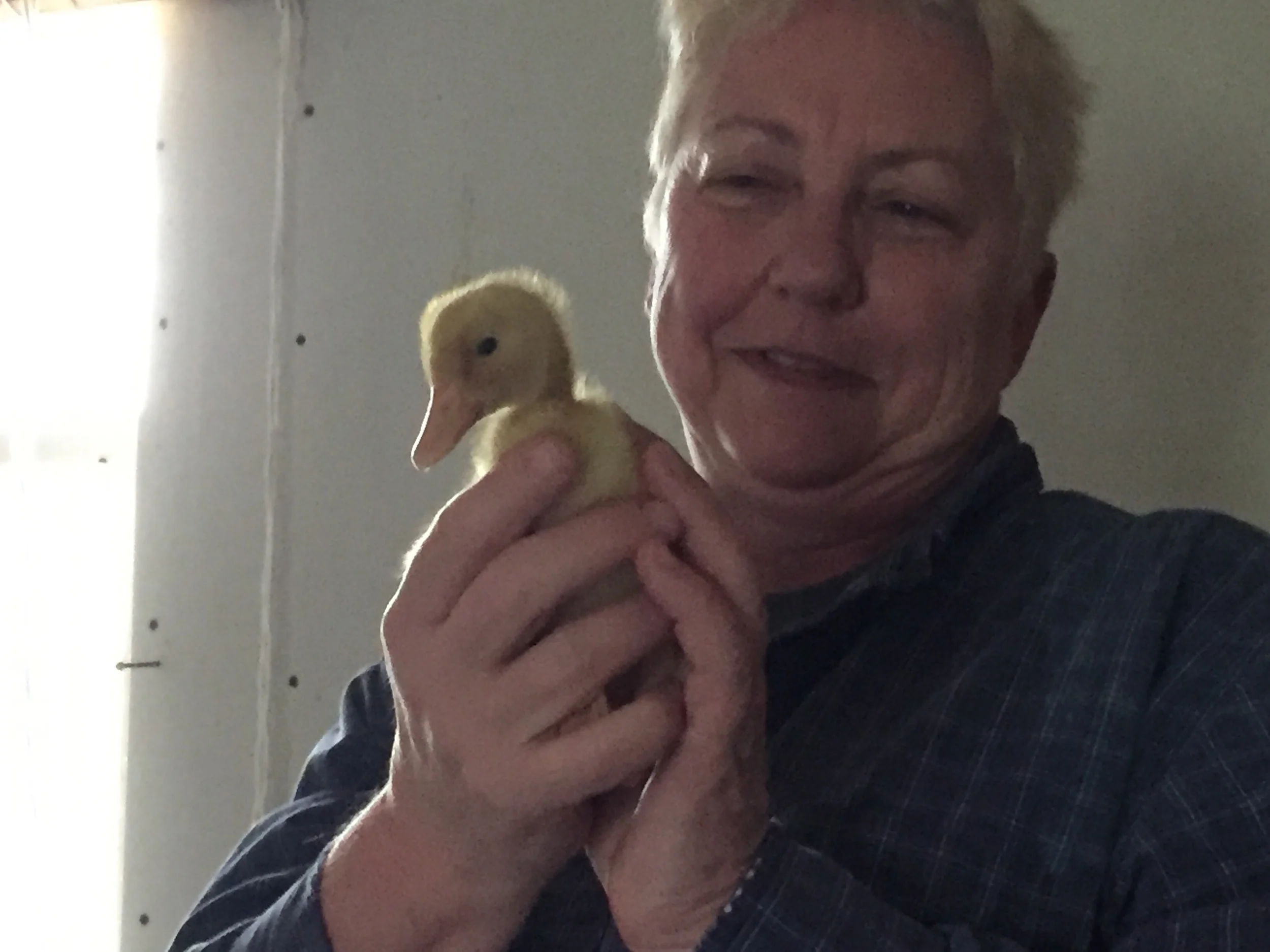
Nancy and Yellow Duckling # 5.  

Nancy and Yellow Duckling # 5.  

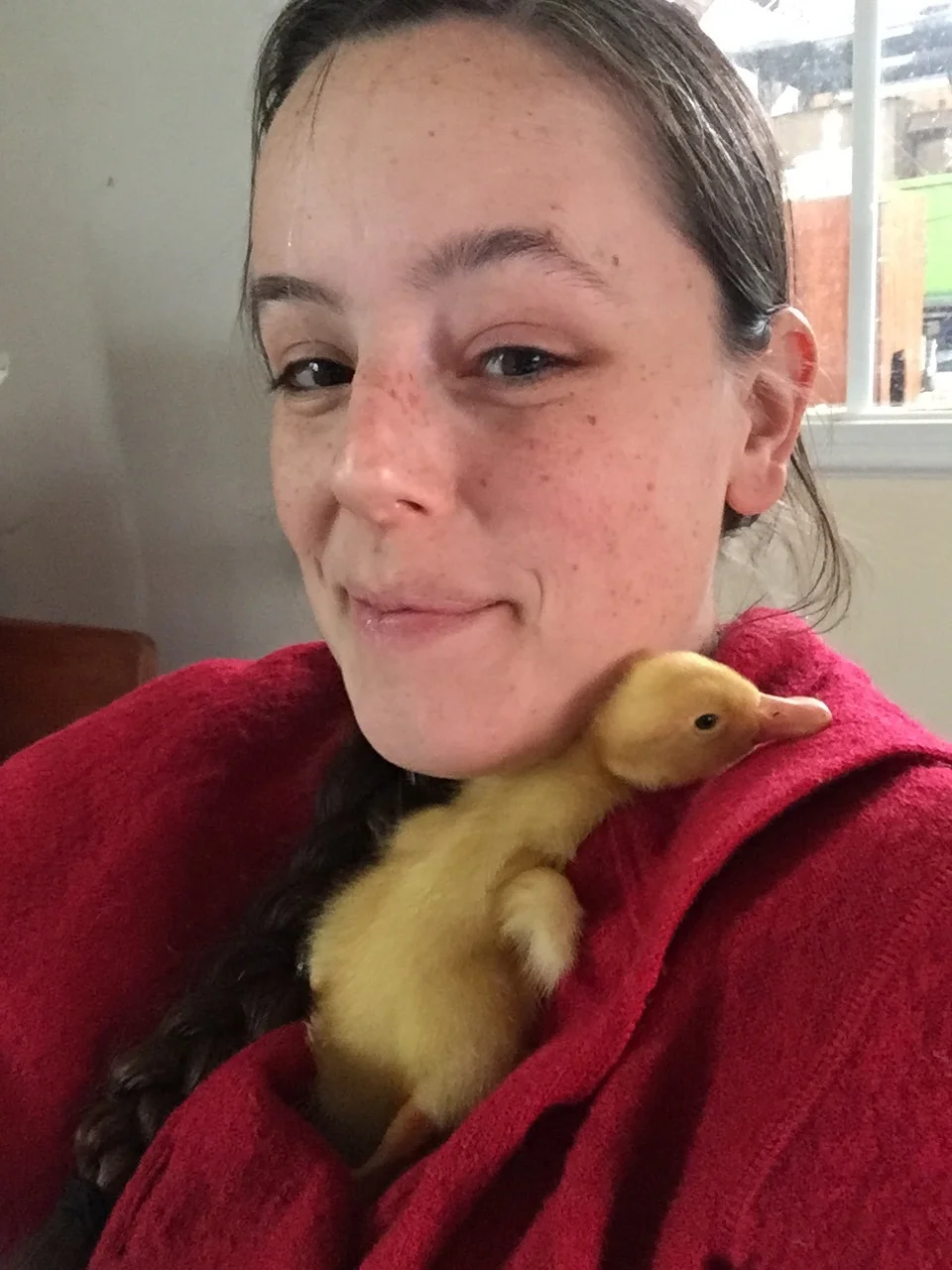
Artemis and Yellow Duckling # 2.  

Artemis and Yellow Duckling # 2.  

We will slowly harden off all our starts, moving the plants to tall-sided totes to protect them from the wind and slowly lowering the temperature on the birds and allowing them access to the rest of the coop before they get to venture into the fenced-in yard. Off to tuck in the potatoes now! 

Livestock journal: the new babies arrived today!

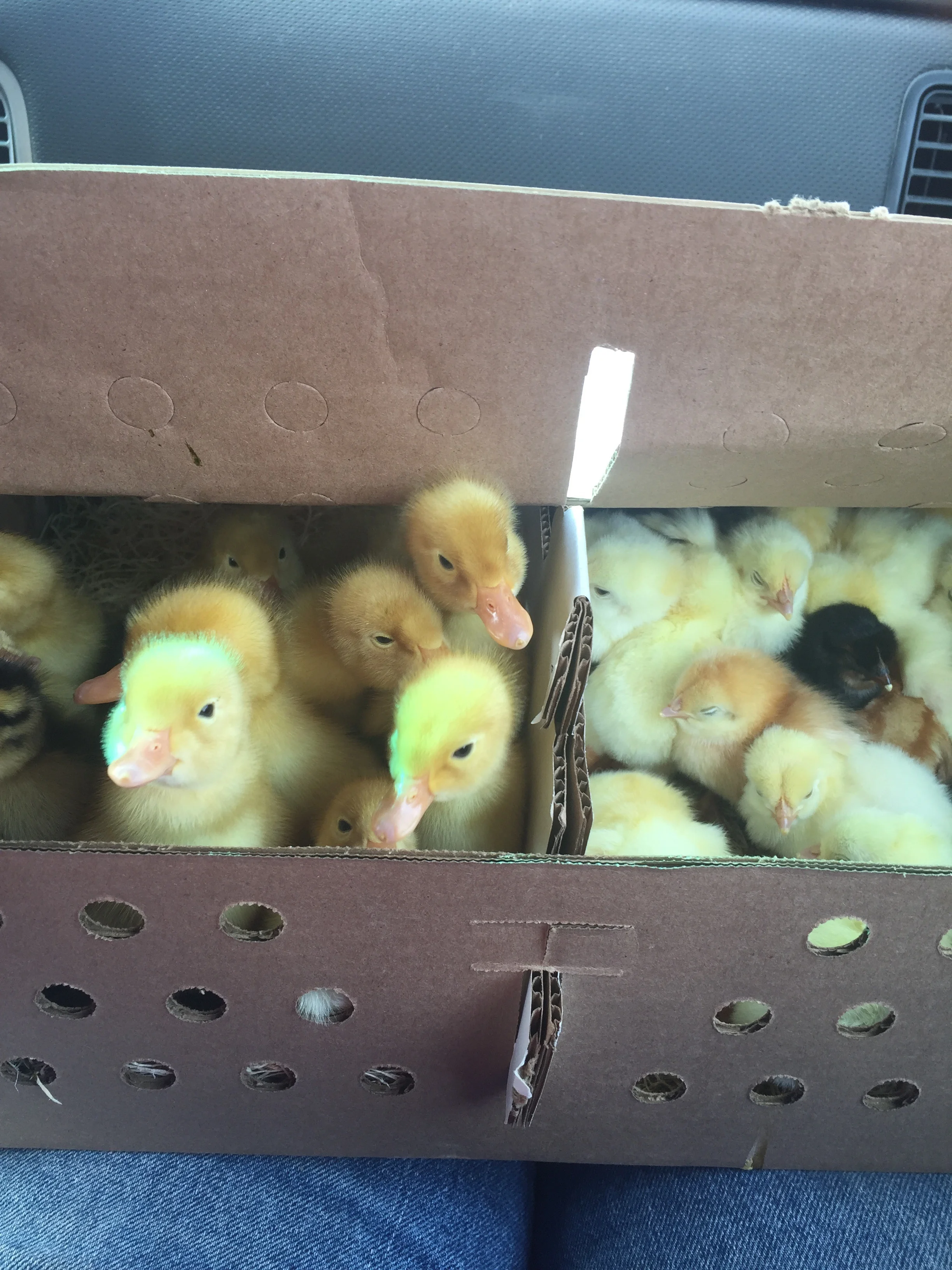
All in one box.  

All in one box.  

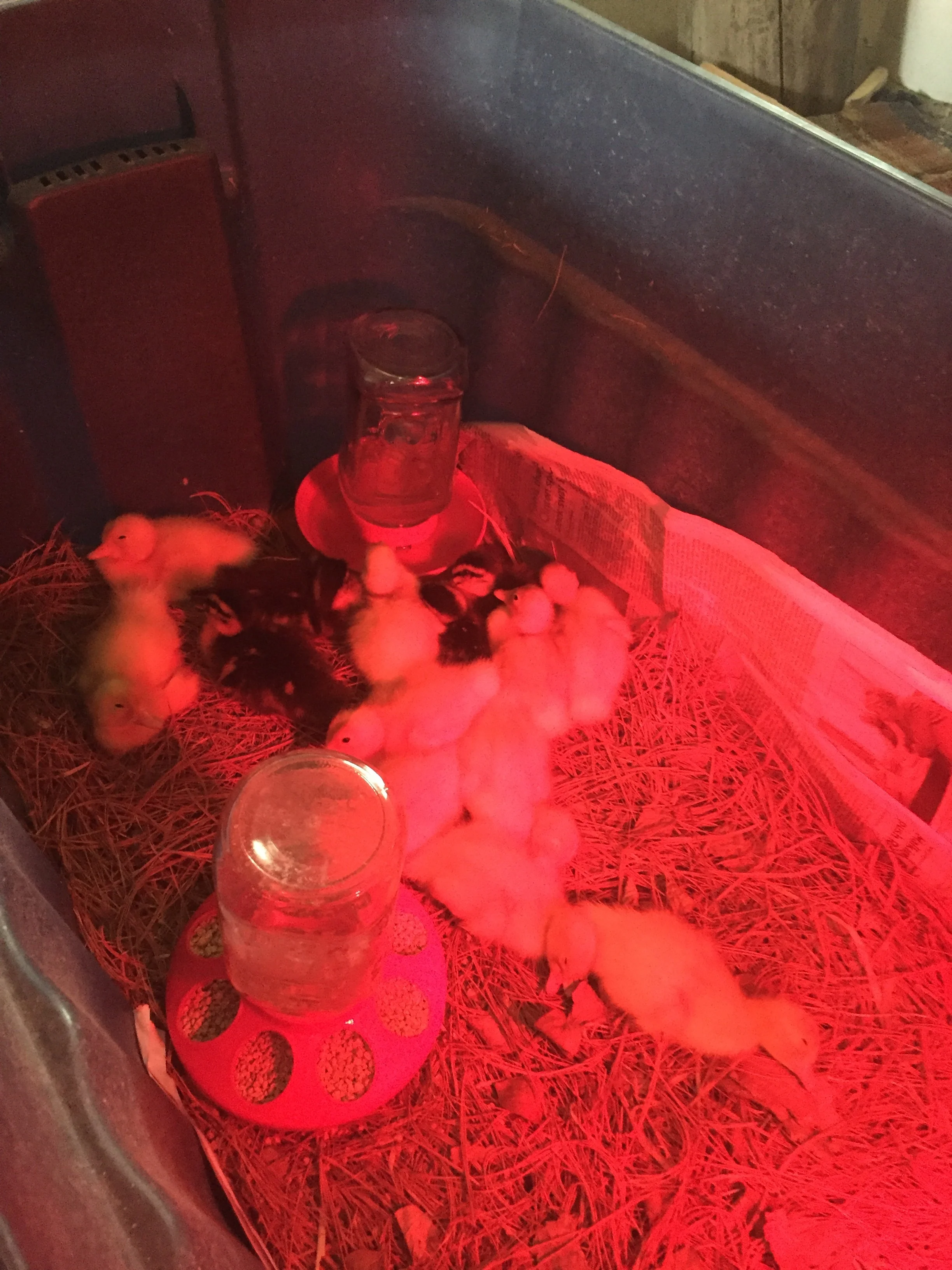
I received a call this morning at about 8:30 from the feed mill: our wee birds arrived!  15 minutes later I held a box of babies on my lap. We spirited them back home. We started preparing yesterday. Michael started a fire in the "guest room," I located the watering and feeding jars, and we put pine straw in the buckets. I've been sitting with the babies ever since. 

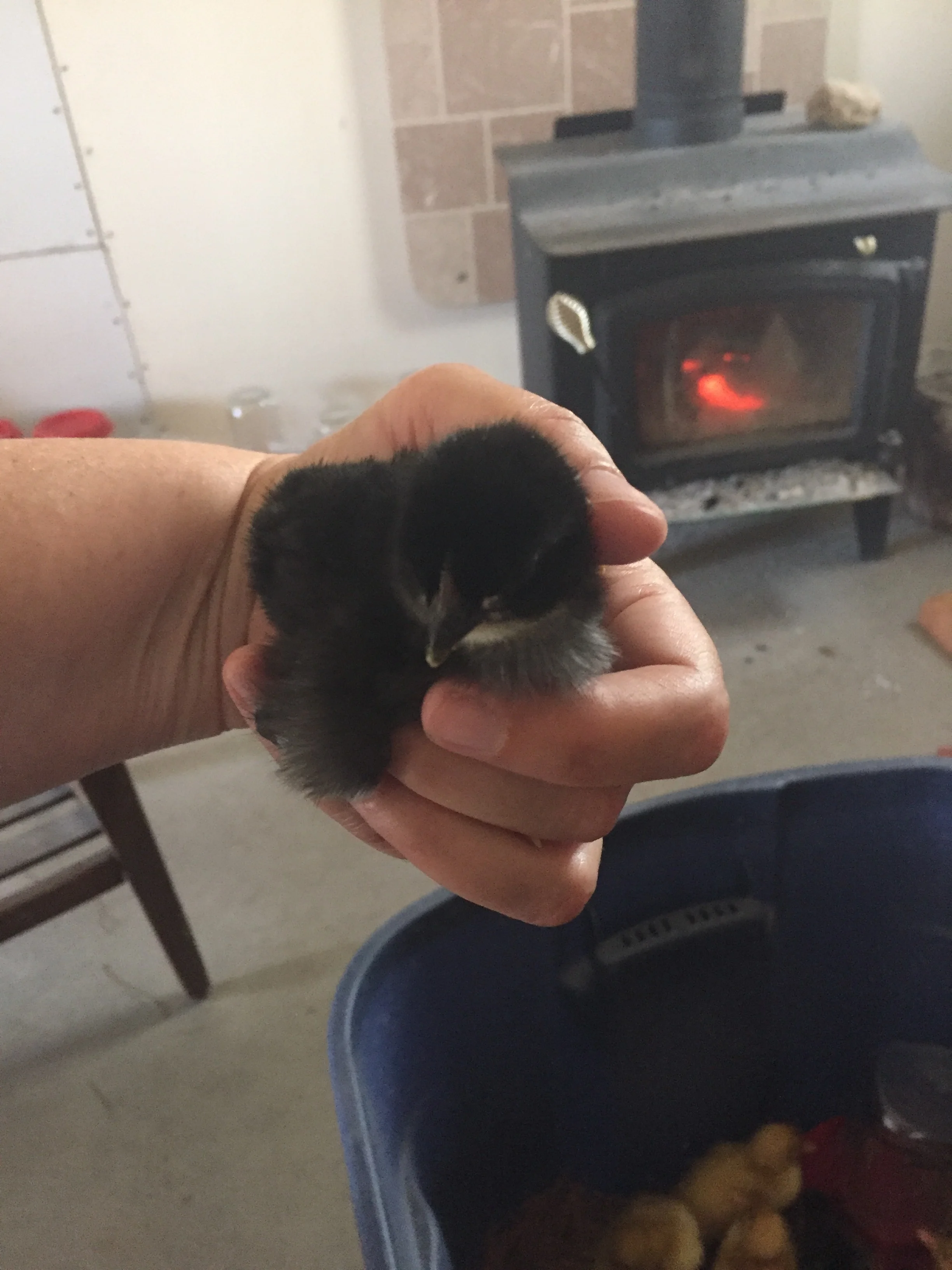
One of  the 8 black chicks we ordered. 29 chicks in all. Wood burning stove keeps the chicks comfy and me wishing I knew where my bathing suit is. We will keep them at 90° for a week. 

One of  the 8 black chicks we ordered. 29 chicks in all. Wood burning stove keeps the chicks comfy and me wishing I knew where my bathing suit is. We will keep them at 90° for a week. 

I dutifully dunked each beak in water as I transferred them to their bins. The chicks found their food without help, but the ducklings needed to be introduced to the feeder as they were trying to eat the dried leaves that came in with the pine straw. 

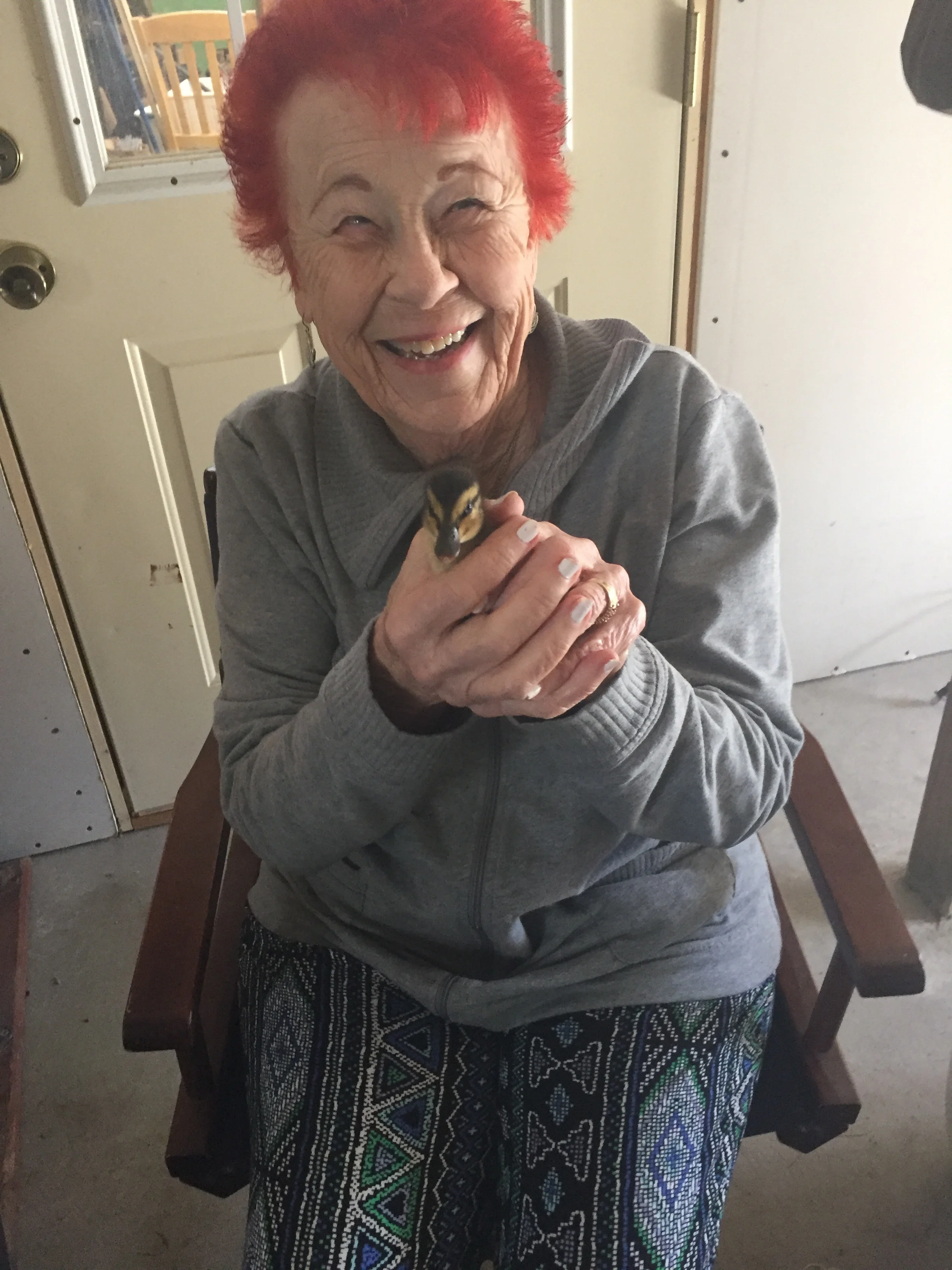
Irene even came out to cuddle a duck. Last year she wouldn't even look at them. Over winter, when the birds were closer to the house, she started to become fond of them.  

Irene even came out to cuddle a duck. Last year she wouldn't even look at them. Over winter, when the birds were closer to the house, she started to become fond of them.  

I'm mainly hanging out to get the ducks accustomed to being handled (something that couldn't happen last year due to unforeseen emergencies), and to gauge how our lighting system is working. The lights will keep them warm over night when we may not tend the fire constantly. 

Sacked out. They eat, they drink, they poop, they keel over with sleep.  

Sacked out. They eat, they drink, they poop, they keel over with sleep.  

Half as many ducklings go through twice the amount of water as twice as many chicks.  Back to my spinning and singing with my birds.  

Construction Journal: hats...we love hats

And now our house has a red one! 

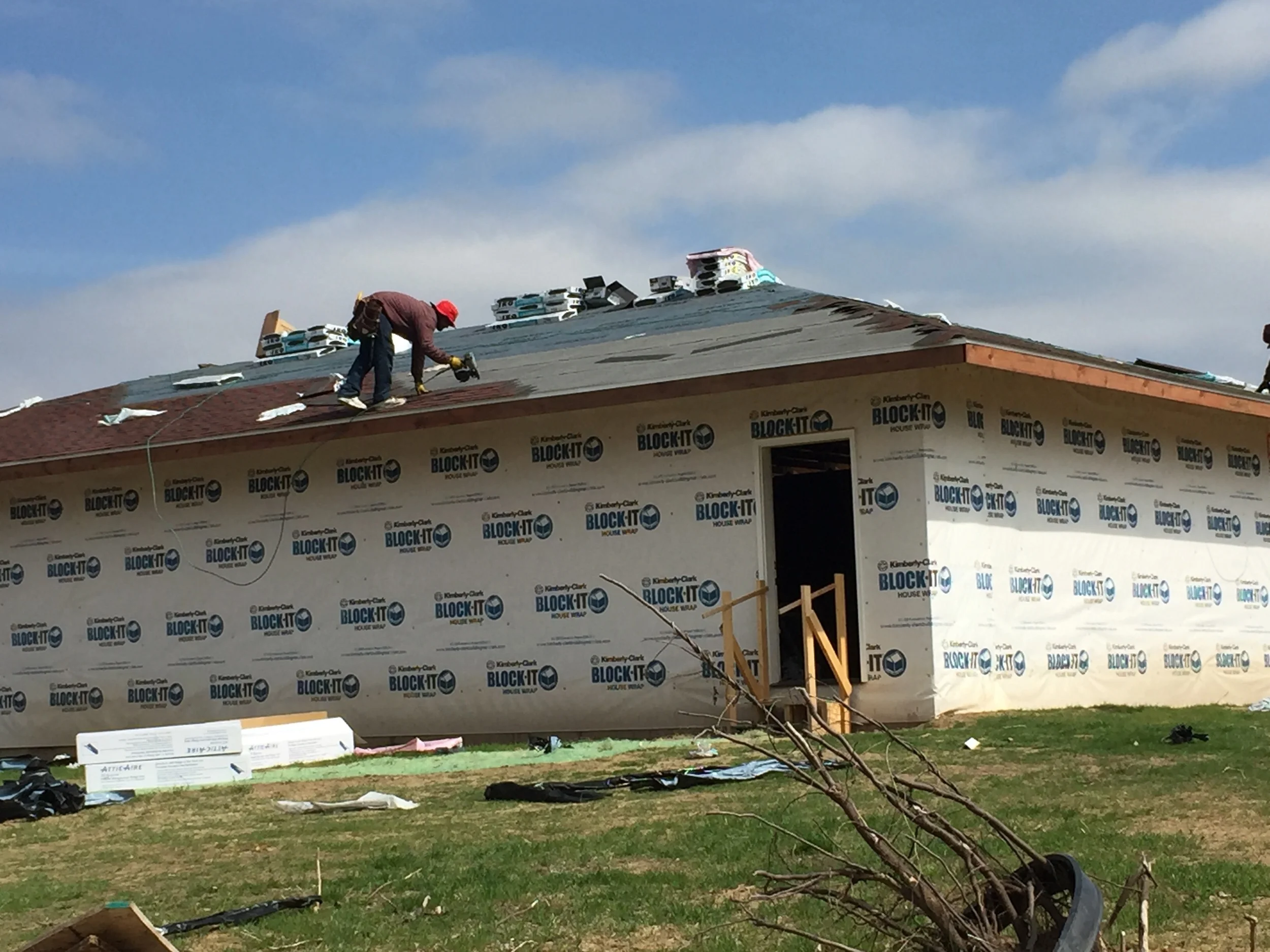
Done in one day...the advantage of hiring a contractor with a crew

Done in one day...the advantage of hiring a contractor with a crew

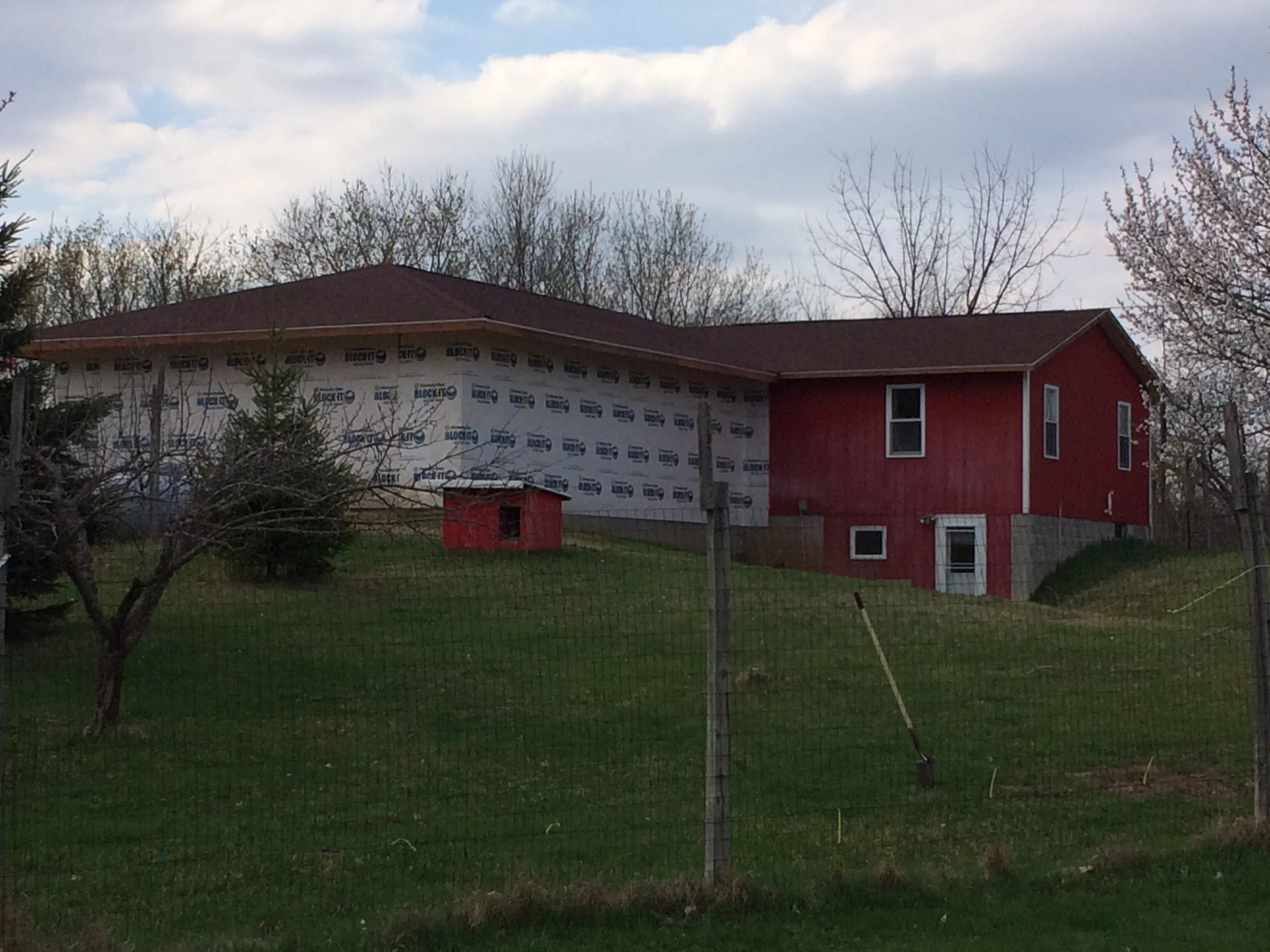
It rained yesterday. We had removed the tarp from the eaves at the beginning of this month in order to install/replace fascia boards.  It flapped in the wind and developed leaks. Better than nothing, but it was time to have a real roof...I was running out of buckets to catch the drips. The sheathing under the tarp had survived the winter without any noticeable harm. Whew. 

The house covered in a huge tarp

The house covered in a huge tarp

The addition lacked fascia boards and the old house had suffered from rotting boards. We had to get the fascia up before the roofers came because the drip edge goes over the fascia but under the shingles.  

That little silver strip is the drip edge. Things I never noticed before!

That little silver strip is the drip edge. Things I never noticed before!

The next stage will be installing windows and doors. Then siding. Then we can start on the interior.  We hope to have Irene in her new apartment by Christmas.  Then we can start to work on getting our living space in order. 

Garden journal: making the bed

Michael has been focused on getting our garden back in shape from its 8 years of laying fallow. He carted trailer loads of compost and dug it in to improve the soil when we lived in St. Paul. Then we moved to Maine for 8 years and the quack grass took back its own. Last year we broke sod and planted a garden again, beating back the quack in what felt like a losing battle.  

The main garden plot is in the middle left on this photo, which was taken in March.   Yes, it mostly looks like another part of the pasture. 

The main garden plot is in the middle left on this photo, which was taken in March.   Yes, it mostly looks like another part of the pasture. 

By this time last year, we had potatoes and onions in the ground. This year, we just finished spading up the garden as of yesterday. 

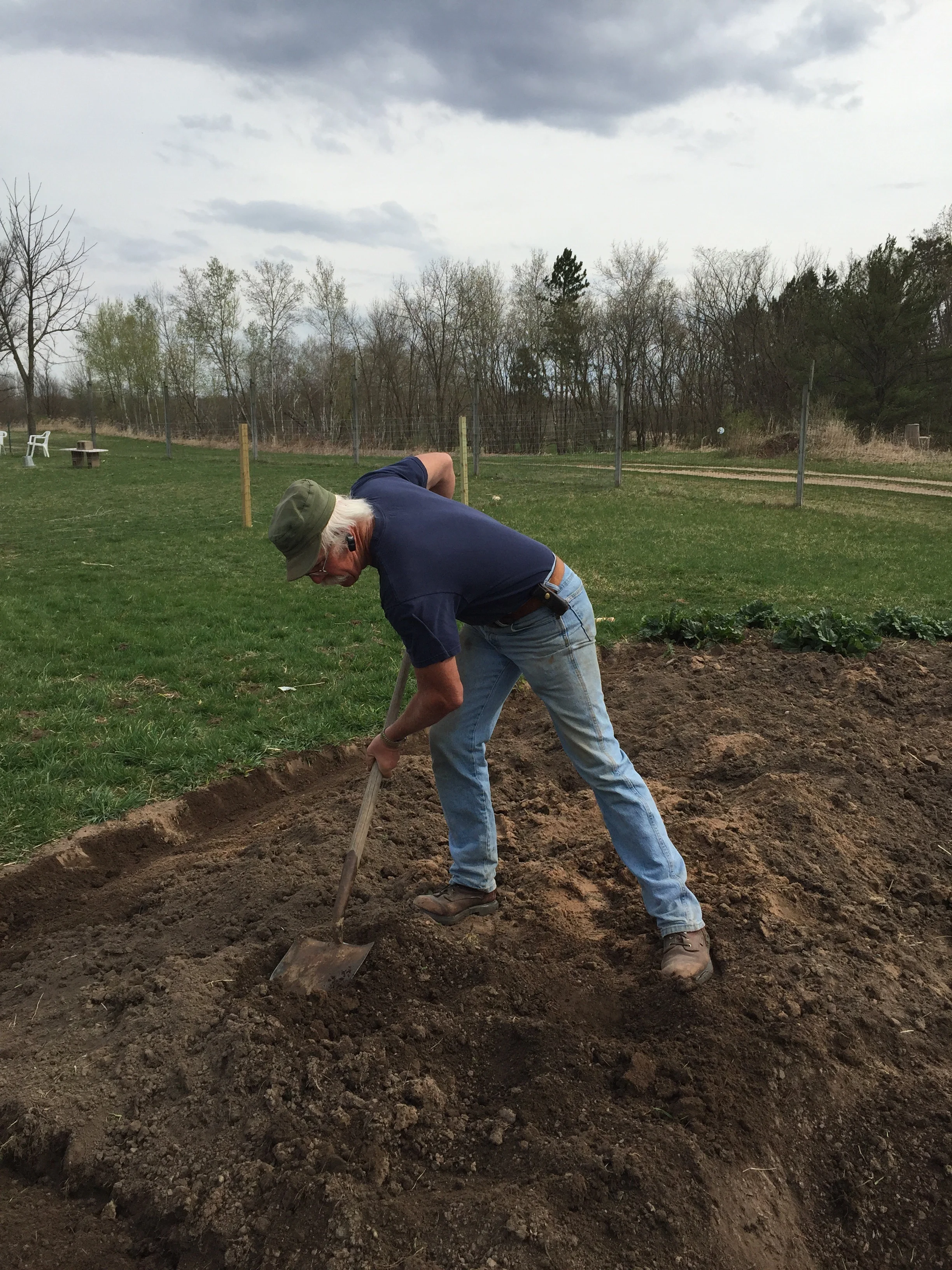
Michael, posing for an action shot. We were both too covered in dirt to take photos while in progress. Although I worked with Michael digging, he is much faster than I am and spaded 3/4 of the garden in the time I did the rest. 

Michael, posing for an action shot. We were both too covered in dirt to take photos while in progress. Although I worked with Michael digging, he is much faster than I am and spaded 3/4 of the garden in the time I did the rest. 

We had piles of sand left over from the basement project, which Michael repurposed into garden soil improver. We tend toward heavy clay here.  

The rototiller's first pass through spaded soil. 

The rototiller's first pass through spaded soil. 

We removed weeds and grass as we went. Michael had "saved" a bunch of soil by hanging sod on the fence diagonals last spring. It took winter to kill the quack roots. They are now safely back in the bed, adding organic matter where it is sorely needed. 

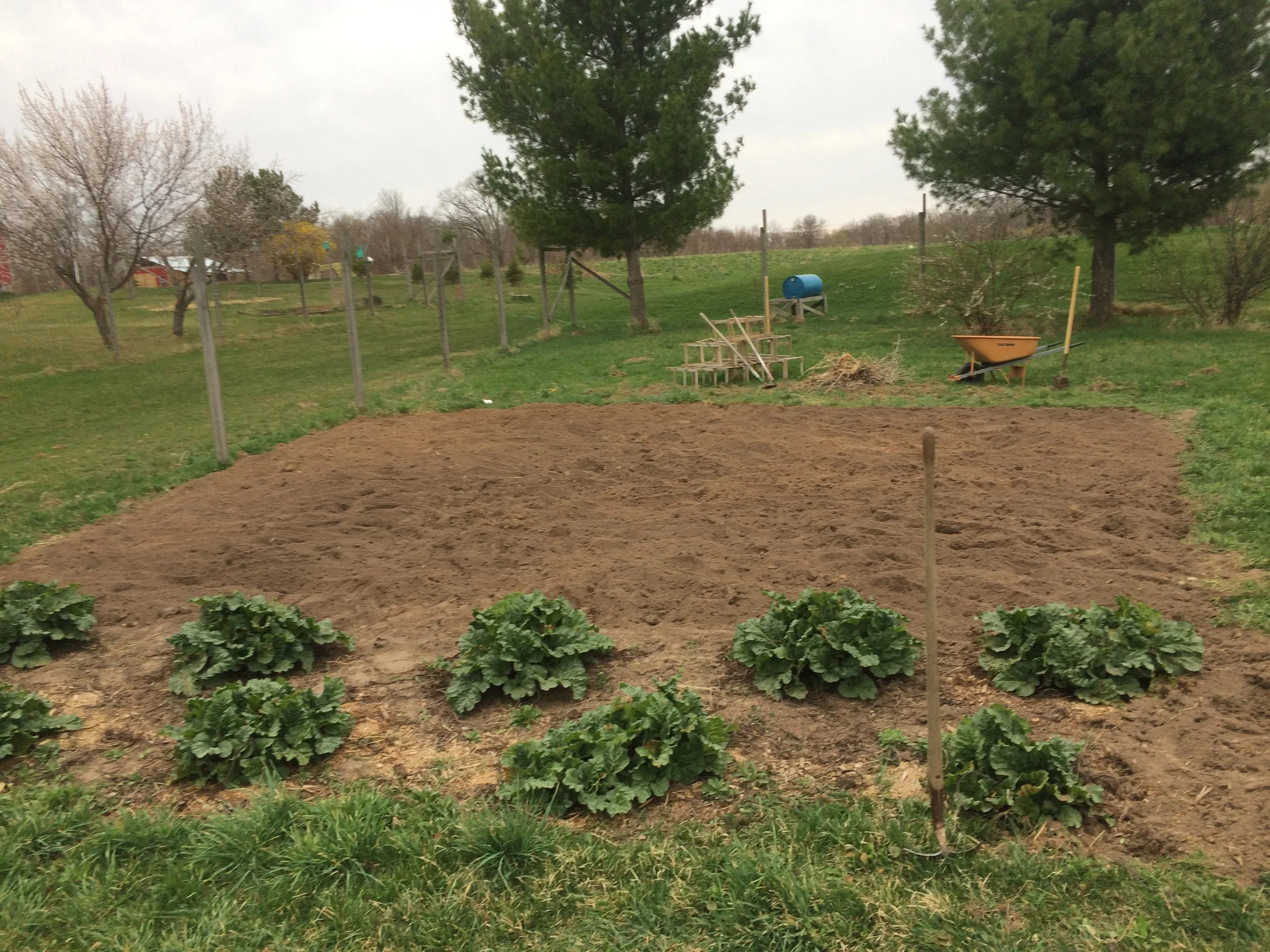
After the tiller.  Ready for planting!  We will have rhubarb for pie again soon. 
After the tiller.  Ready for planting!  We will have rhubarb for pie again soon. 
Today we go in search of Red Pontiac potatoes (the Kennebec are easy to find) and other seeds to sow. We have onion sets already, but will save those for a day it isn't raining.  


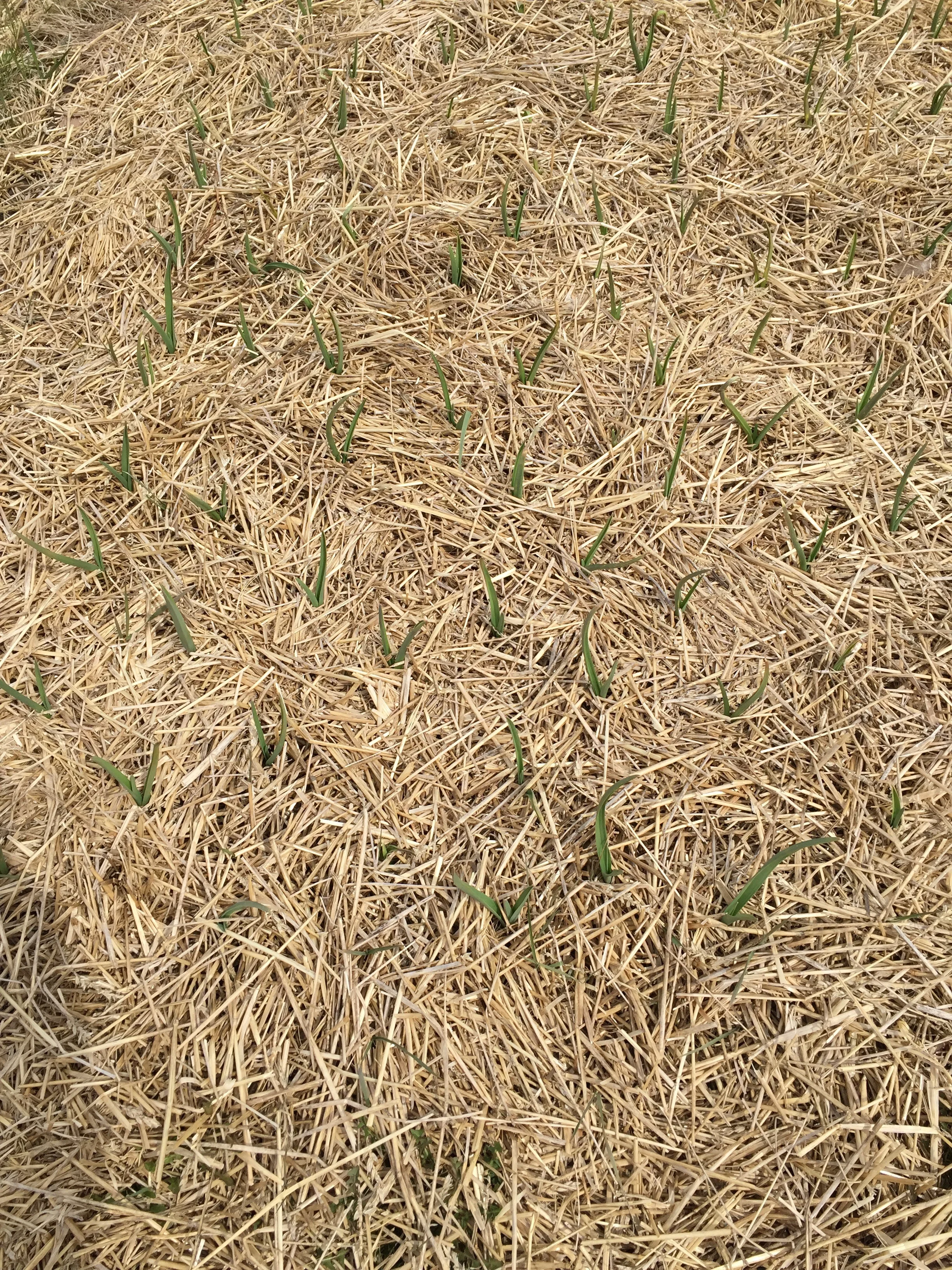
My garlic garden. I get to call it "mine" since I did the spading and planting on these small raised garden plots this past October. 

My garlic garden. I get to call it "mine" since I did the spading and planting on these small raised garden plots this past October. 

For the bonus photo of the day: the garlic is up and looking healthy.  

Springtime journal: on the day you were born, all the flowers decided to bloom

Today is my daughter Persephone's birthday.  

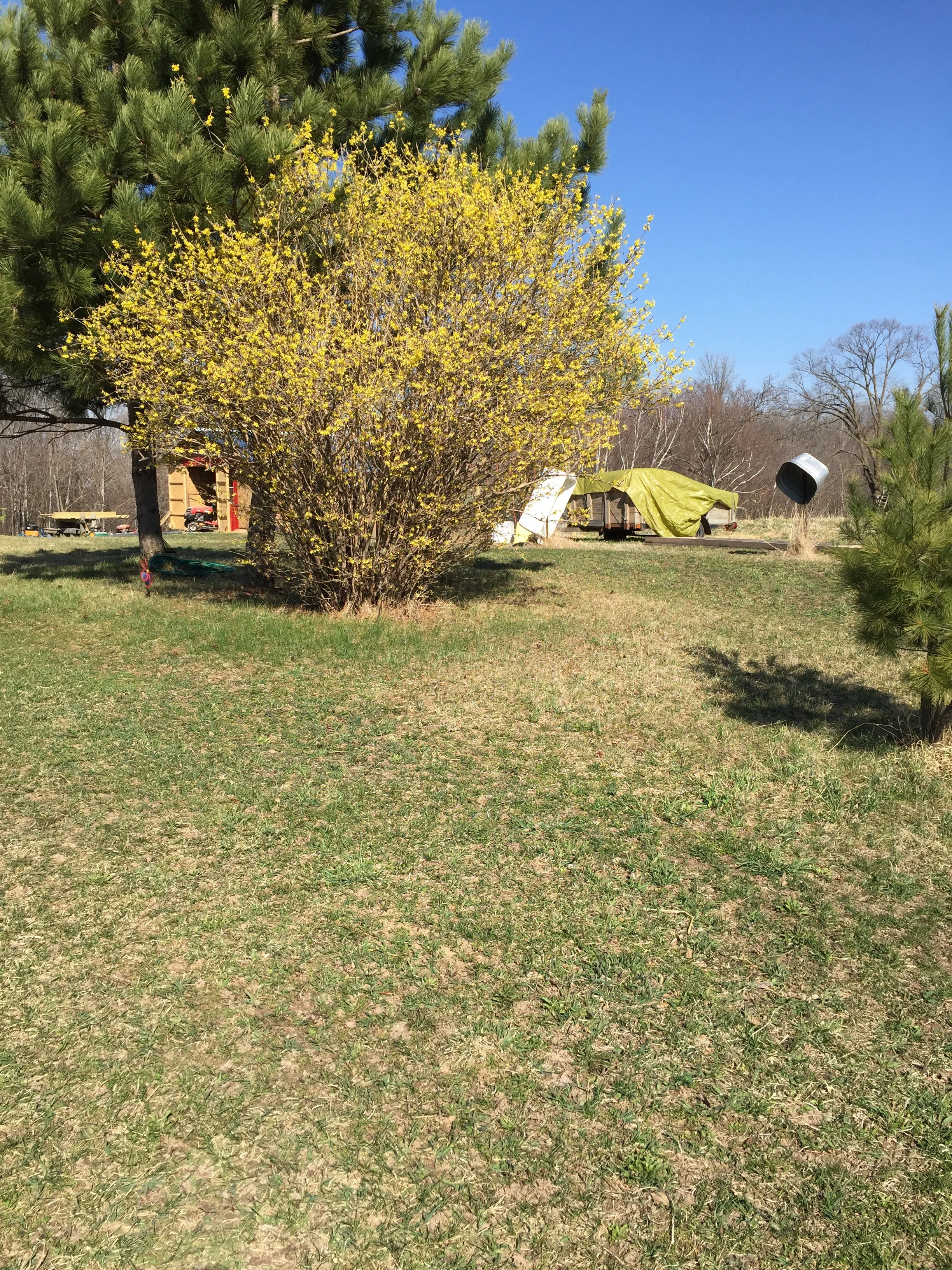
The forsythia afire.  

The forsythia afire.  

Happy Birthday Little Sweetheart!  Today we have sunshine and weather in the 70s. All the plants have been waiting, buds tight against the cold, but swelling with the lengthening days.  

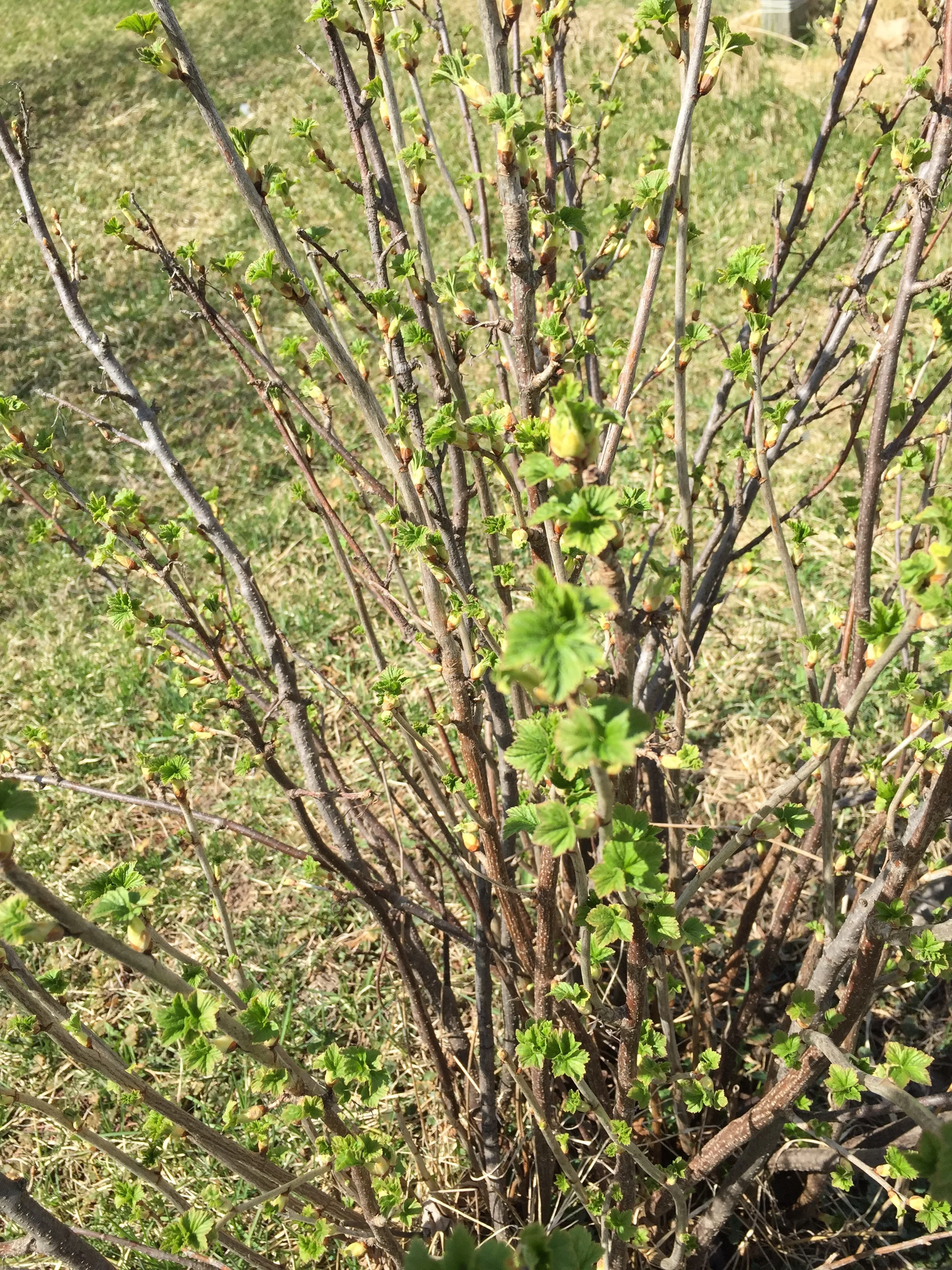
Black currant greenery! 

Black currant greenery! 

A good day to turn dirt over in the garden, put batteries back in the riding mowers, plant some more fence posts for the new duck pasture...and celebrate growing things.  

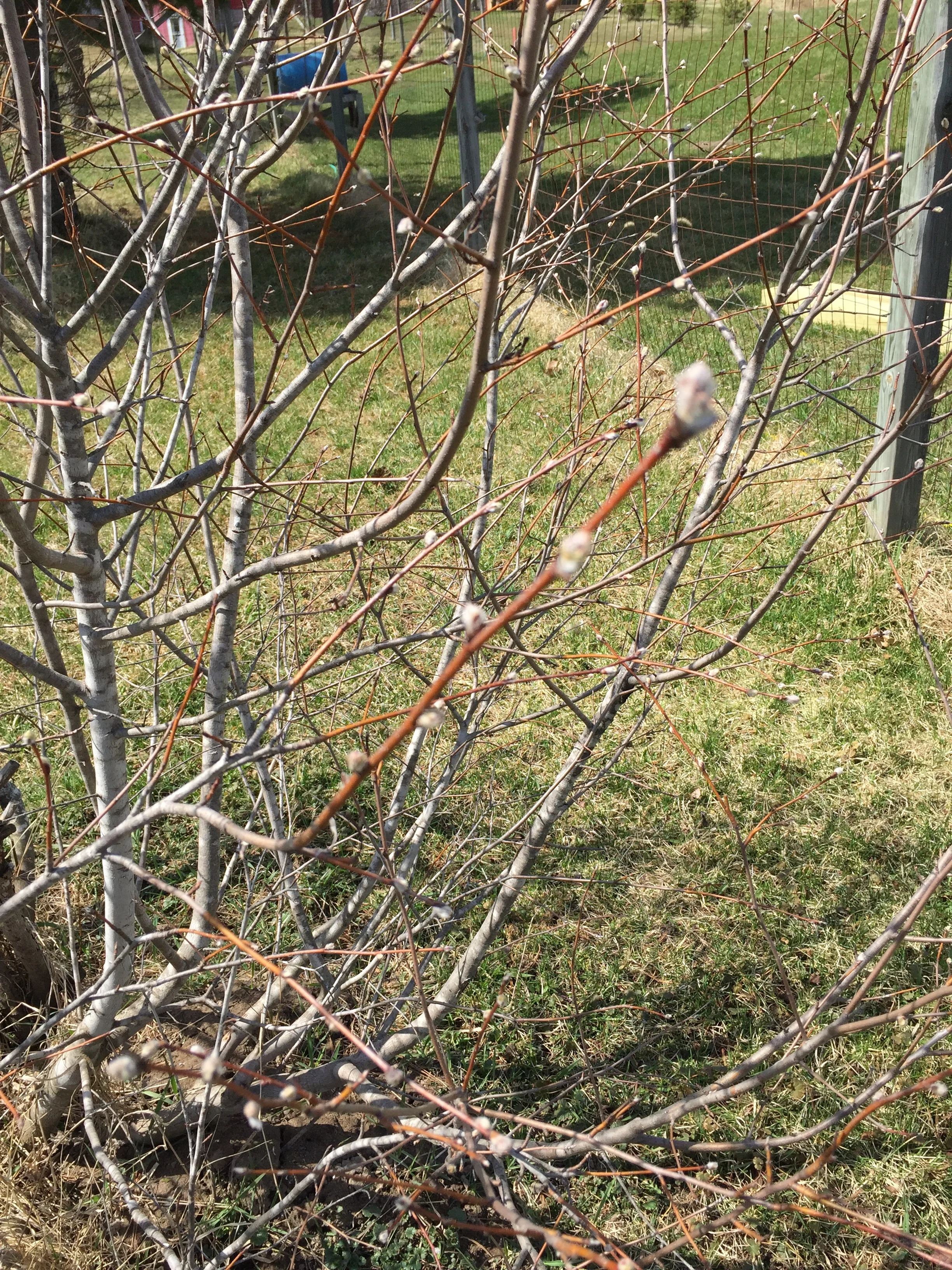
June berry leaves barely peeping out.  

June berry leaves barely peeping out.  

We can still have snow, but we celebrate with sun today.  

Fire journal: Houston, we have liftoff

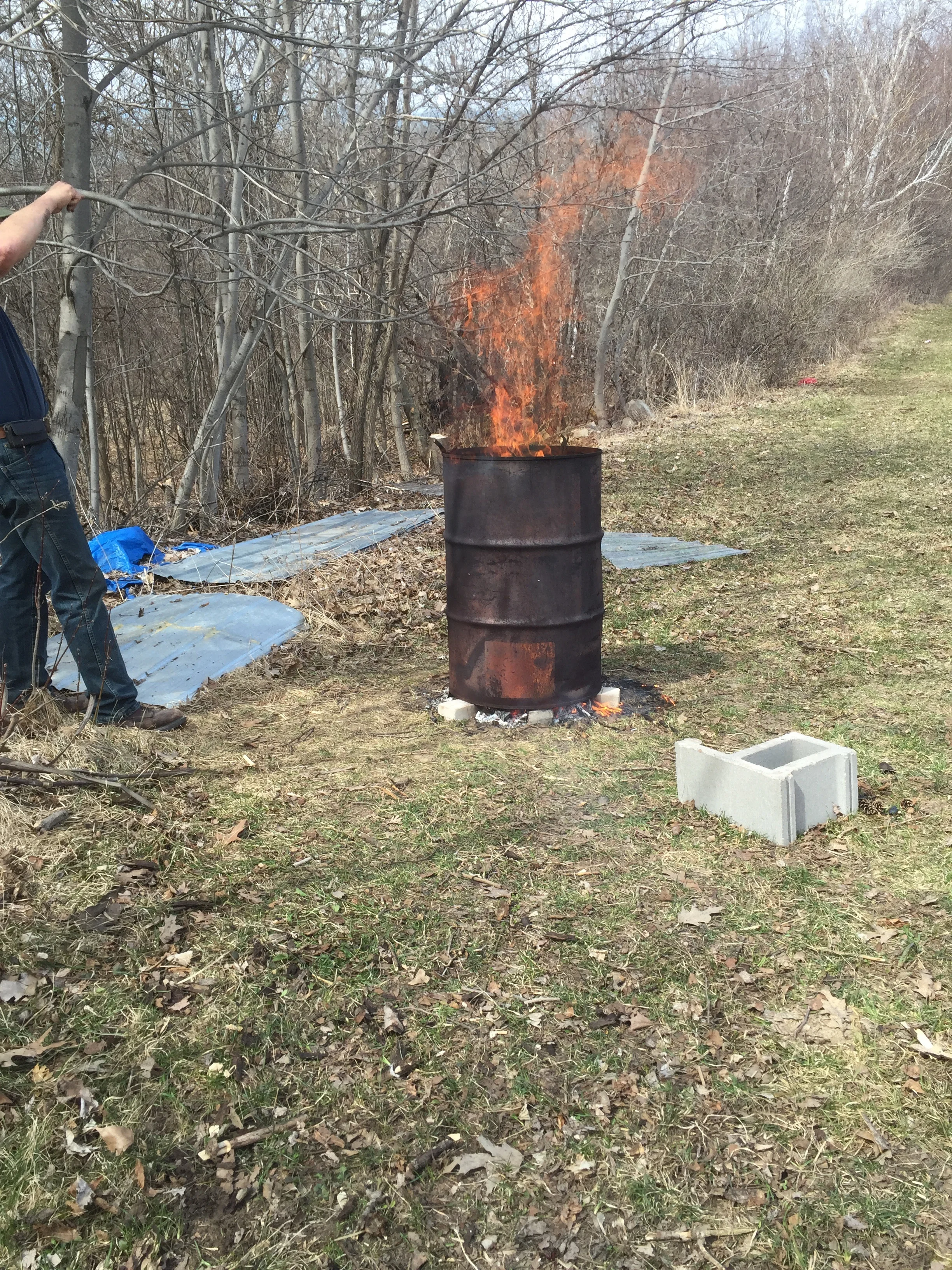
A lovely-ish Sunday in spring called for some frivolity, so we took a break from fencing and fired some clay. First firing with the birthday barrel.  

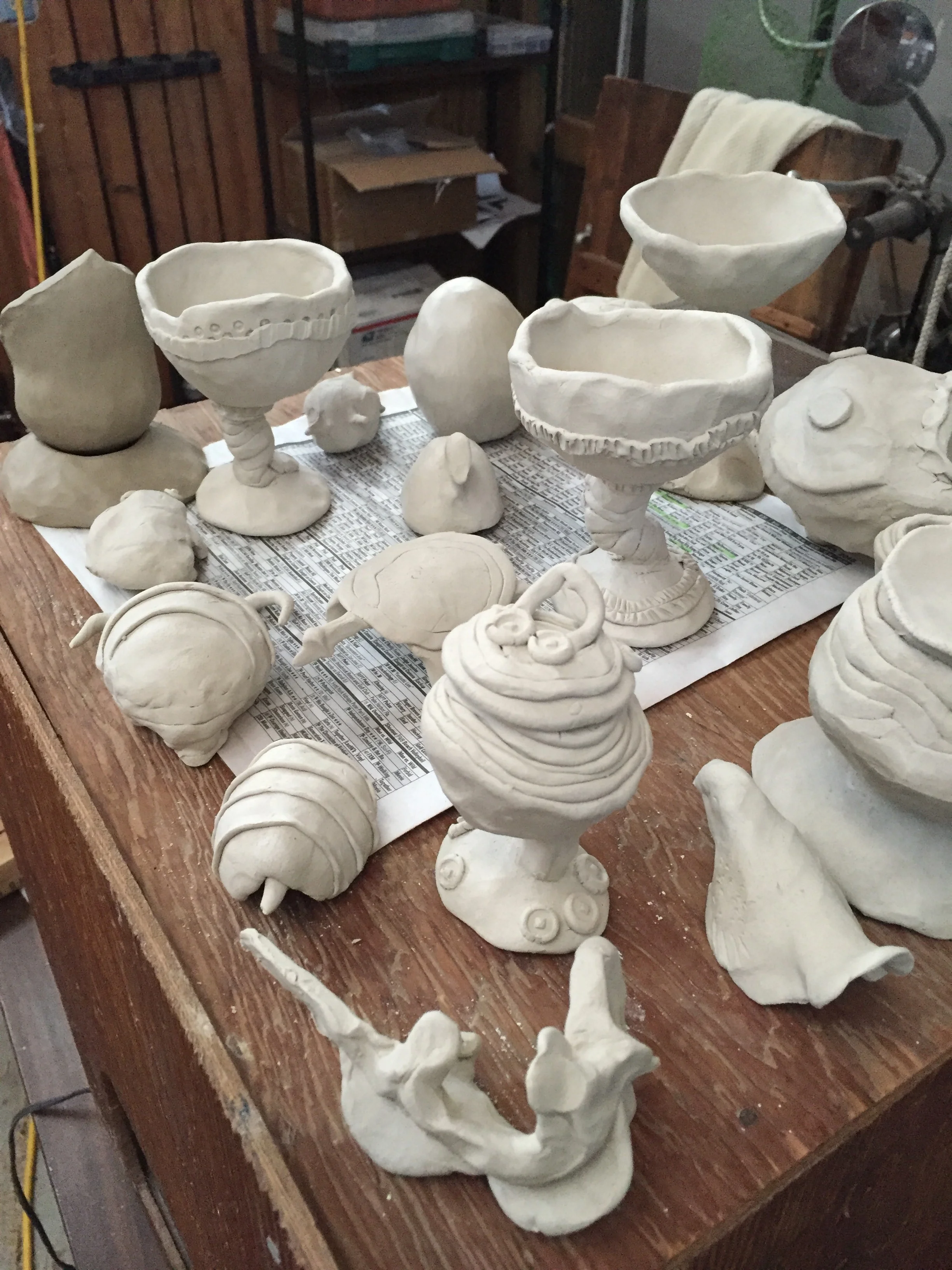
Several weeks ago we made a batch of small clay things. 

Drying slowly in freezing temps.  Notice the darker color of the figure on the left in the back. That one was not dry enough yet. 

Drying slowly in freezing temps.  Notice the darker color of the figure on the left in the back. That one was not dry enough yet. 

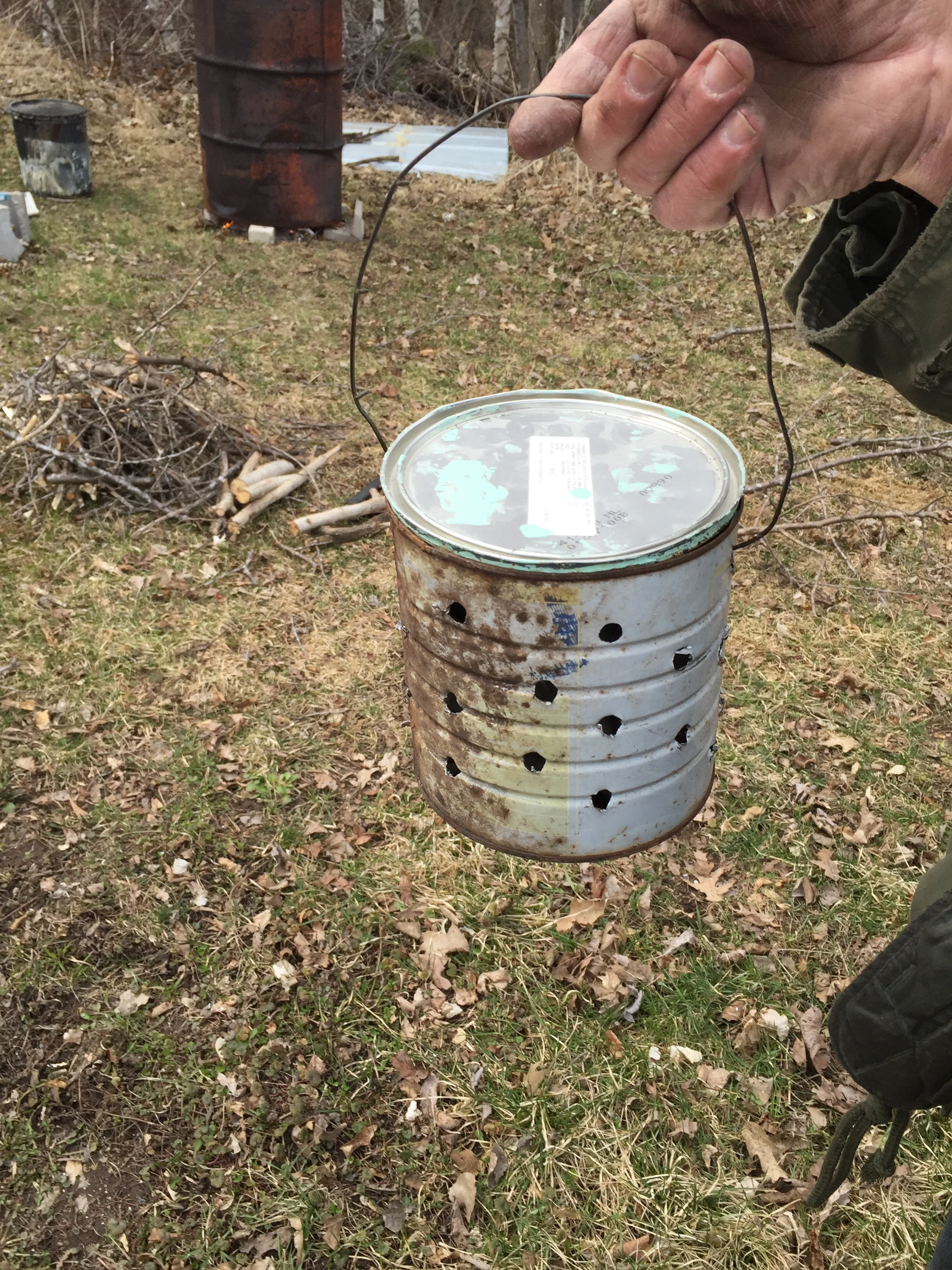
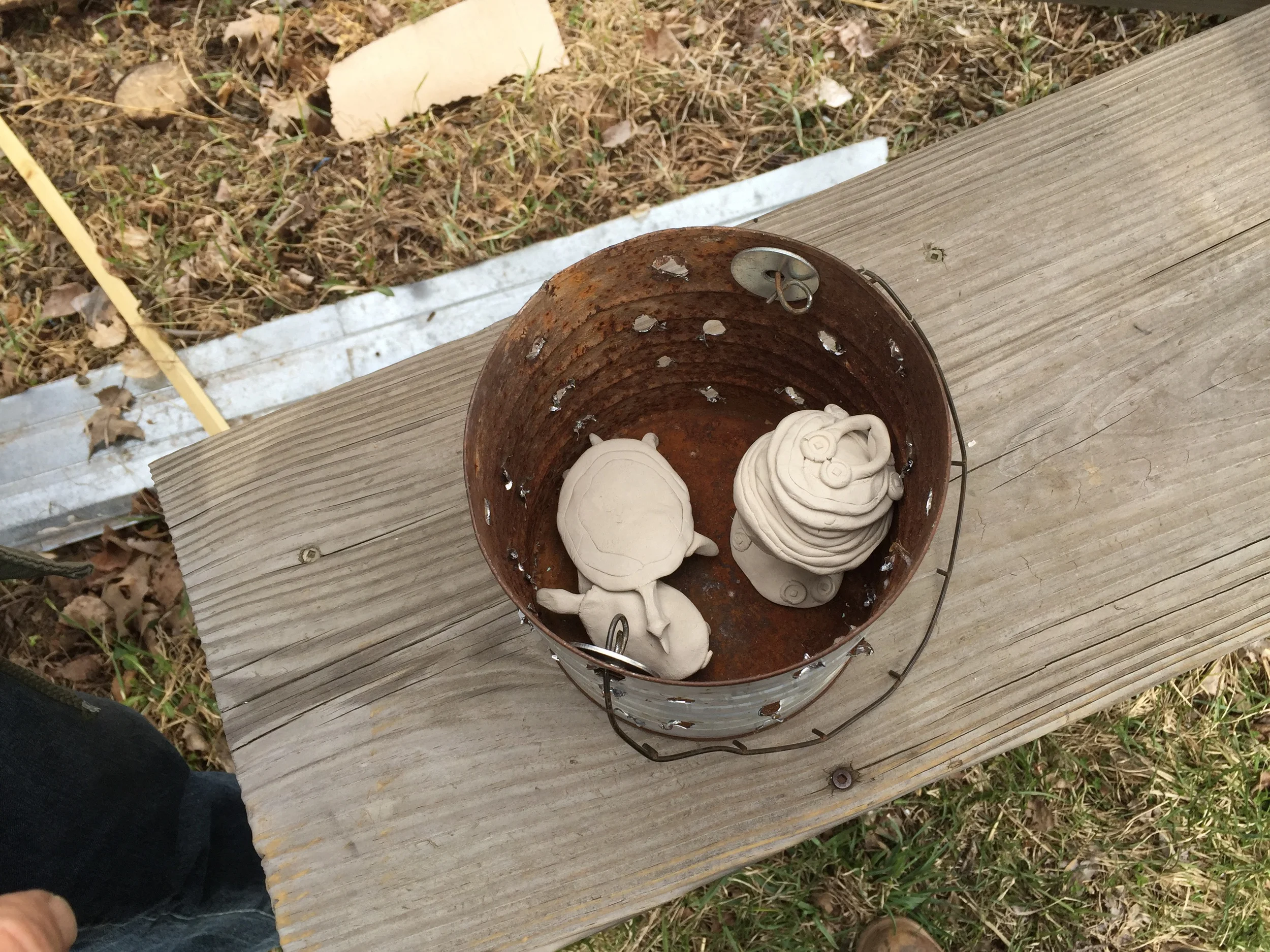
Then we made a small firing can (technical term is a "sagger", pronounced with a long a) out of a one gallon tin can fitted with a paint can lid. (Paint cans are made from plastic these days.)   I used a 3/8" drill bit to make the holes. 

I scavenged these from the hillside Clyde used for a dumping ground. Beautification on multiple levels.  

I scavenged these from the hillside Clyde used for a dumping ground. Beautification on multiple levels.  

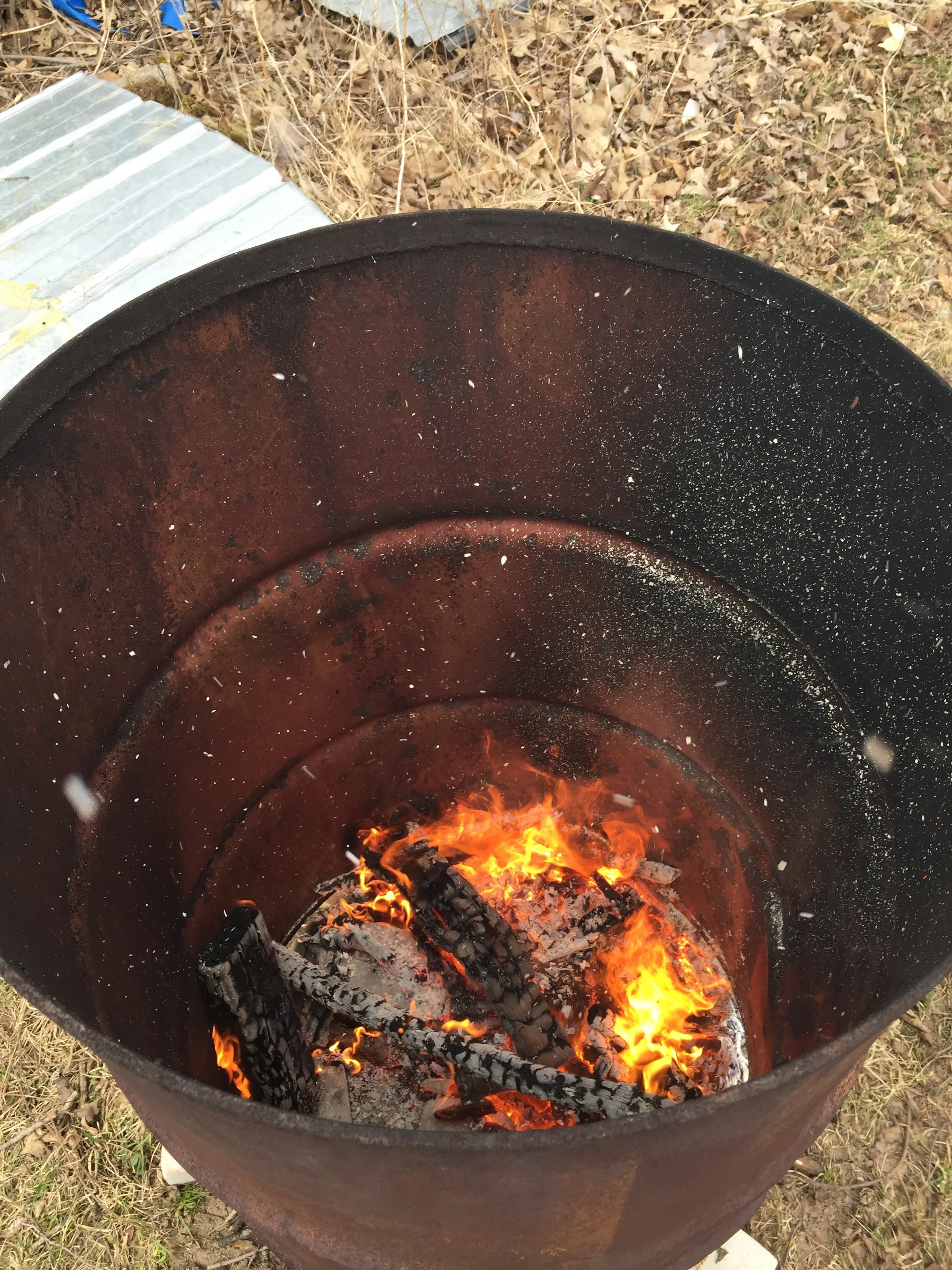
Then we started a fire in the bottom of the barrel, to make a layer of coals and to warm the bricks.  

Fire. A good time on a chill day.   We made the fire near an old brush pile-easy access to small, dry wood and more beautification by getting rid of the brush pile. 

Fire. A good time on a chill day.   We made the fire near an old brush pile-easy access to small, dry wood and more beautification by getting rid of the brush pile. 

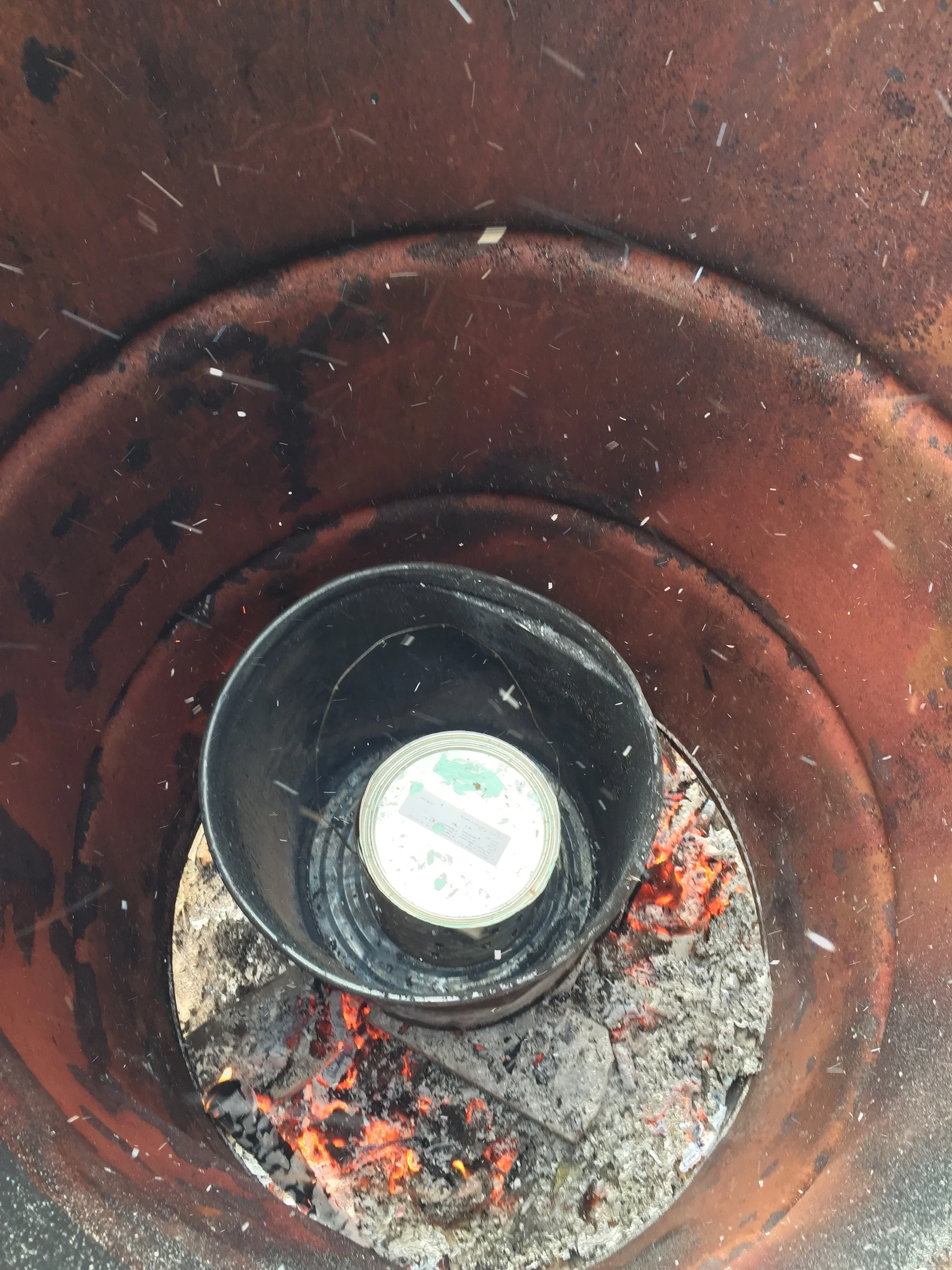
Once there was a sustainable fire going, Michael loaded some of the drier looking pieces in the small can with holes inside the 5 gallon can without holes.  

Clay in place.  

Clay in place.  

We used the small can due to the delicate nature of the forms. If we were making stronger forms, such as thrown bowls, we could dispense with the 1 gallon bucket. We also don't mind serendipitous marks you get when the reducing agent touches the clay.  

Small can inside large can inside barrel.  

Small can inside large can inside barrel.  

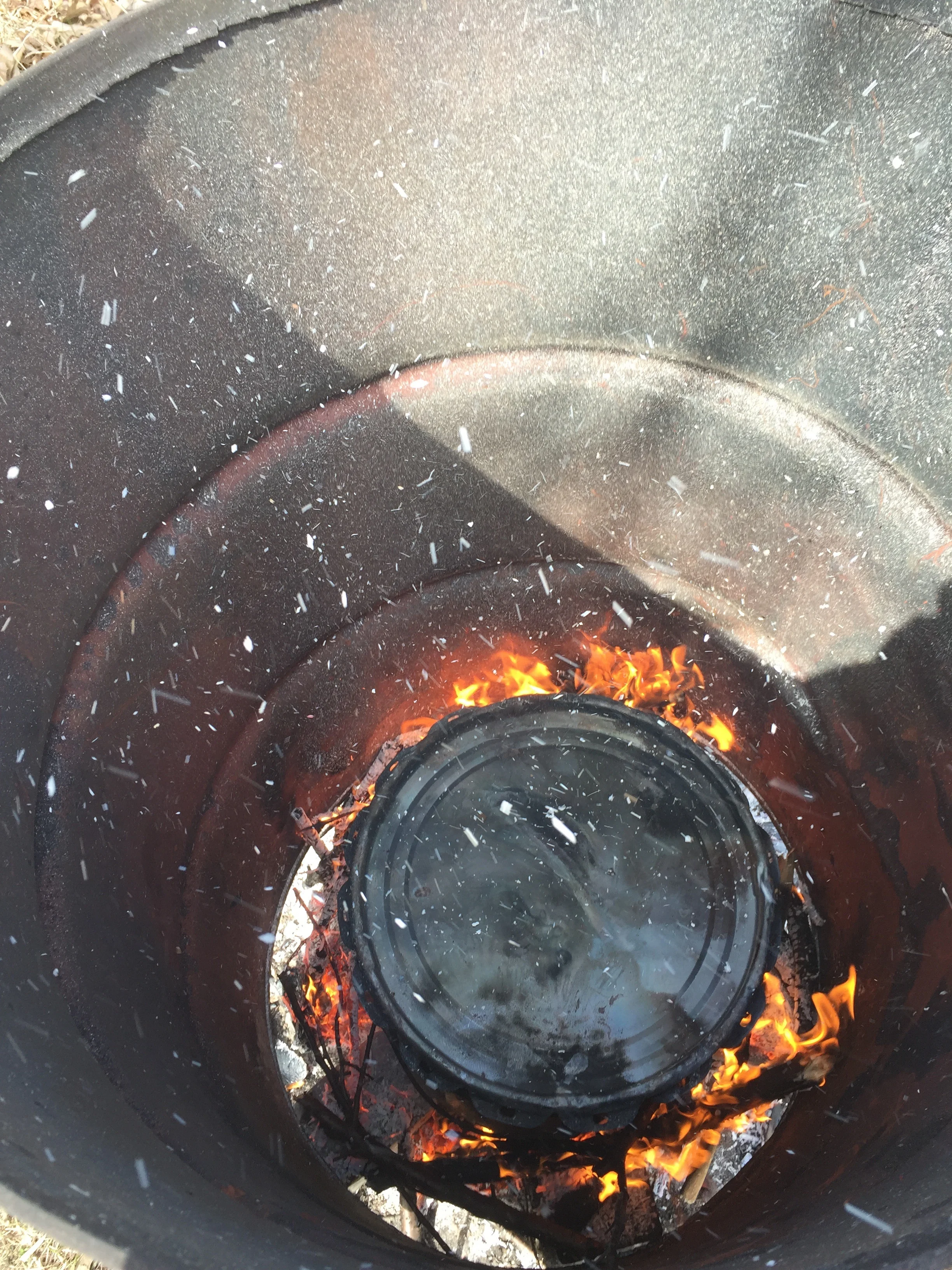
The next stage involved slowly building up the fire around the 5 gallon can to bring the clay up in temperature, slowly driving out any remaining moisture and altering the chemical composition of the clay (exorcising hydrogen bonds).  Michael then delicately placed the lid on the 5 gallon can (slightly singeing his arm hair), and we kept the fire to the top of the can for about 10 minutes. 

Nearing the end of the process.  

Nearing the end of the process.  

Once the can was well warmed (about 500° F--if the pots weren't in a sagger, you would see them begin to turn dark--) we filled the barrel with small, dry branches from the brush pile, which burned quick and HOT.

Whee! 

Whee! 

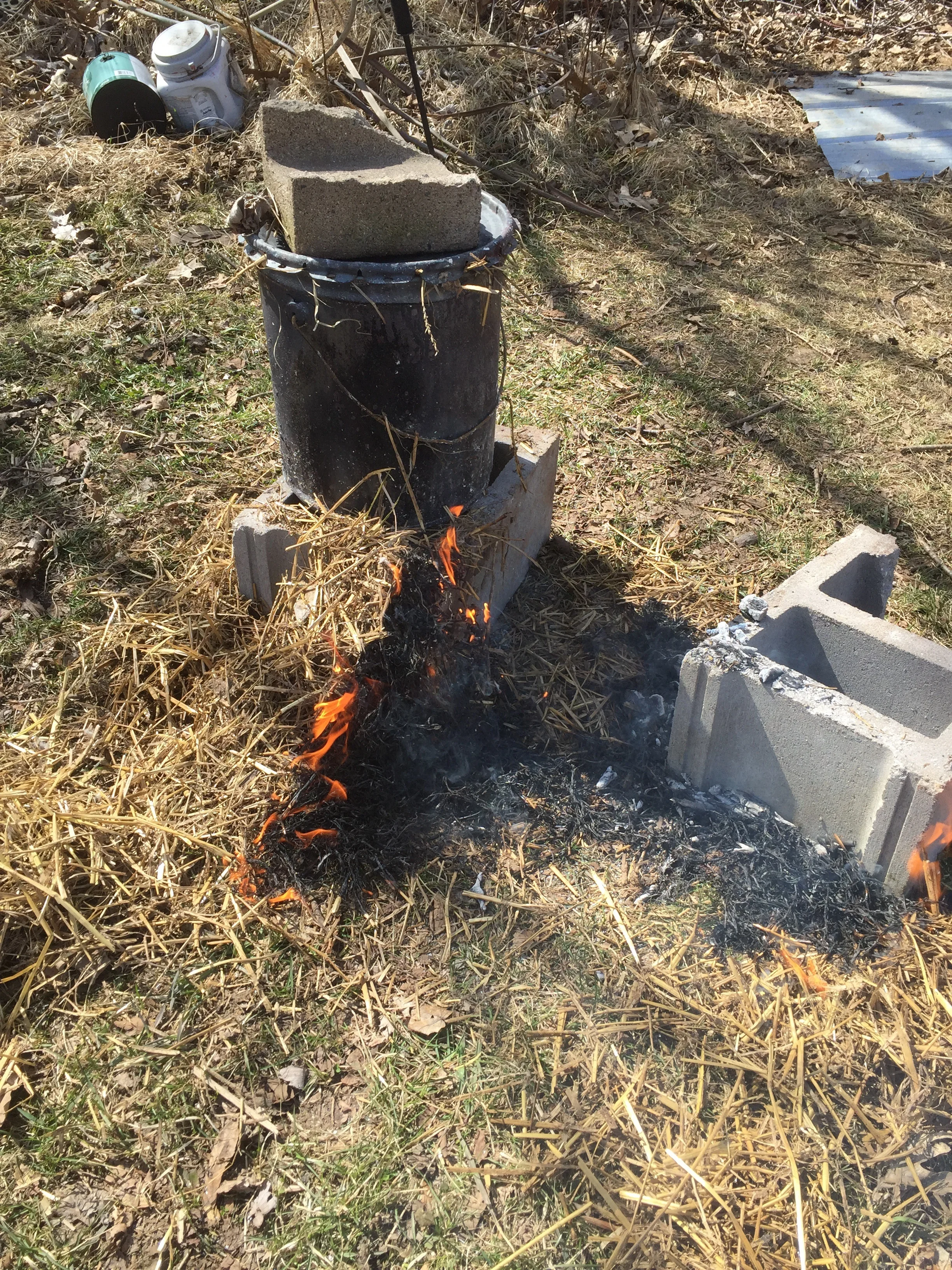
The finishing touch was to get something that would burn slowly and smokily around the pots. We happened to have the straw from our chicken coop at hand.  

Must be a better way to get the lid of the 5 gallon bucket off without removing it from the barrel.  We will figure it out for next time. 

Must be a better way to get the lid of the 5 gallon bucket off without removing it from the barrel.  We will figure it out for next time. 

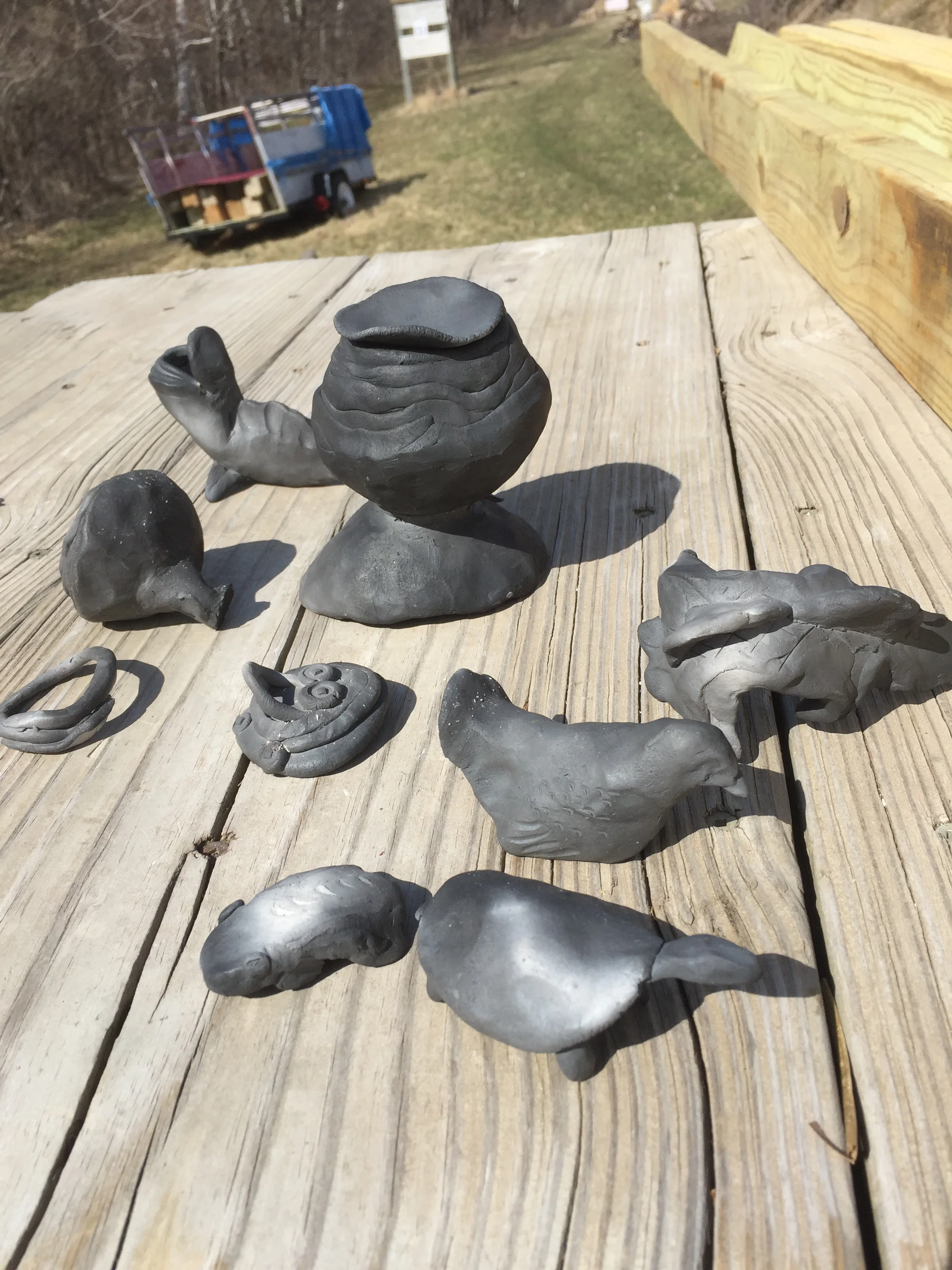
And voila!  Clay things! 

Fresh out of the kiln. 

Fresh out of the kiln. 

Total firing time from pots in the sagger to pots on the table was about one hour.  

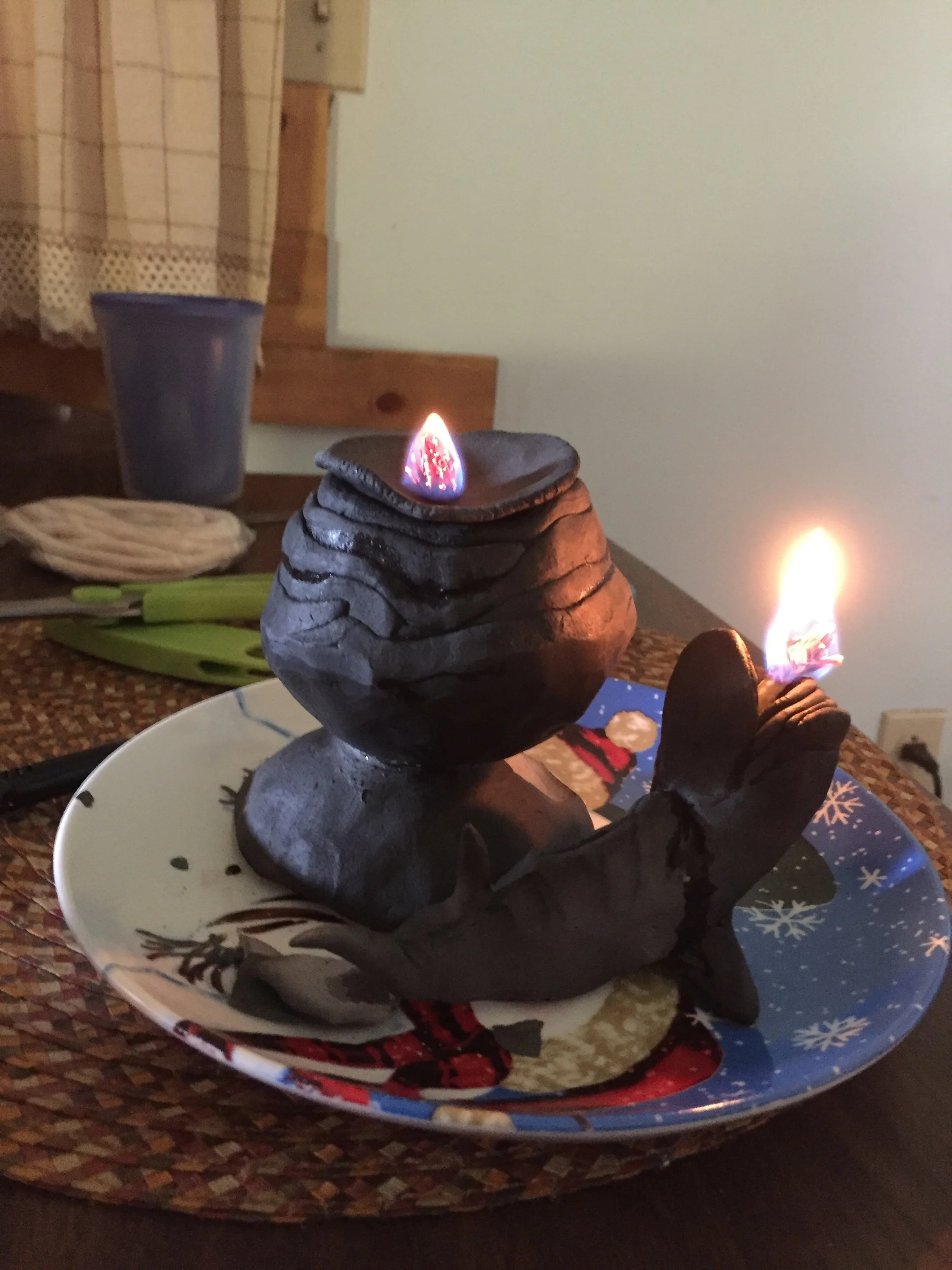
Experimental oil lamps.  

Experimental oil lamps.  

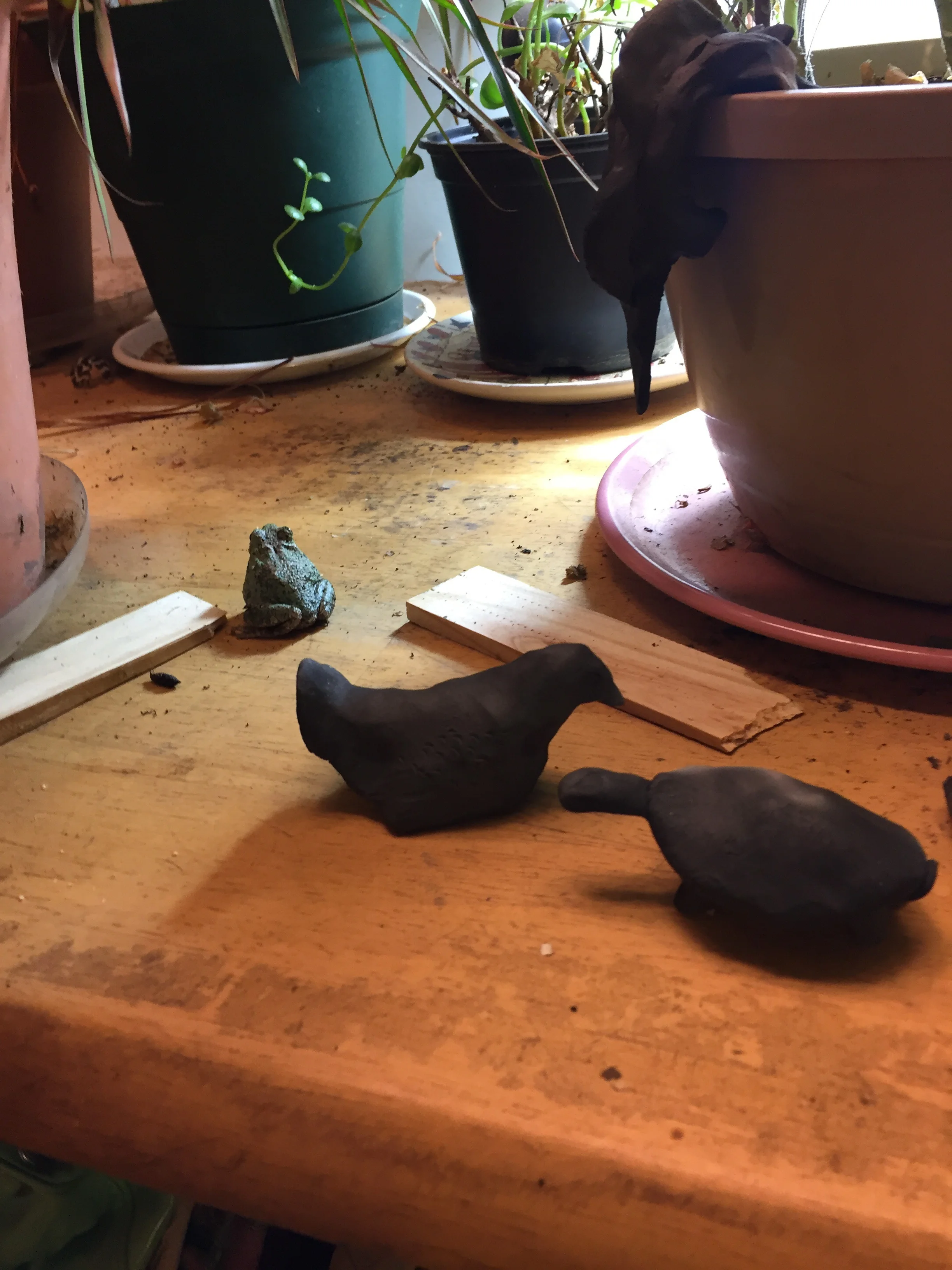
Mr. Frog visiting his new neighbors.  

Mr. Frog visiting his new neighbors.  

Planting journal: the starts are started

Hello. Remember how it snowed yesterday? It snowed again last night...a perfect time to begin dreaming of digging in the garden, and working toward making that dream a little more real.  

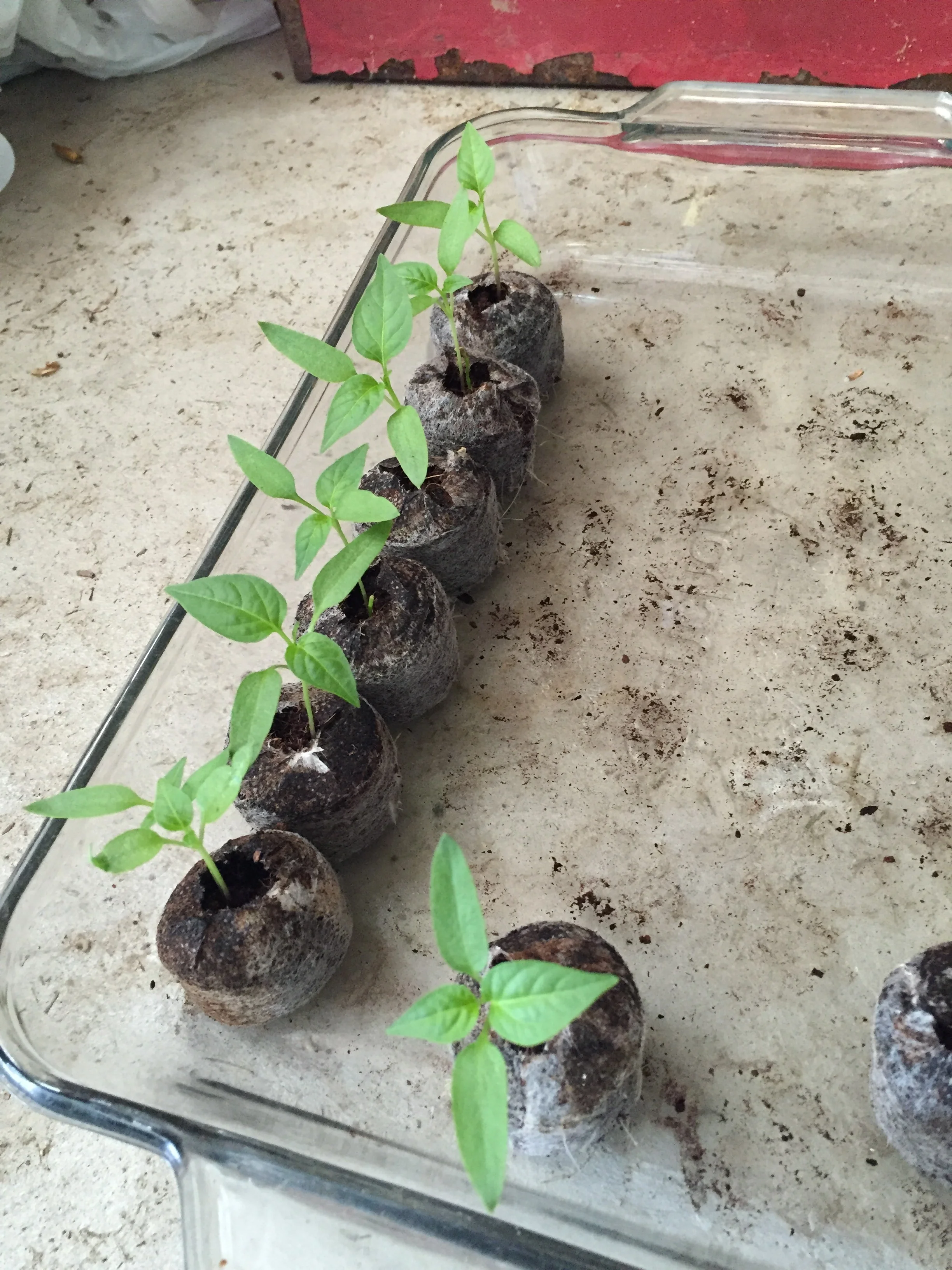
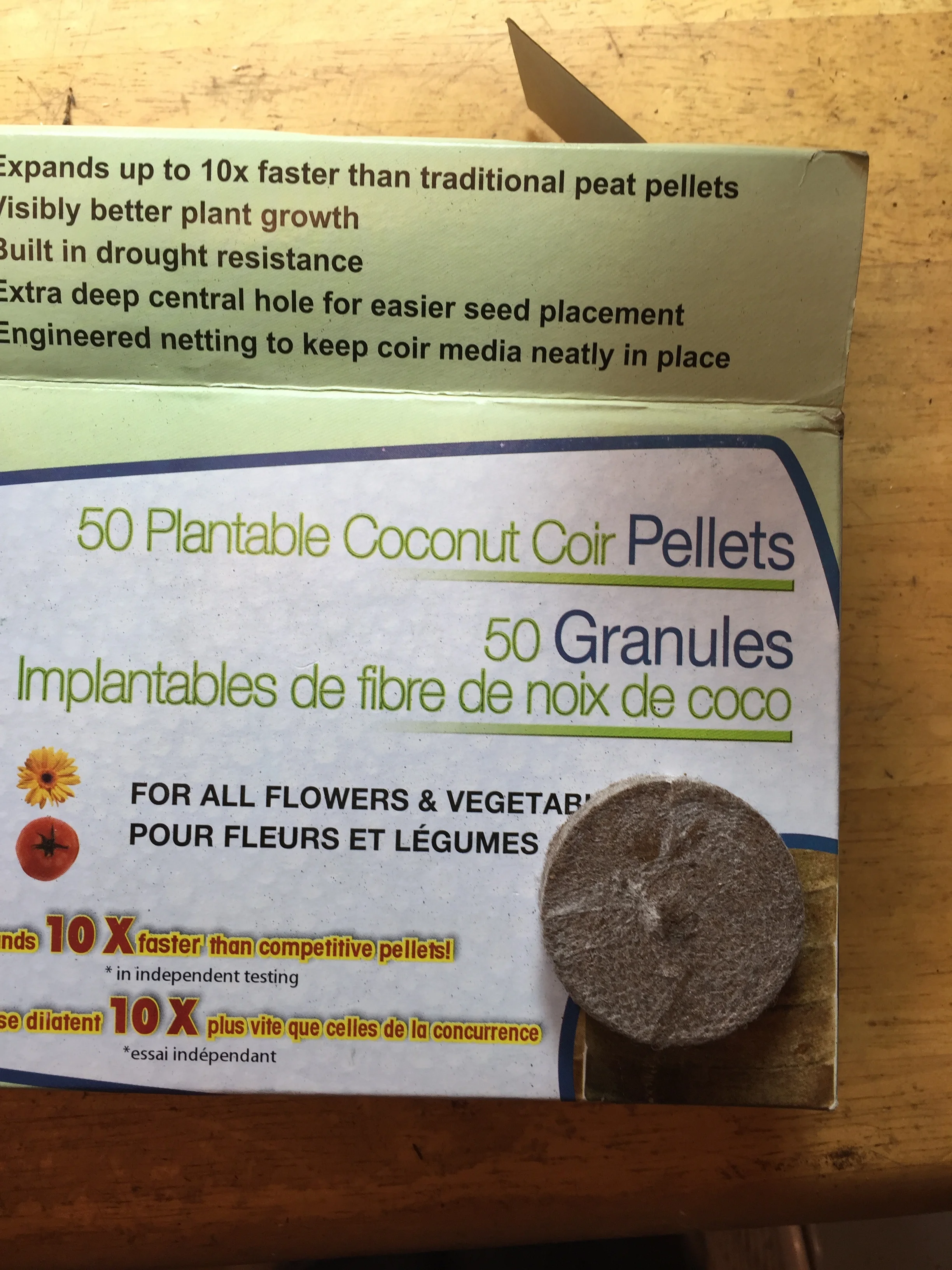
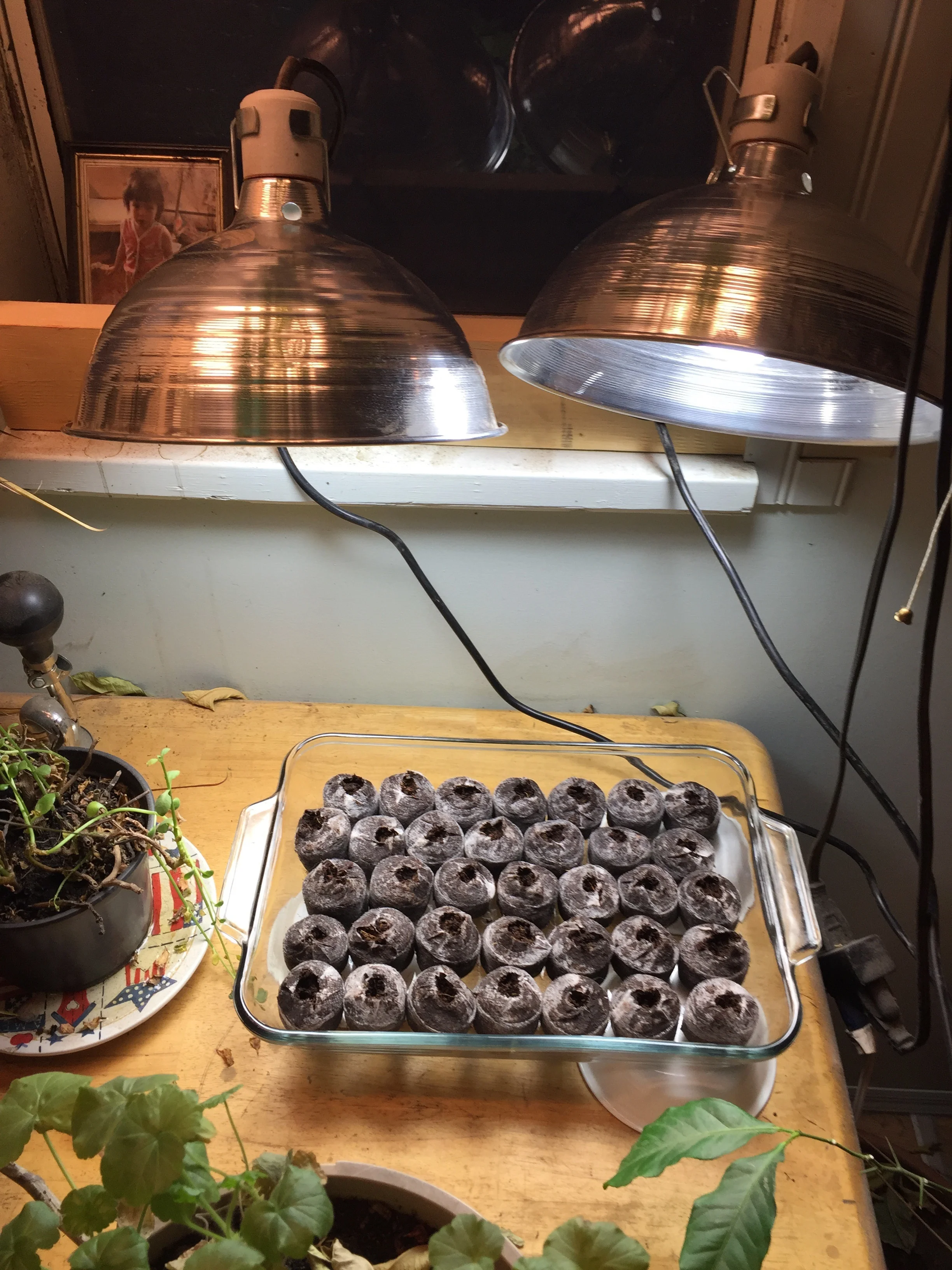
Peat pellets or coconut fiber pellets...they all work. 

Peat pellets or coconut fiber pellets...they all work. 

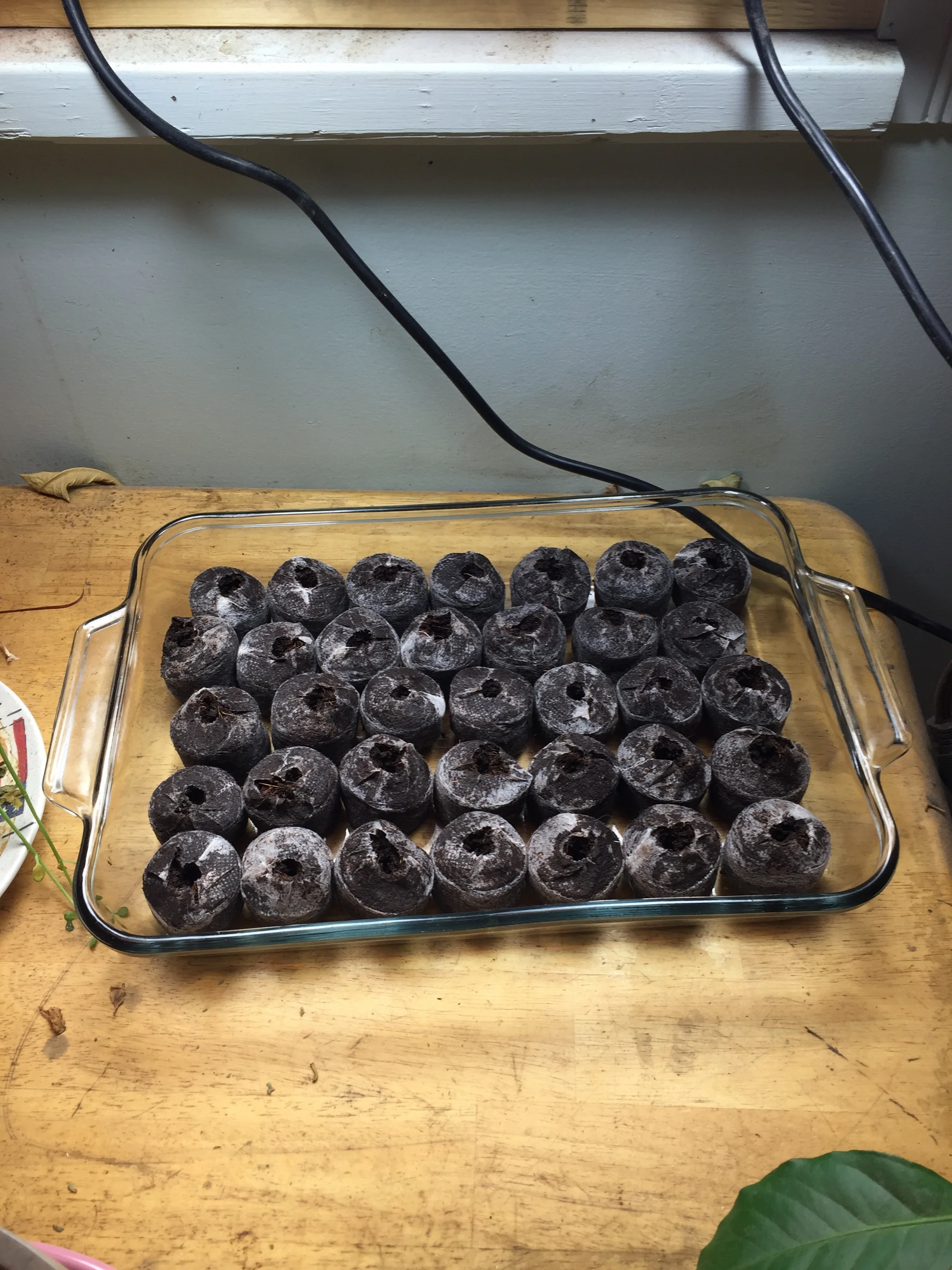
When you have a short growing season, you start frost-sensitive plants indoors and then transplant after Memorial Day. I start by clearing out a space on my winter plant table!  Then I soak my starter pellets in water until they swell into little pots.  

Looking phat! 

Looking phat! 

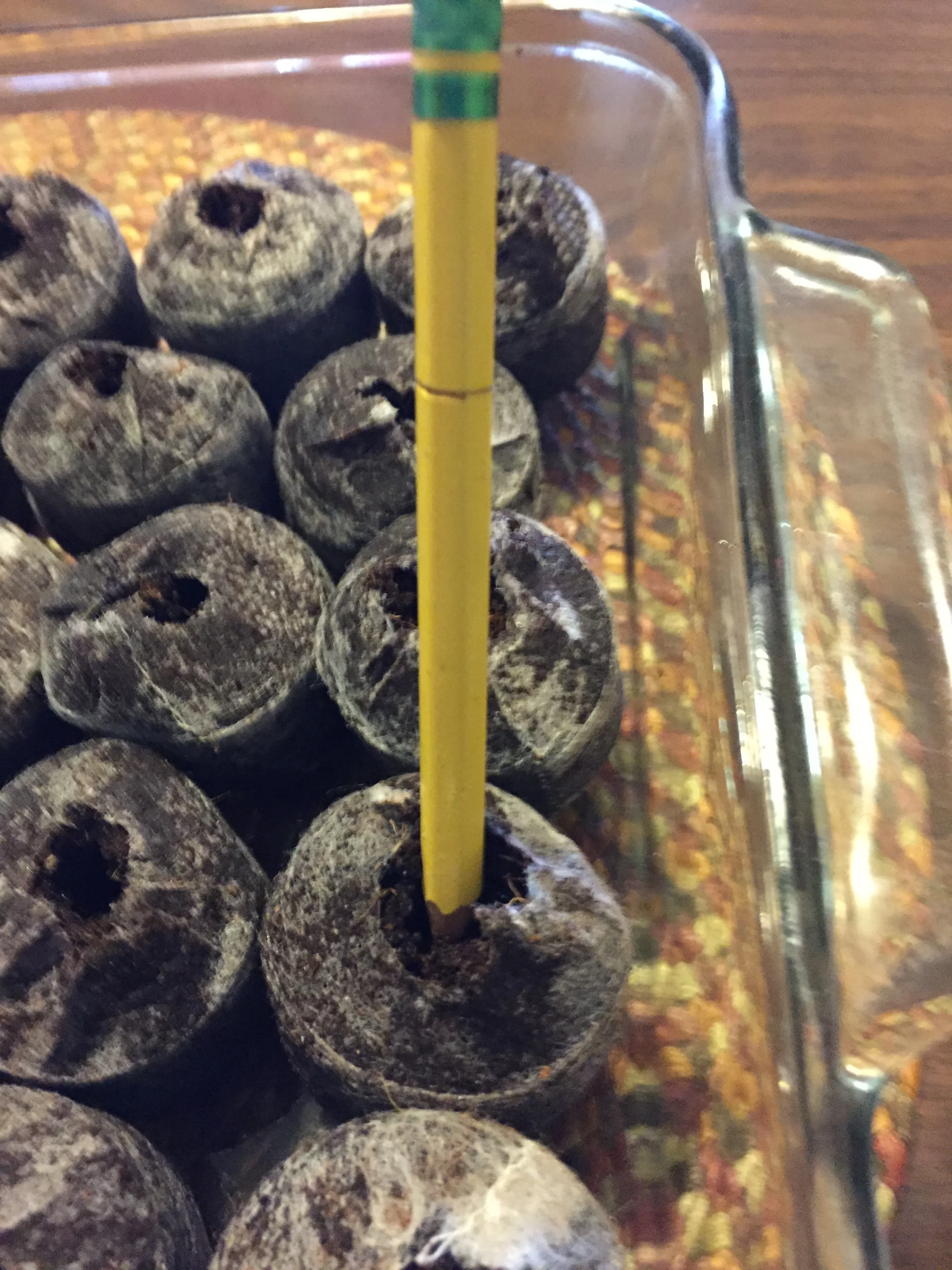
The seeds come next. I put 2-3 in each pot, with malice towards extras afore thought. If you have extra space and abhor thinning, plant one seed per pot. I then cover my seeds with the dirt in the pots until they are covered to about 1/4". I use a pencil for this delicate operation. 

High tech equipment!  Not.  

High tech equipment!  Not.  

As the plants grow, I'll raise the lights, and then will transplant into coffee cups filled with potting soil. Keeping the peat pots moist and warm will help germination. Light will encourage growth.  

I will probably find a way to raise the baking dish a little higher  

I will probably find a way to raise the baking dish a little higher  

I'll update when I start to get sprouts.  

Season journal: April Fools!

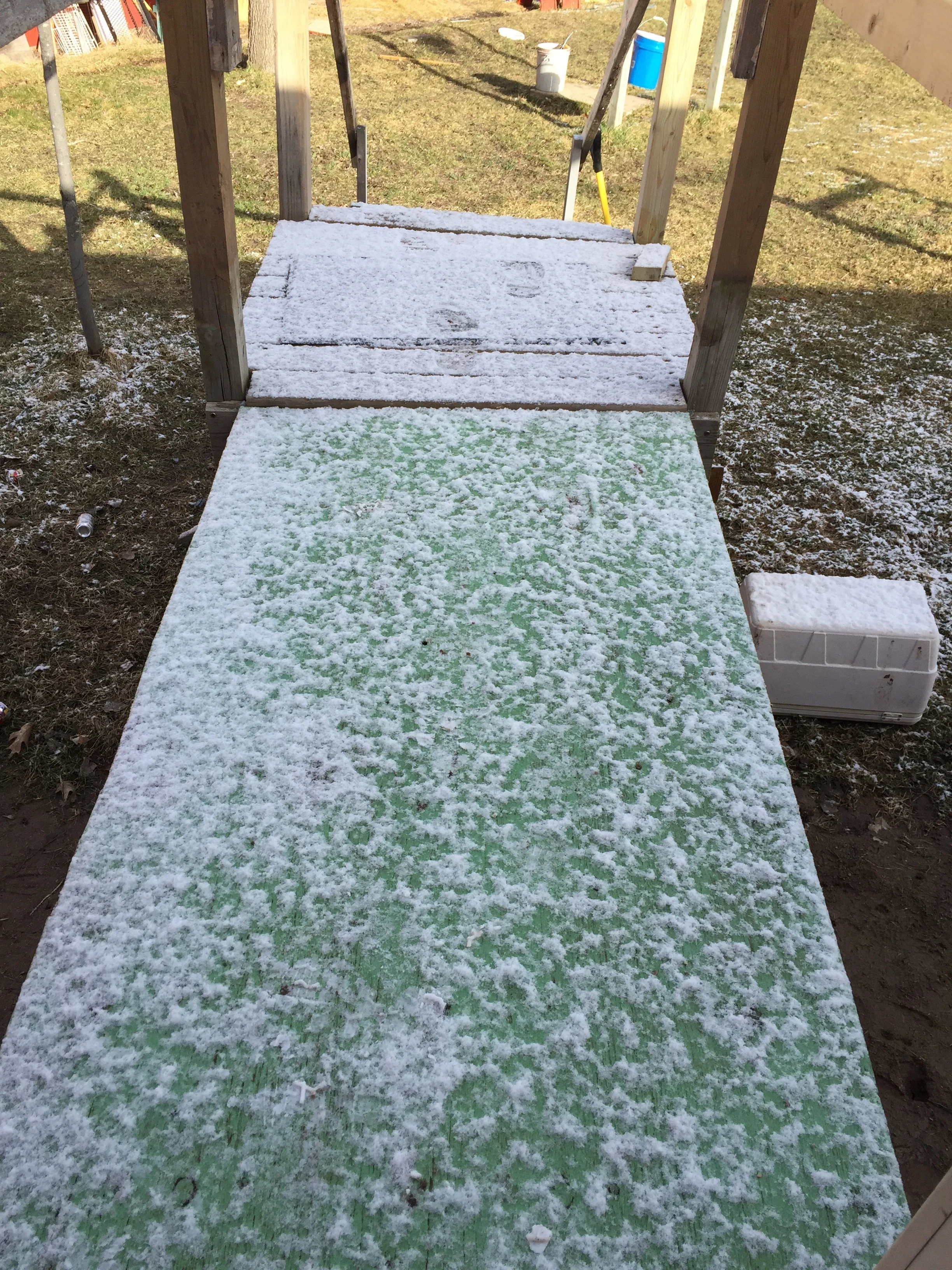
We awoke to snow this morning. 

Mother Nature's little joke

Mother Nature's little joke

It will be gone by later today, but it is a reminder as to why we are starting our tomatoes later this year. The frost is out of the ground and Michael has been digging post holes for the new duck playground.  

Where ducks can dig holes to their hearts content 

Spring isn't here quite yet, but she's on her way.  

Season journal: preparing for Oester

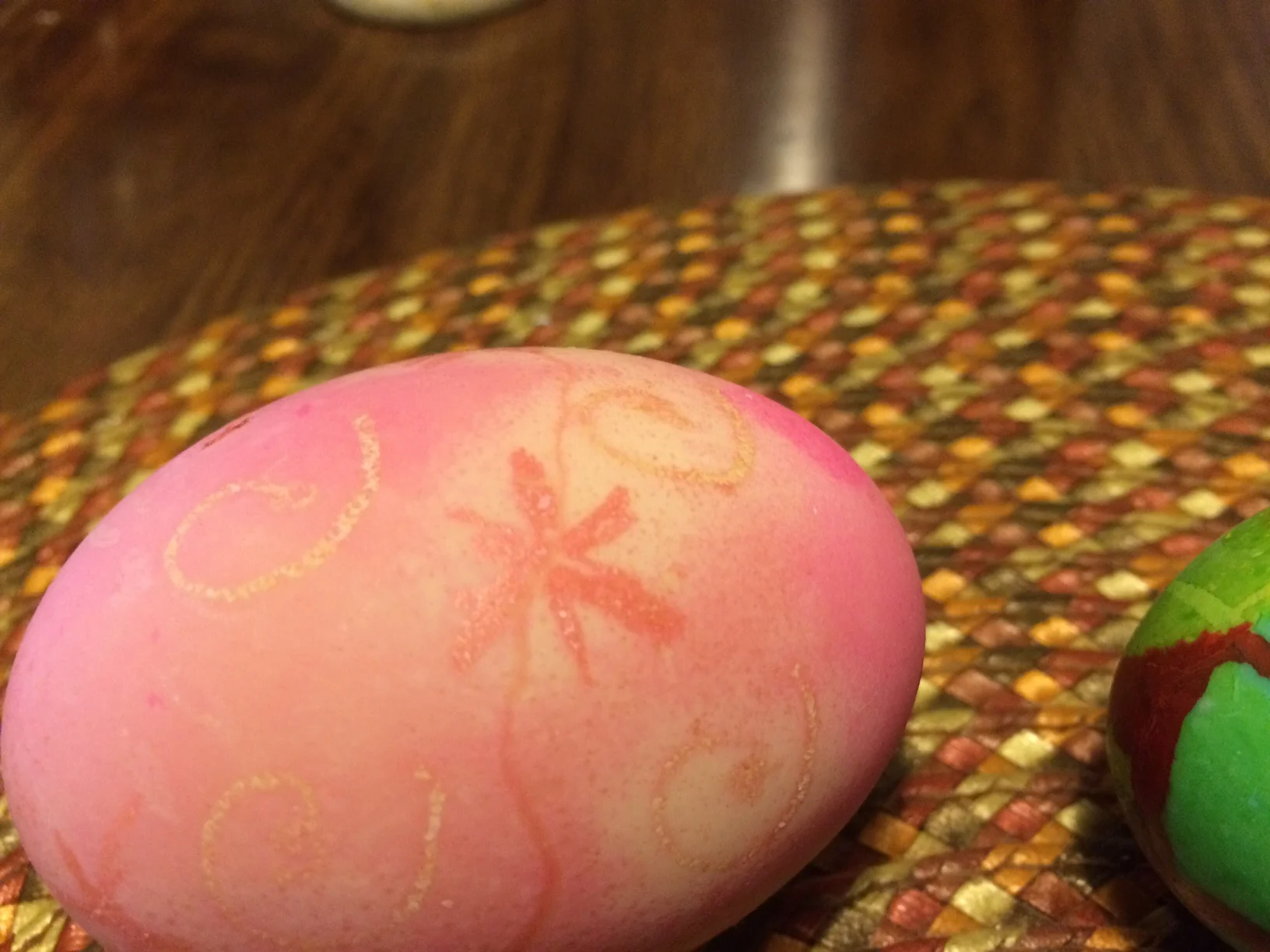
Marking the passage of time with ritual is important as a means of continuity as well as a good reason to celebrate. No baskets full of fake green grass, plastic eggs or chocolate bunnies in our household. Yet we have always colored eggs. We hid them when we had wee ones, but figure it doesn't make sense to hide them from ourselves...yet. We do color them!  (I even colored eggs when I was alone due to Michael staying with his parents when Clyde was first diagnosed with cancer.)  I like to think of it as a connection with my German grandmother, as Oester was a Germanic goddess of spring and fertility, and gave us oestrus as a fun word to know and use. It also gave us the word "Easter."  

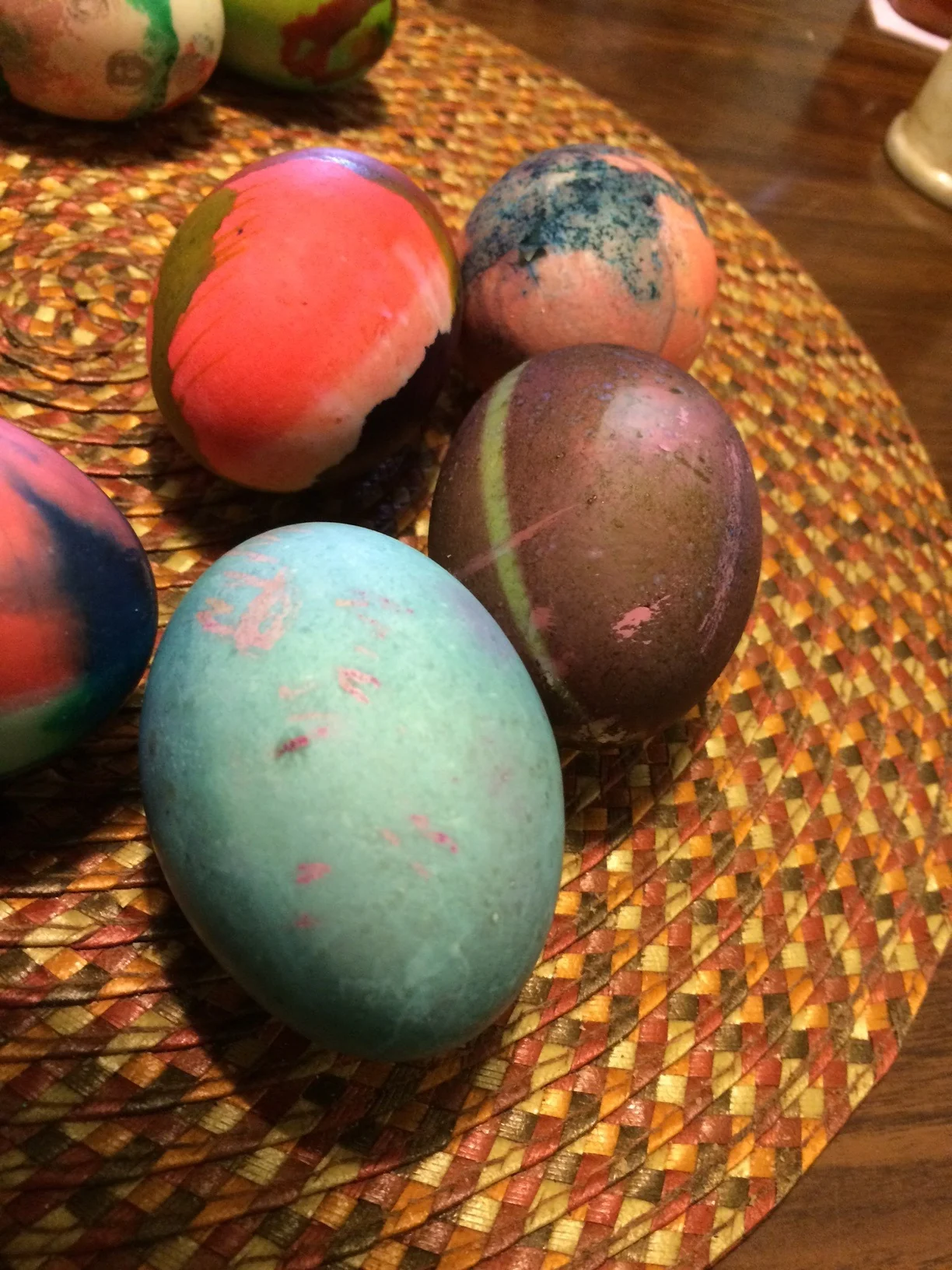
Duck eggs! 

Duck eggs! 

All of our chicken eggs are brown, so we have been saving duck eggs for Sunday.  The interesting thing was that the duck eggs took on a greenish hue naturally when we boiled them. We still dyed them anyway. 

More duck eggs! 

More duck eggs! 

The beauty of dyed eggs is that we then get lovely colored deviled eggs for dinner. Because we REALLY like deviled eggs, we only get to have them once a year.  Look for my deviled egg recipe, to be posted soon.
Season journal:happy spring equinox!

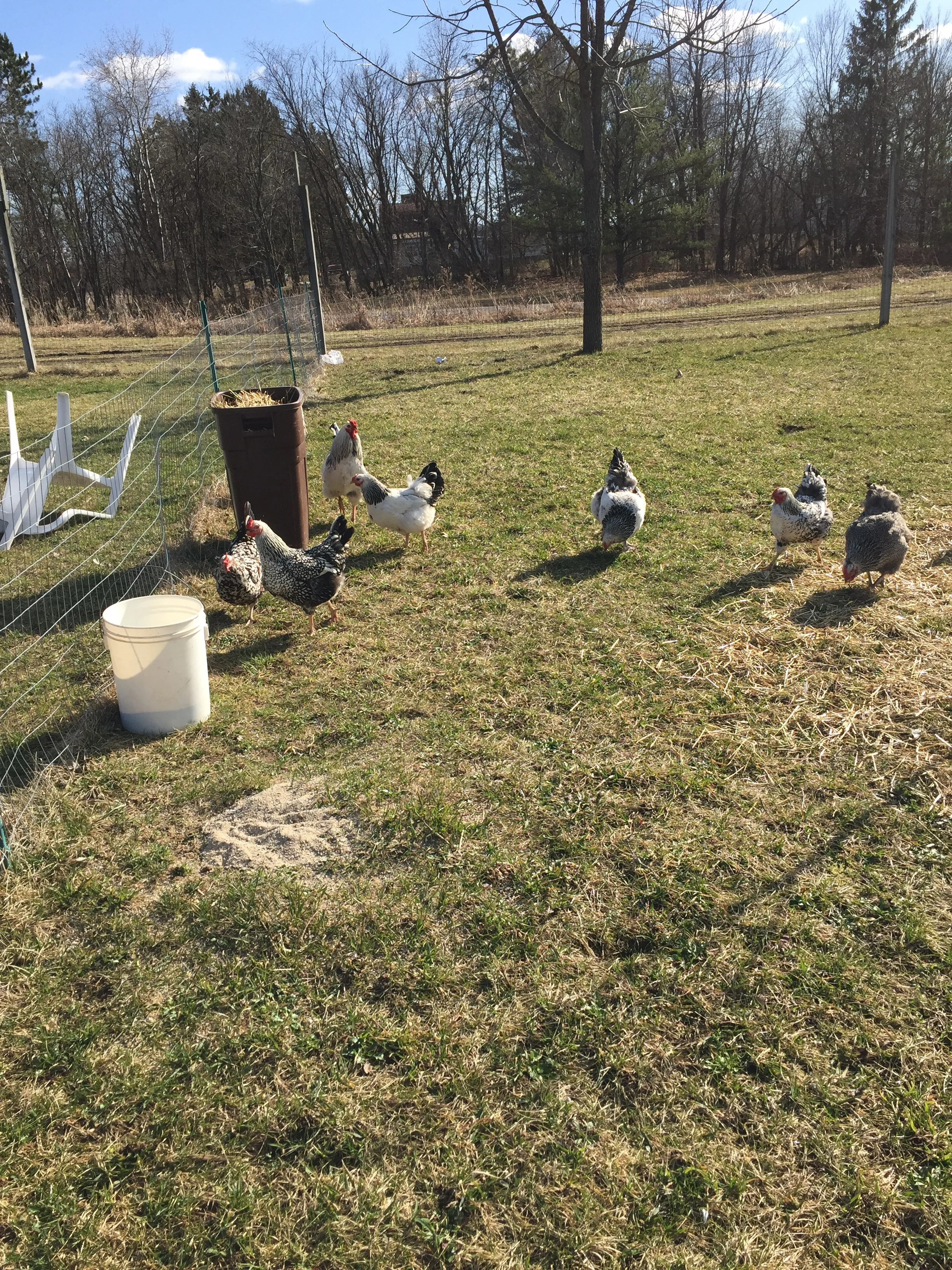
In celebration of the season, we (meaning Michael) modified the chicken cabana to support nesting boxes, placed a new tarp over the armature, and hiked down straw, feed, waterers, etc. I got in on ferrying the chickens from their winter quarters to their summer pasture.  

Happy chickens! 

Happy chickens! 

We may suffer from reduced egg production, since chickens need about 14 hours of light to produce regularly, but the ducks seem to be doing well enough (an egg per duck per day).  

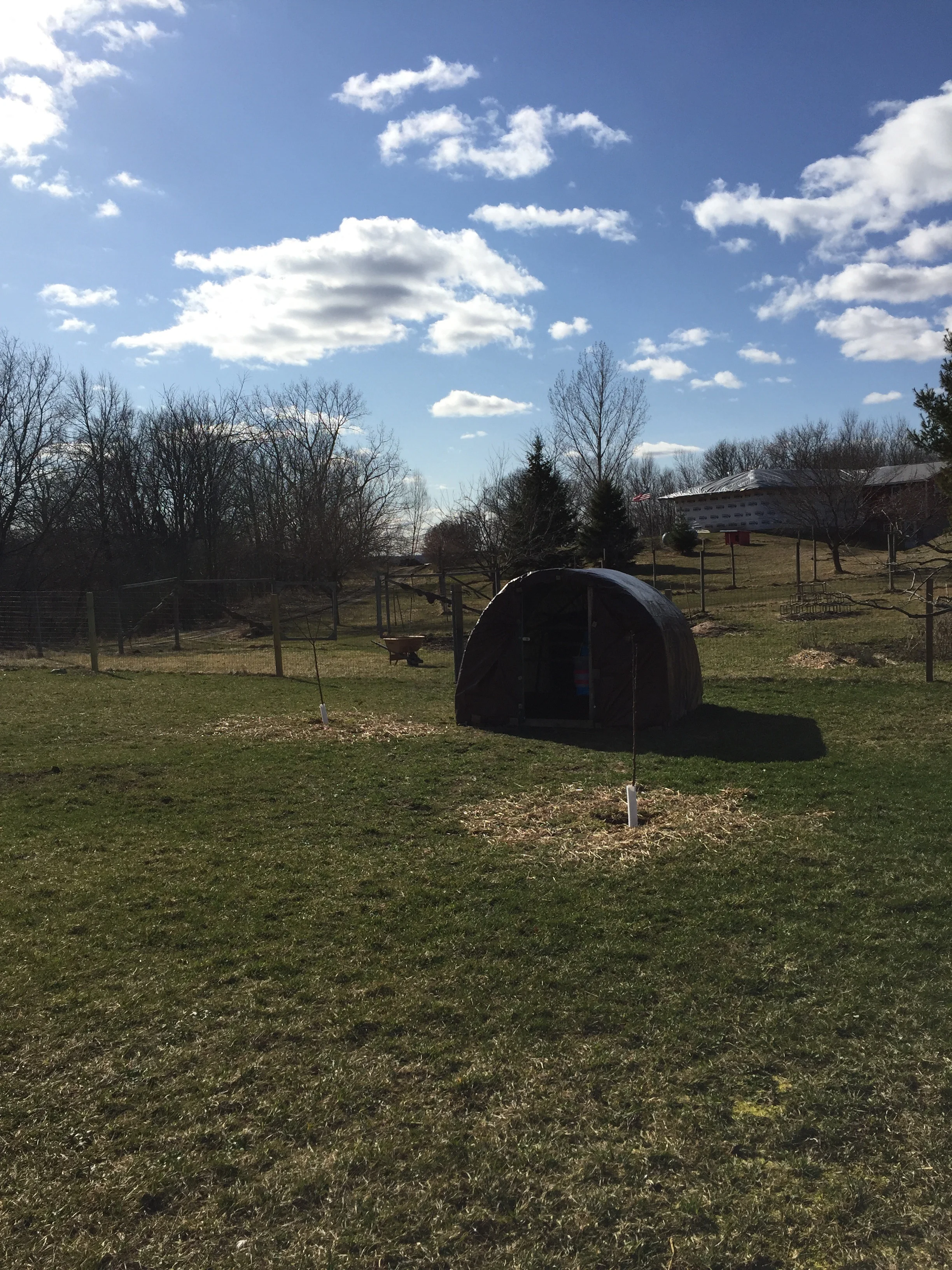
The chicken cabana backed by idyllic fluffy clouds. 

The chicken cabana backed by idyllic fluffy clouds. 

We will seed the mud hole that the chicken and duck yard became and hope it will have recovered by the time the babies we are ordering are big enough to venture outdoors. 

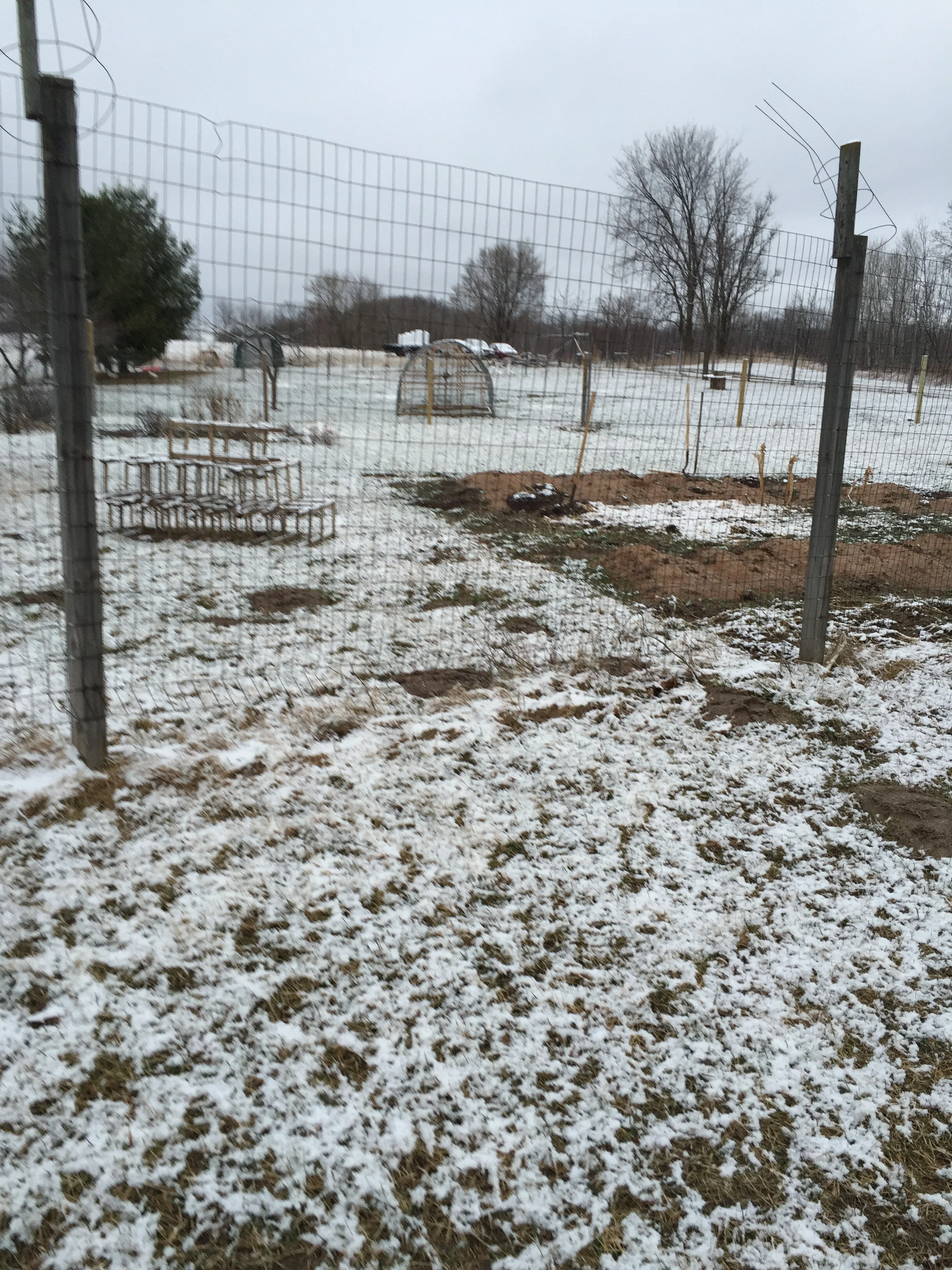
This was two days ago.  Note the bare bird hut in the background. We may get more snow two days from now, but it won't stay long. 

This was two days ago.  Note the bare bird hut in the background. We may get more snow two days from now, but it won't stay long. 

The frogs serenaded us as we worked in the sun. Life doesn't get much better. 
Fire journal: let's get primitive

Michael was a master potter in a prior life. We are trying to rekindle his ceramic soul. It is a slow process, given our other obligations. But this is about progress, and so here is where we are to date: 


Notice the orange barrel

Notice the orange barrel

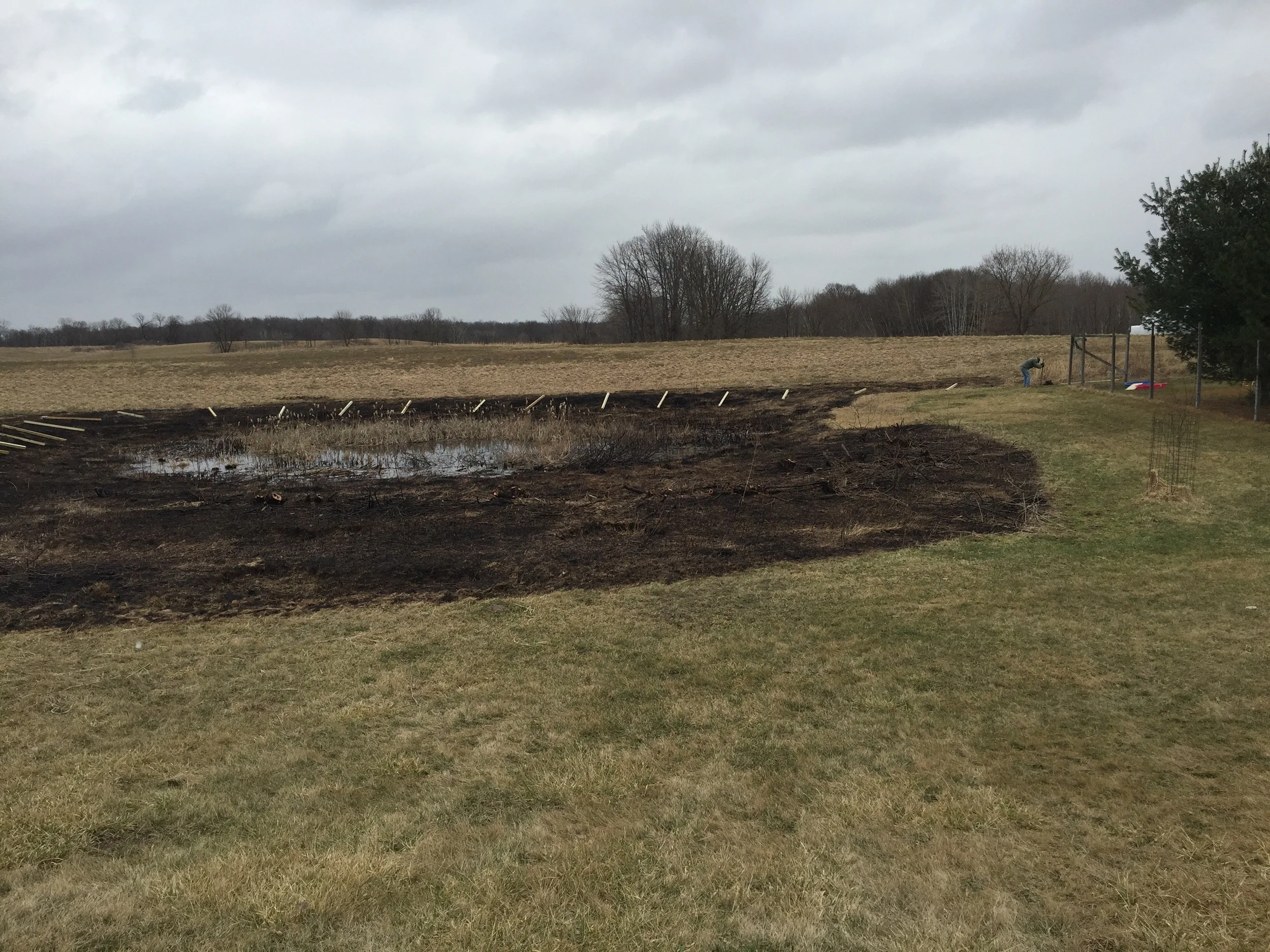
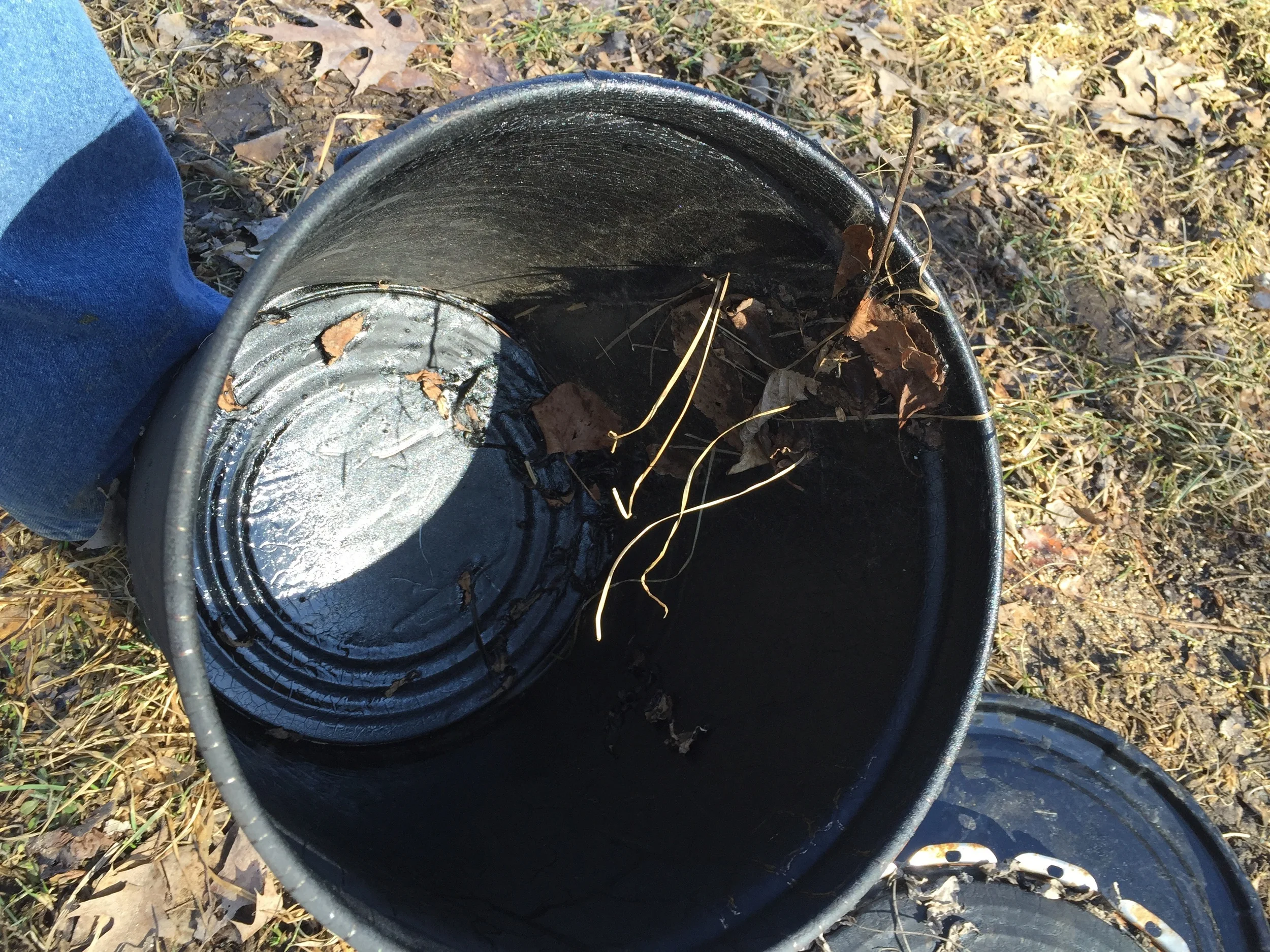
Michael had been looking for a 55 gallon metal drum for a while. I finally found one and gave it to him for his birthday two years ago. We hauled it from Maine to Wisconsin, where we found that our neighbor could cut off the top and bottom for us. The next challenge was to find 5 gallon metal buckets with lids. They magically appeared around the mastic we bought to coat the outside of our basement last summer. But they still had mastic stuck in them. The answer?  Fire! 

The barrel makes a nice chimney once perched on bricks.  

The barrel makes a nice chimney once perched on bricks.  

We built a fire out of small branches conveniently dried in a brush pile.  The rabbits didn't mind our commandeering part of their warren...much. 

The buckets went into the fire once we had a nice bed of coals.  

Viola!  Clean buckets.  

Viola!  Clean buckets.  

We bought 50# of clay. Now all we have to do is build some clay thingies!  Just happy to have (finally) the equipment to make (primitive) fire happen.