Experimentation journal: deer tallow candles
A by-product of butchering our own deer is that we have access to deer fat, which I render into tallow. Michael makes soap, but our tallow store has outstripped our soap needs. Ever inventive, Michael bought a candle mold, wick, and a candlestick holder. Venison tallow has a high melting point and feels waxy at room temperature, which is why we thought it might make an okay candle.
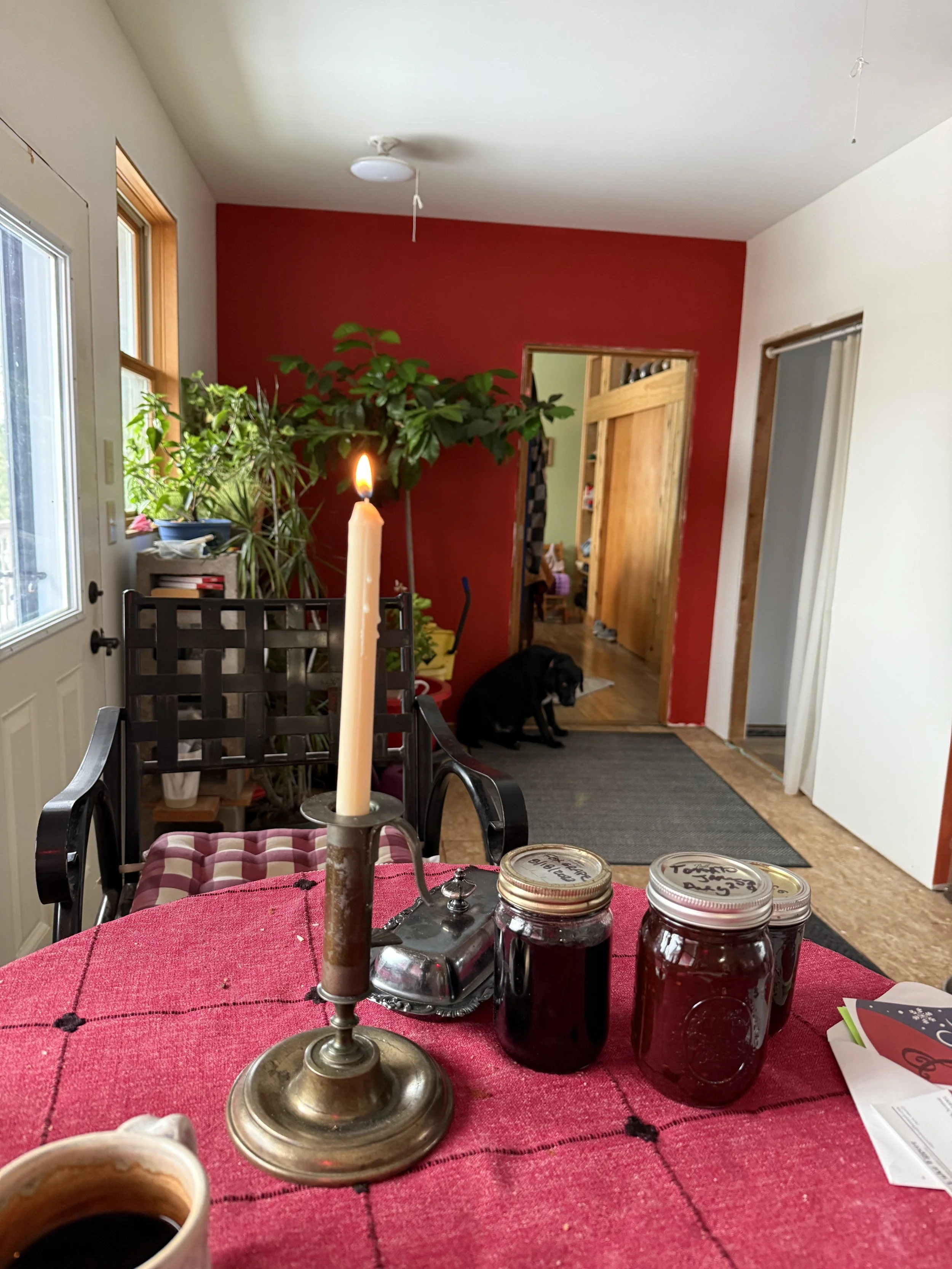
Success! But not without a learning curve.
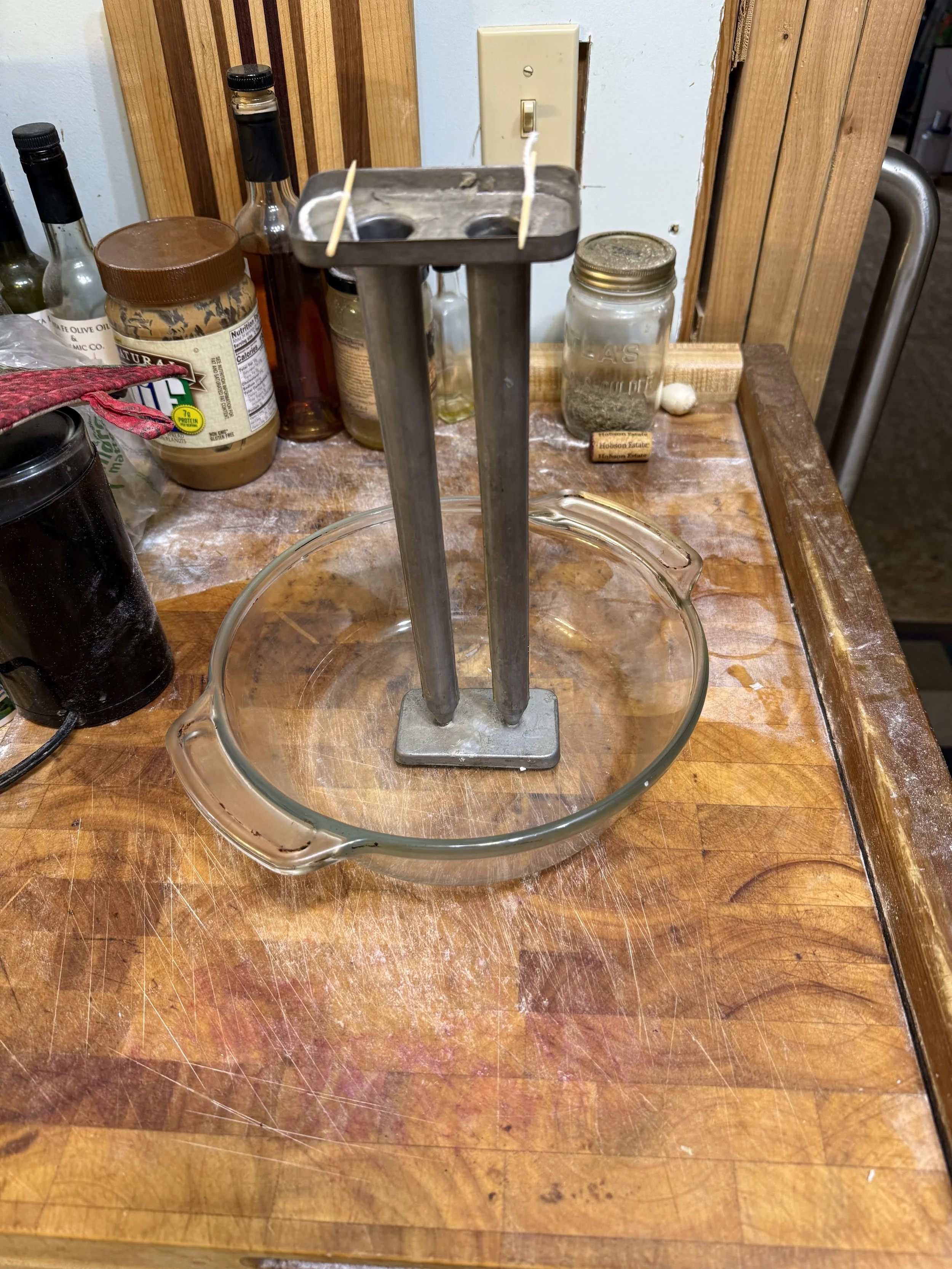
This is the candle mold. Michael said to tape the bottom holes, where the wicks come through, shut. Not trusting an unproven method, I used a deep dish for possible leeks. I threaded toothpicks through the wick to hold them at the top.
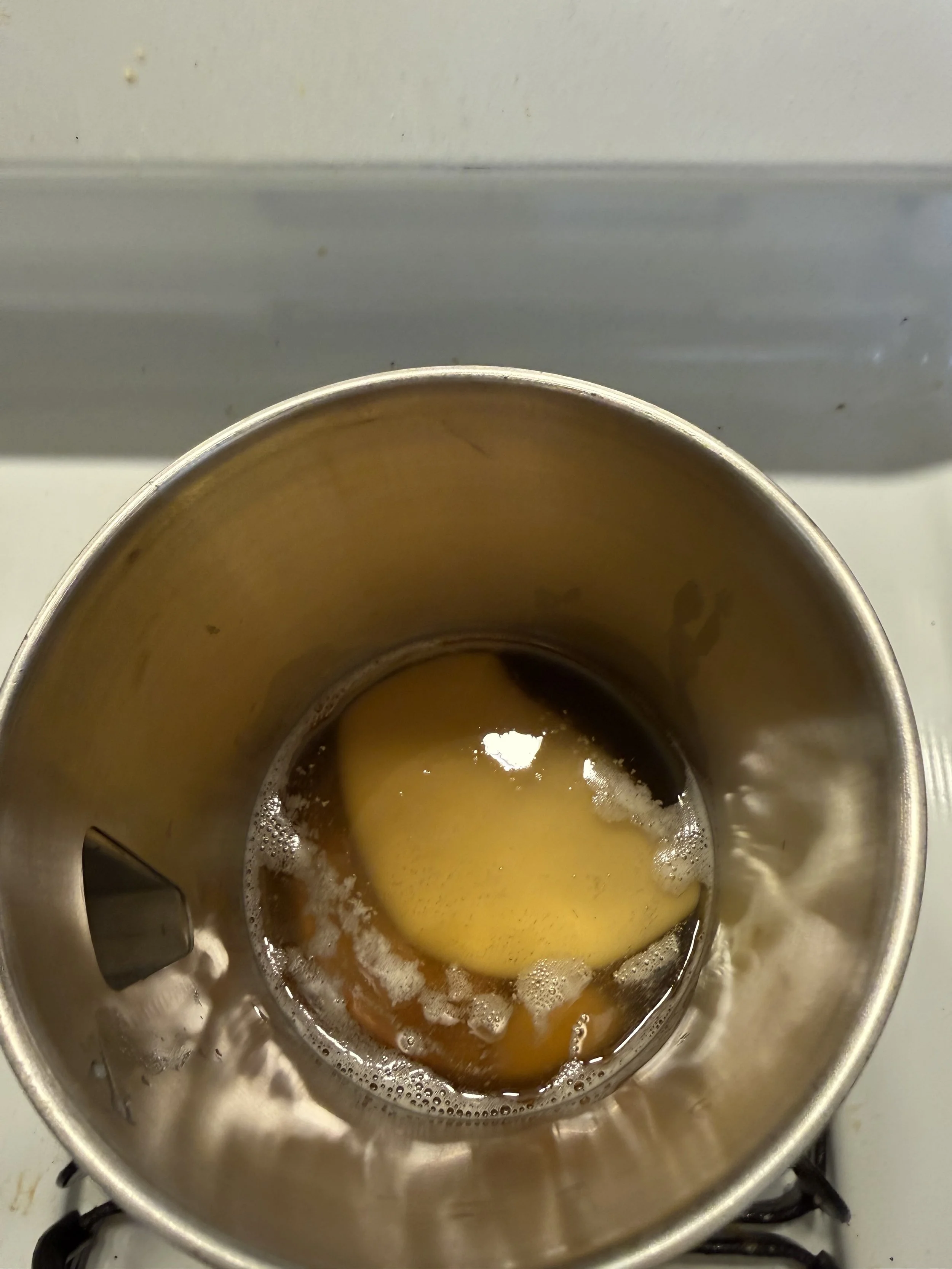
I melted tallow in a tall pot with a spout. We used to bring it camping to make coffee.
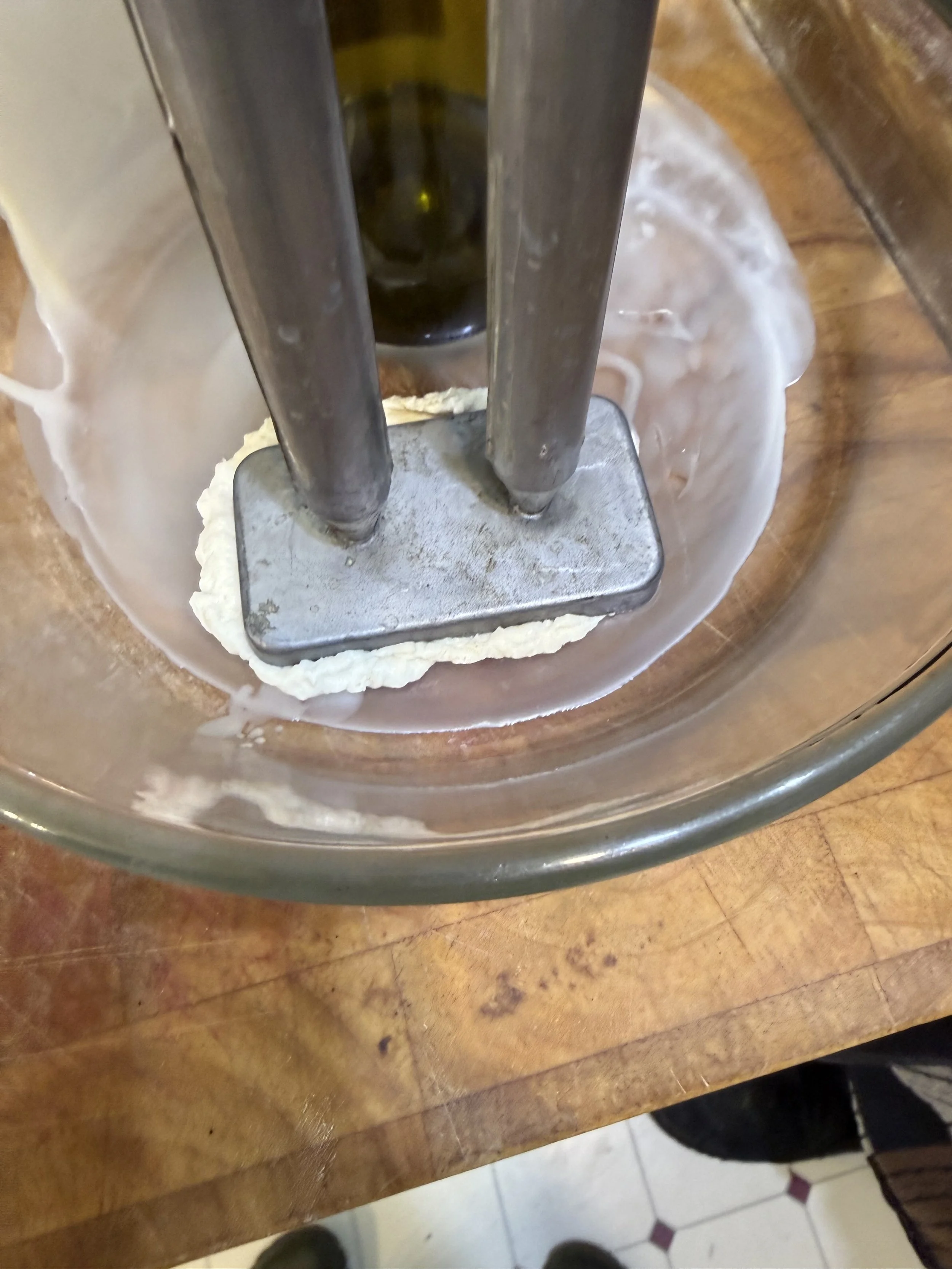
Once the tallow melted, I filled the mold. It leaked immediately. The tape fell off. Michael made a paste of flour and water to act as a stopper. This only worked so well, as I had to apply steady downward pressure to keep this from leaking. Michael got a large lead weight, which applied sufficient pressure, but was hard to balance. The whole thing fell over, splashing deer tallow everywhere. We started again, and this time while I held a steady downward pressure, Michael rubbed the outside of the mold with an ice cube. This worked! The tallow solidified with minimal leakage.
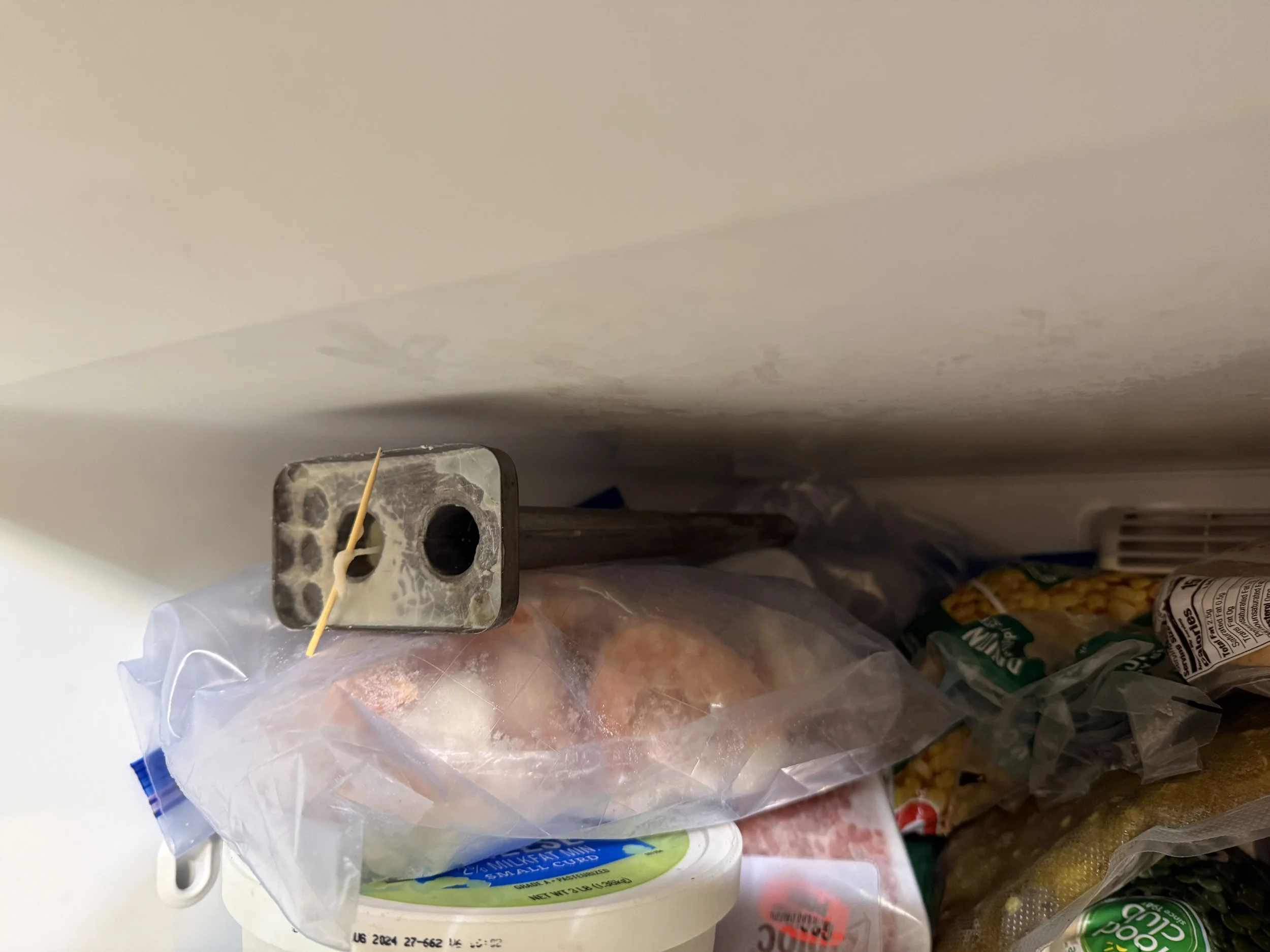
To remove the candles, we put the mold in the freezer, which shrinks the tallow more than the metal. The candles practically fell out.
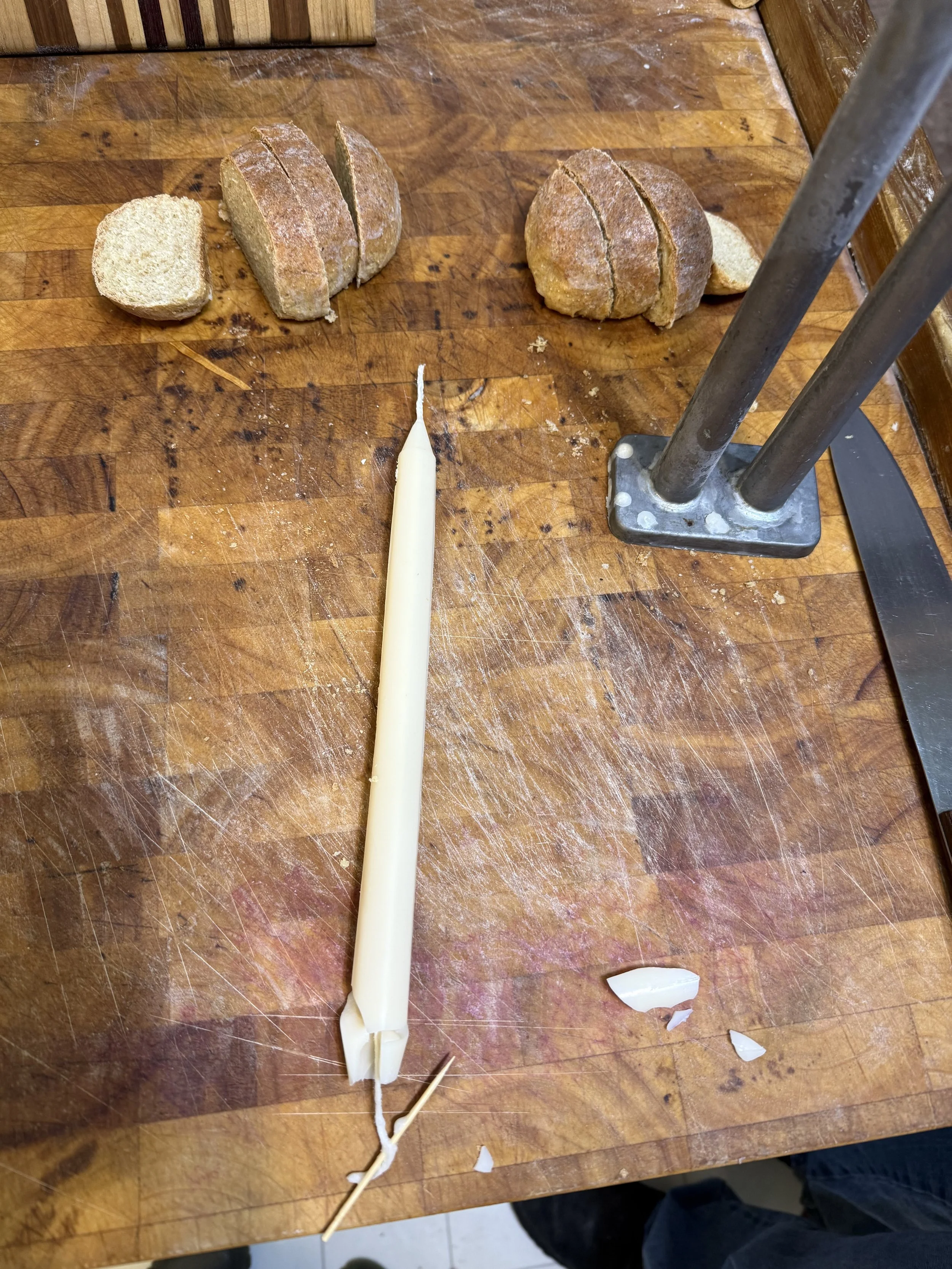
The bottom of the candle broke, but not by much. Michael did some research on how to use a candle mold where the wick comes out the bottom. There is a putty you can buy, or you can seal it with hot glue. We have a hot glue gun, so will try that next.
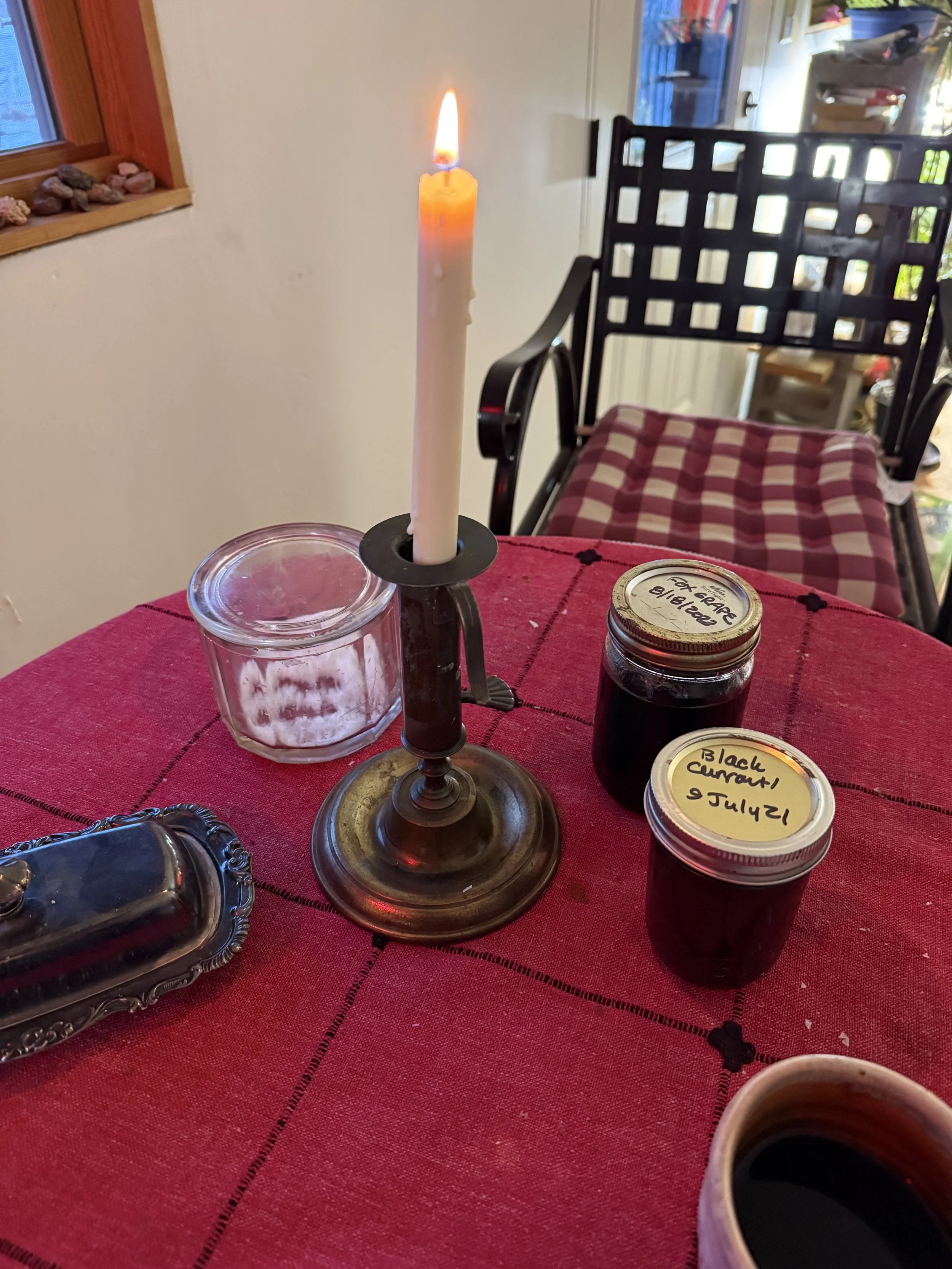
It burns well once the wick got below the tip of the candle. It doesn’t drip more than normal. It has no scent. We will call this experiment successful, if a bit more exciting than necessary.
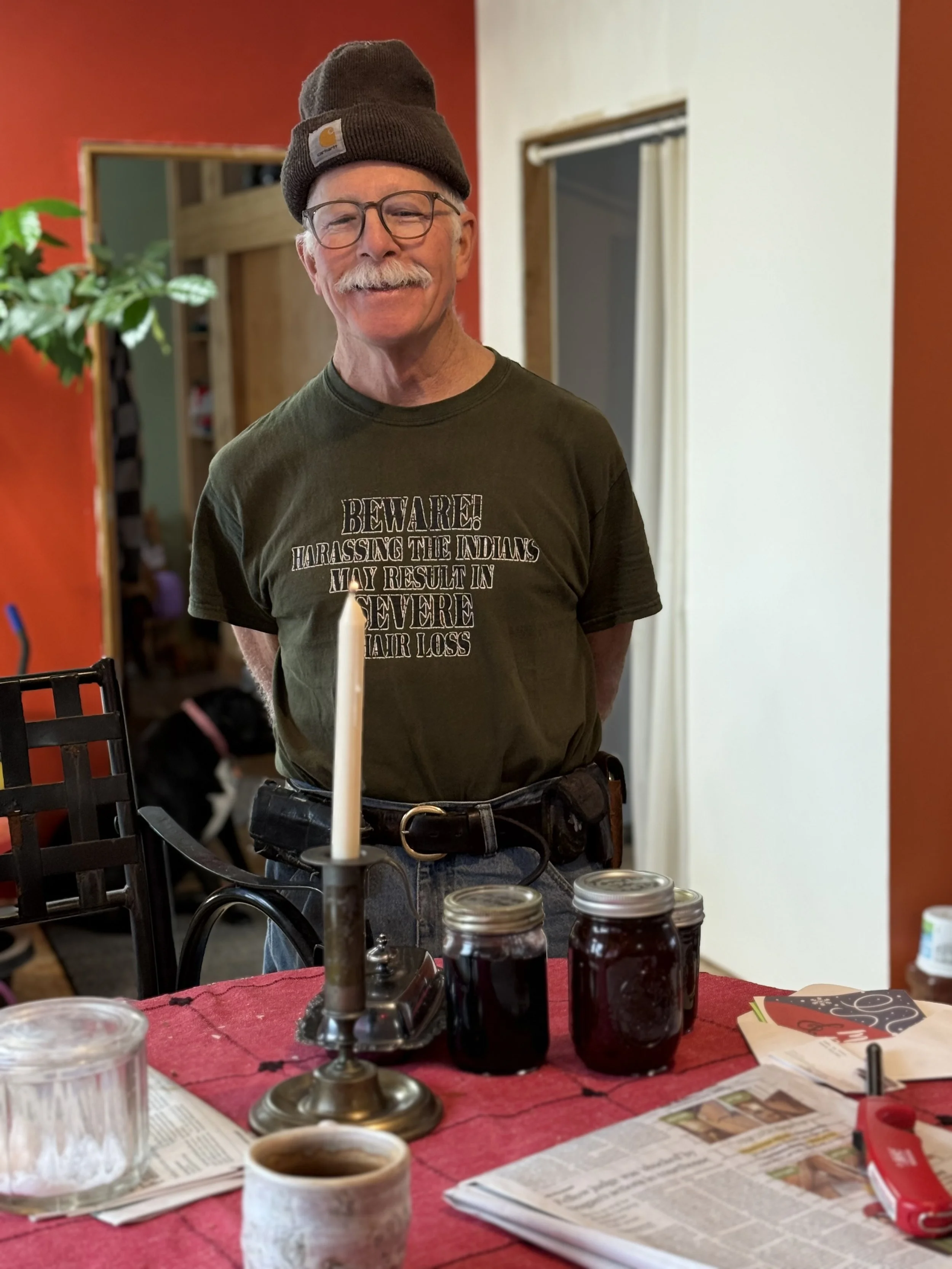
Michael: butcher, baker, candlestick maker!